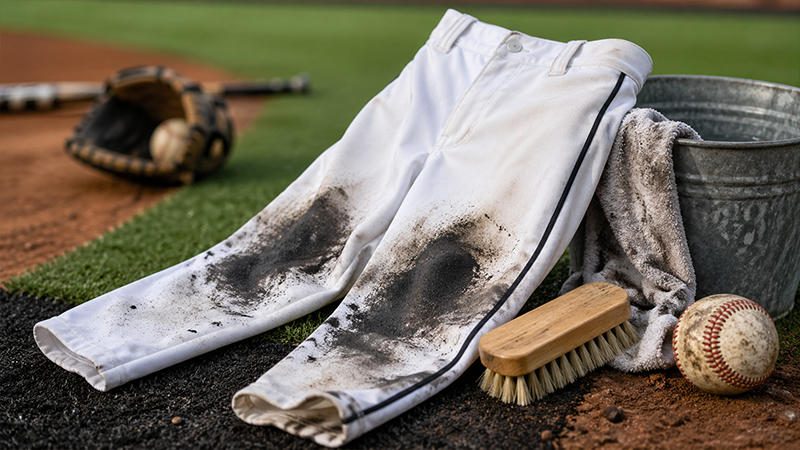
Maintaining a pristine baseball uniform is a badge of honor for many players and parents. However, the modern game is increasingly played on synthetic turf, which introduces a frustrating adversary: black rubber turf stains.
These marks are notoriously difficult to remove compared to traditional mud or grass because they are composed of ground-up rubber infill that physically bonds with the synthetic fibers of the pants.
To keep your gear looking professional and boost your confidence on the diamond, you need a specialized cleaning strategy.
This guide provides a comprehensive, step-by-step breakdown of how to erase those stubborn black marks and restore your pants to their original brilliance.
1. Why Turf Stains Are Different (And Why You Must Act Fast)
Unlike organic stains like grass or blood, turf stains are caused by the synthetic rubber pellets used to cushion artificial fields. When a player slides, the friction creates heat, which can effectively “smear” the rubber into the fabric.
The most critical rule in uniform maintenance is speed. You should never allow stained pants to sit in a laundry bag for days, as the stains become significantly harder to dislodge once they have settled into the fibers.
2. Pre-Wash Preparation: Clearing the Surface
Before applying chemicals or water, you must prepare the garment to ensure your cleaning agents can reach the deep-set rubber marks.
- Shake and Brush: Begin by vigorously shaking the pants to remove loose dirt, debris, or stray rubber pellets.
- Dry Brushing: Use a soft-bristled brush to sweep away any surface-level dust. This prevents you from accidentally rubbing loose dirt deeper into the fabric during the wet cleaning phases.
- Identify the Trouble Spots: Locate every black streak, as turf marks can often hide behind the knees or along the seams of the sliding side.
3. The Top Three Methods for Erasing Black Turf Marks
Standard laundry detergent is rarely enough for high-performance stains. Depending on the severity of the marks, one of these three methods will be your best line of defense.
Method A: The Fels-Naptha “Old School” Scrub
Fels-Naptha is a heavy-duty laundry bar soap that has been a staple in dugouts for decades due to its ability to break down oily, synthetic residues.
- Wet the fabric: Use warm water to dampen the stained areas.
- Apply the soap: Rub the Fels-Naptha bar directly onto the black marks until a thick lather forms.
- Manual Agitation: Use a toothbrush or a specialized laundry brush to scrub the area thoroughly.
- Rinse and Repeat: Rinse with hot water and check if the mark has faded.
Method B: The “Power Paste” (Dawn, Peroxide, and Baking Soda)
For stains that refuse to budge, a chemical reaction can help lift the rubber from the polyester fibers.
- The Recipe: Mix 1 part Dawn dish soap, 2 parts hydrogen peroxide, and 1 part baking soda to create a thick, abrasive paste.
- The Process: Smear the paste over the turf marks and let it sit for at least 30 minutes. The hydrogen peroxide acts as a color-safe brightener, while the Dawn breaks down the oils in the rubber and the baking soda provides the grit needed to scrub the stain away.
Method C: Enzyme-Based and Specialty Cleaners
If DIY methods aren’t your preference, professional-grade cleaners like ESPRO or enzyme-based detergents are specifically formulated to target the chemical bonds in grass and turf stains. These are particularly effective for players who play multiple games a week and need a reliable, repeatable solution.
4. The “Secret Weapon” for Extreme Cases: Power Washing
In recent years, a “pro-parent” hack has gained popularity for pants that seem beyond saving. Some parents take stained baseball pants to a self-service car wash and use the pressure washer to literally blast the black rubber marks out of the fabric.
The high-pressure stream can reach deep into the knit of the polyester where a toothbrush cannot.
Note: If you use this method, be careful not to hold the nozzle too close to patches or embroidery, as the high pressure can damage delicate stitching.
5. The Deep Soak: Restoring the White
Once you have pre-treated the specific black marks, the entire garment needs a deep soak to ensure the overall “white” is restored and any remaining residue is neutralized.
- The OxiClean Solution: Fill a bucket or sink with hot water and a generous scoop of OxiClean White Revive.
- Duration: For standard cleaning, a 30-minute soak is sufficient. However, for pants with heavy turf burns, an overnight soak (or at least 6 hours) is recommended for maximum whitening results.
- Oxygen Bleach vs. Chlorine Bleach: Avoid traditional chlorine bleach, especially on pants with colored piping or logos, as it can weaken the synthetic fibers and cause yellowing over time.
6. Machine Washing for Longevity
After the pre-treatment and soaking are complete, it is time for the final mechanical wash.
- Inside Out: Always turn the pants inside out before placing them in the machine. This protects the outer finish of the fabric and any heat-pressed logos from friction against the agitator.
- Water Temperature: While hot water is great for soaking, a cold water gentle cycle is often best for the machine wash to preserve the elasticity of the waistband and the integrity of the fabric.
- The Vinegar Hack: Add one cup of white vinegar to the rinse cycle. This acts as a natural softener, removes any lingering detergent residue, and helps neutralize odors from sweat and dirt.
7. The Golden Rule: Air Dry, Don’t Fry
The single most important piece of advice for cleaning baseball pants is to stay away from the dryer until you are 100% certain the stains are gone.
- Heat Sets Stains: If a small amount of black rubber remains in the fabric and you put the pants in the dryer, the high heat will permanently bake that stain into the fibers.
- Fabric Integrity: High heat can also cause the synthetic materials in baseball pants to shrink or lose their “stretch”.
- The Better Way: Hang the pants to air dry or lay them flat on a clean towel. If you are in a rush for a double-header, use a high-powered fan to speed up the evaporation process.
8. Professional Maintenance Tips
To ensure your gear lasts the entire season, consider these final “pro tips”:
- Avoid Fabric Softeners: These can leave a waxy coating on the pants that reduces breathability and makes future stains harder to remove.
- Rotation is Key: If possible, own at least two pairs of game pants. This prevents you from having to rush the cleaning and drying process, ensuring you never have to step onto the field in damp or dingy gear.
- Confidence through Cleanliness: A clean, bright uniform doesn’t just look good—it reflects a professional mindset that can translate to better performance on the field.
By following these steps—fast action, aggressive pre-treatment, deep soaking, and air drying—you can conquer the challenge of black turf stains and keep your uniform in “opening day” condition all season long.