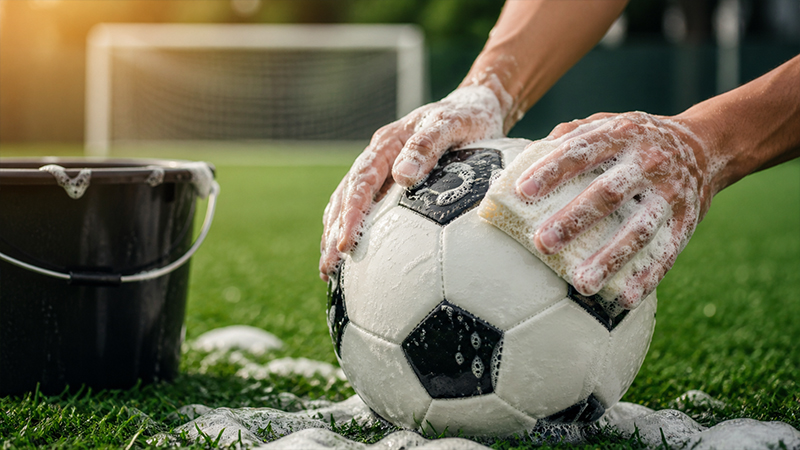
In the world of professional sports, the difference between a championship-winning goal and a missed opportunity often lies in the details. While athletes spend thousands of dollars on high-performance cleats and biometric tracking wearables, the most critical piece of equipment—the soccer ball—is frequently the most neglected.
Properly cleaning and maintaining your football is not merely an aesthetic choice; it is a fundamental requirement to preserve the ball’s grip, aerodynamic consistency, and structural longevity.
The Anatomy of Performance: Why Maintenance is a Competitive Advantage
Before diving into the “how,” one must understand the “why.” Modern soccer balls are marvels of material science, typically featuring a three-layer construction: the casing (outer layer), the lining, and the bladder.
1. Preserving the “Touch” and Grip
The outer casing, whether made of high-grade synthetic leather or polyurethane, is engineered with specific textures to facilitate friction between the boot and the ball.
Accumulated mud, oils, and turf chemicals fill these micro-textures, leading to a “slick” ball that lacks the necessary grip for high-velocity strikes and intricate dribbling.
2. Aerodynamic Integrity
Dirt and debris do not just add weight; they create irregular surface friction. At high speeds, a dirty ball may experience unpredictable “knuckling” or drag, compromising the player’s ability to predict flight paths. Regular cleaning maintains the surface uniformity required for professional-grade play.
The “Gold Standard” Cleaning Protocol: A Step-by-Step System
To maintain the integrity of both leather and synthetic materials, we recommend the Gentle Hand Wash Method. This is the industry-standard approach used by equipment managers in top-flight leagues globally.
Step 1: Preparation of the Specialized Solution
Avoid the temptation to use industrial degreasers. Instead, fill a bucket with lukewarm water and integrate a small amount of mild dish soap or a specialized pH-balanced ball cleaner. The goal is to lift surface contaminants without stripping the protective coatings of the synthetic leather.
Step 2: Precision Surface Agitation
Using a soft cloth or a non-abrasive sponge, begin wiping the surface in circular motions. Focus on the seams where dirt tends to lodge.
For balls with intricate panel designs or “laces” (often seen in American football variants), it is best to wash these areas with extra care to ensure no grit remains trapped in the stitching.
Step 3: Targeted Remediation for Turf and Scuffs
Artificial turf presents a unique challenge: “turf burn” marks caused by the rubber infill. For these stubborn black marks or scuffs that soap cannot reach, use a Magic Eraser gently on the affected areas. This targeted approach lifts the carbon residue without compromising the surrounding material.
Step 4: The Neutralizing Rinse
Once the dirt is lifted, wipe the ball down again with a clean, damp cloth using only water. It is vital to remove all soap residue, as dried soap can become slippery when the ball is reintroduced to a damp pitch, negatively impacting player control.
Step 5: Advanced Drying and Moisture Management
Thoroughly dry the ball with a clean, lint-free towel immediately after rinsing. However, the process does not end there. The ball must be left to air-dry in the shade.
Critical Warnings: Protecting Your Investment
In maintenance, what you don’t do is as important as what you do. Improper cleaning can lead to “water-logging” or material degradation, effectively ruining a premium match ball.
1. The Hazard of Submersion
Never submerge the ball in a bucket of water. In stitched balls, submersion allows water to penetrate the inner lining and the bladder. This results in a “heavy” ball that feels like a brick when kicked and causes the internal materials to degrade and rot from the inside out.
2. The Chemical Trap
Avoid harsh detergents or bleach. These chemicals act as solvents that can break down the adhesives used in thermally bonded balls and cause synthetic leather to become brittle and crack.
3. Thermal Risks
It is a common mistake to place a wet ball on a heater or in direct sunlight to speed up drying. Excessive heat is the enemy of ball longevity. High temperatures can cause the panels to warp, the bladder to over-expand, and the casing material to crack or lose its elasticity.
4. The “Washing Machine” Fallacy
Under no circumstances should a soccer ball be placed in a washing machine or dryer. The mechanical agitation and heat of these machines break down the stitching and glue over time, leading to panel separation and loss of spherical integrity.
Pro-Active Maintenance: The “Always-Ready” Strategy
Maintenance should be a ritual, not a reaction to a ruined ball. Following these professional tips ensures your gear is always match-ready.
- Frequency is Key: Clean your ball regularly, especially after sessions on artificial turf. This prevents turf marks from becoming permanent and keeps the ball’s friction coefficients consistent.
- Component Care: If your ball has laces or complex paneling, consider washing those elements separately where possible to ensure a deeper clean of the hidden crevices.
- The Post-Clean Inspection: Every cleaning session should conclude with a technical inspection. Check the air pressure to ensure it meets the manufacturer’s recommended PSI (usually printed near the valve). A properly inflated ball ensures the casing is taut, which actually helps repel dirt and prevents moisture from seeping into the seams.
Strategic Storage and Environmental Considerations
A Fortune 500-level maintenance strategy extends to how the ball is stored when not in use.
- Temperature Control: Store balls in a climate-controlled environment. Drastic temperature swings in a car trunk or a garage can lead to pressure fluctuations and material fatigue.
- Surface Awareness: Avoid storing balls on rough concrete or abrasive surfaces that can cause “flat spots” or micro-scratches on the casing.
Enhanced FAQ: Expert Insights for Peak Performance
Q: Can I use a pressure washer for a quick clean?
A: Absolutely not. The high-pressure stream can force water through the stitching and into the bladder, as well as damage the delicate texture of the outer casing. Stick to the gentle hand-washing method.
Q: Why does my ball feel heavier after playing in the rain?
A: This is likely due to moisture absorption in the stitching or lining. Follow the drying protocol (towel dry then air-dry in the shade) to safely remove this moisture. If the ball remains heavy, it may have been submerged, or the seams may be failing.
Q: How often should I check the PSI?
A: Ideally, before every use and after every cleaning. Even the best bladders lose a small amount of air over time due to osmosis.
Conclusion: The Professional Standard
Your soccer ball is a tool of precision. By implementing a systematic cleaning routine—utilizing lukewarm soapy water, avoiding harsh chemicals, and shunning mechanical heat—you protect your investment and ensure that your equipment never hinders your performance.
Take Action Today: Evaluate your current gear. If your match ball is covered in turf marks or feels “slick,” follow the hand-wash protocol outlined above. A well-maintained ball doesn’t just last longer; it plays better.