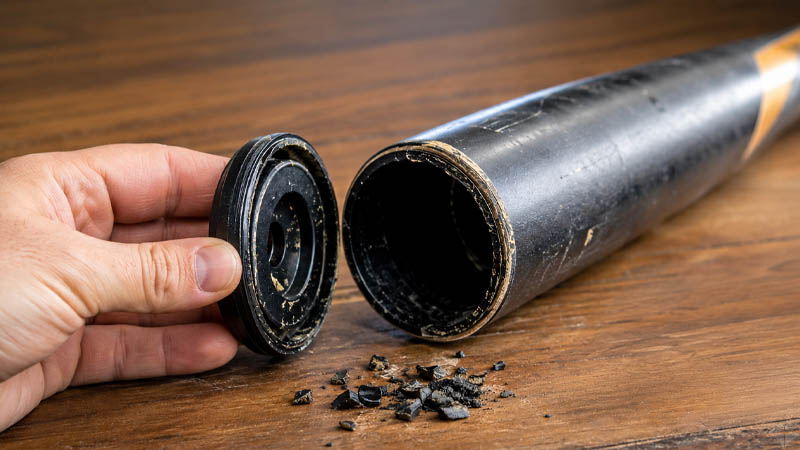
Hearing an unmistakable clicking or rattling sound inside your favorite baseball or softball bat can stop you in your tracks. You step out of the batter’s box, give the handle a light tap against your cleat, and there it is—a tiny piece of something bouncing around inside the barrel.
While a rattle is one of the most common issues with modern composite and alloy bats, it causes immediate concern. Does a rattle mean the bat is dead? Can you fix it at home? Will an umpire toss it out of a big game?
This guide breaks down why bats develop rattles, how league rules address them, and the step-by-step methods to resolve the issue safely without destroying your bat’s performance or warranty.
What Causes a Rattle Inside a Bat?
To understand how to fix the sound, you first need to understand what is happening inside the barrel. Modern high-performance bats are multi-piece engineered tools. They are held together using specialized structural adhesives, internal dampeners, and composite layers.
When something detaches inside the hollow chamber, it has nowhere to go, turning the interior of your bat into a noise chamber.
1. Loose Epoxy or Glue Flakes (Most Common)
During manufacturing, heavy-duty epoxy is used to secure the end cap and bond internal components.
Over time, repeated high-velocity impacts cause tiny beads or flakes of this cured glue to break free. The fragment is usually no larger than a grain of rice, but because the barrel is hollow, it echoes loudly.
2. Internal Composite Delamination or Fibers
Composite bats are made of carbon fiber layers pressed together with resin. Under normal stress, micro-fractures can cause a small fiber or chip of composite material to flake off inside the barrel wall.
3. Detached End Cap Pin or Weighting Material
Some models feature internal tuning weights or pins beneath the end cap designed to adjust the swing weight. If these components shift or break, they can produce a heavier, more noticeable rattle than simple glue flakes.
Does a Rattle Affect Bat Performance?
In the vast majority of cases, a simple glue rattle has zero impact on pop, distance, or structural integrity.
- Glue Flakes: Purely cosmetic and auditory. The bat retains its structural flex, trampoline effect, and sweet spot.
Composite Shredding: If the rattle is accompanied by visible exterior cracks, seam separation, or a dull “thud” sound on contact, the composite structure has failed. In that case, the performance is compromised.
However, even if performance is unchanged, the biggest risk of a rattling bat isn’t how it hits—it’s whether you’re allowed to hit with it at all.
League Rules and Umpire Inspections: The Real Risk
Why fix a rattle if the bat still hits well? Because league rulebooks give umpires full authority to remove rattling bats from play.
Umpires cannot distinguish between a harmless piece of dried glue and a loose piece of internal barrel material during a quick pre-game check. To prevent safety hazards or illegal modifications, official guidelines mandate taking rattling bats out of service.
3 Ways to Fix a Rattle in a Bat
Fixing a rattling bat ranges from simple warranty claims to hands-on restoration. Evaluate your options carefully based on the bat’s age and value.
Method 1: Contact the Manufacturer (Warranty Claim)
If your bat is within its warranty window (typically 1 year from the purchase date from an authorized dealer), do not attempt a DIY fix.
Opening the end cap, applying heat, or drilling into the bat will immediately void your warranty.
       [ Detect Rattle ]
               │
       Is it under 1 year old?
         ┌─────┴─────┐
        YES          NO
         │           │
[ File Warranty ]  [ Choose Repair Method ]
                   ┌─────┴─────┐
              Professional    DIY Epoxy
                 Repair       Injection
- Locate your original sales receipt.
- Visit the manufacturer’s warranty portal (e.g., DeMarini, Easton, Rawlings, Louisville Slugger).
- File a claim citing an internal rattle/loose end-cap glue.
- Ship the bat back. Most manufacturers will clear the rattle, re-cap the bat, or send a replacement model.
Method 2: Professional Rattle Removal Services
If the bat is out of warranty, specialized repair services offer a clean, professional solution.
How Professionals Do It:
- Precision Heat Application: Technicians use controlled heat to soften the factory adhesive holding the end cap.
- Cap Extraction: Using custom pulling tools, they remove the end cap without damaging the composite or alloy barrel rim.
- Debris Clearing: The loose epoxy or composite fragment is extracted.
- Re-Sealing: The cap is re-anchored using industrial structural adhesive, maintaining the original swing weight and balance.
- Pros: Restores the bat safely; no added weight; highly reliable.
- Cons: Requires shipping costs and a few days of turnaround time.
Method 3: The DIY Epoxy Injection Technique (High Risk)
If you have an older bat out of warranty and need a fast fix before a tournament, some players turn to the epoxy injection method.
Warning: This method will permanently alter the bat, void all warranties, and potentially alter the swing balance if done incorrectly. Proceed at your own risk.
Equipment Needed:
- Industrial Marine Epoxy or Slow-Curing Clear Resin
- Drill with a tiny bit (1/16-inch or smaller)
- Syringe or fine applicator tip
- Rubbing alcohol and a clean rag
Step-by-Step Instructions:
- Drill an Access Hole: Carefully drill a single, minimal access point through the center of the plastic end cap. Do not drill into the metal or composite barrel itself—only through the plastic cap material.
- Inject the Adhesive: Load a syringe with 2–3 drops of slow-cure epoxy. Insert the tip into the hole and deposit the glue into the internal cavity.
- Trap the Fragment: Tap the knob of the bat gently on the ground so the loose piece falls directly into the wet epoxy pool at the bottom of the end cap.
- Cure Upright: Stand the bat perfectly upright in a corner or vise for 24 hours. The loose piece will fuse into the setting epoxy.
- Seal the Hole: Fill the tiny drill point flush with a dab of dark epoxy or sealant, and sand it smooth once fully cured.
Frequently Asked Questions
Will tapping my bat against a pole knock the rattle free?
No. Hard impacts against rigid objects like fence posts or cleats will not dislodge trapped glue and can cause outer barrel denting or micro-cracks in composite walls.
Can I warm up my bat with a hair dryer to melt the glue back down?
No. Household heat sources do not reach the specific melting point of cured industrial epoxies without damaging the composite resin matrix inside the barrel wall.
Does removing a rattle change the bat’s swing weight?
If done by clearing the debris or using a minimal drop of epoxy, the weight change is less than a fraction of a gram—completely imperceptible during a swing.
Final Recommendation
When faced with a rattling bat, start with the safest path first:
- Check warranty status: If it’s under 12 months old, let the manufacturer fix or replace it.
- Use professional repair: For high-end bats past warranty, send the bat to a specialized restoration technician to protect your investment.
- Attempt DIY as a last resort: Only use epoxy injection on older, out-of-warranty practice bats where immediate field playability is the only goal.
By resolving the rattle early, you keep your bat fully legal for league play and step up to the plate with confidence.