You’ve finally done it. You’ve invested in a high-quality Rawlings softball glove. Whether it’s a Heart of the Hide or a Pro Preferred, you’ve likely noticed one immediate thing: it is incredibly stiff. In fact, many new owners describe the experience as trying to catch a ball with a wooden board.
This stiffness isn’t a defect; it’s a hallmark of professional-grade leather that is built to last for seasons. However, a stiff glove is a liability on the field. To turn that leather into an extension of your hand, you need a disciplined break-in process.
This guide explores the “Gold Standard” methods, traditional tricks, and the dangerous myths you must avoid to ensure your Rawlings glove becomes game-ready.
Why Is My Rawlings Glove So Stiff?
Rawlings uses premium steerhide and kip leathers, especially in their upper-tier models. These materials are intentionally dense to provide “pop” and longevity.
Because these gloves are professional-grade, they often require a significantly longer breaking-in period than cheaper, synthetic alternatives.
In the professional leagues, some players are so wary of the struggle that they have staff members or younger players play catch with their gloves until they are soft enough to use in a game. For the rest of us, the responsibility falls on our own hands.
The “Gold Standard” Method: Playing Catch
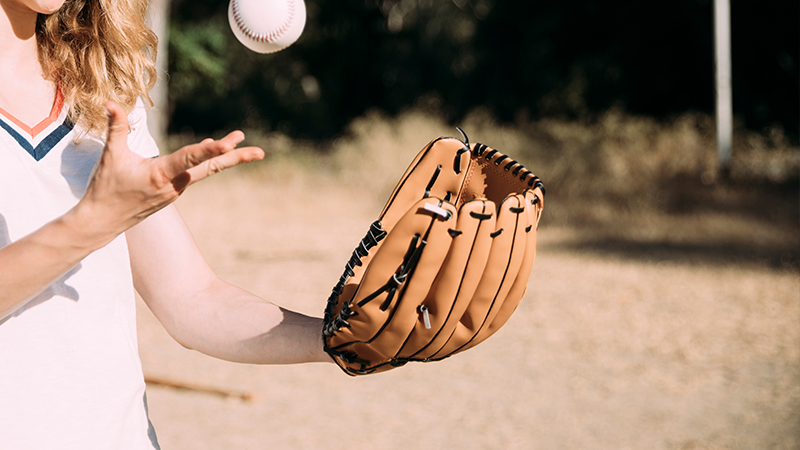
If you ask a purist how to break in a Rawlings glove, the answer is almost always the same: Just play catch.
Why “Natural” is Better
The primary advantage of playing catch is that it forces the glove to shape itself naturally to the specific way your hand closes. Every player has a slightly different grip and “break point” (where the glove hinges).
When you use the glove to catch actual softballs, the leather fibers stretch and compress in a way that mimics your unique mechanical movements.
The Repetition Phase
The common mantra among experienced ballplayers is: “Just play catch, then more catch, then more catch”. If you don’t have a partner, you can simulate this by sitting on your couch and repeatedly tossing a ball into the pocket while you watch a game.
This constant impact helps soften the palm and deepens the pocket without the risk of damaging the leather’s integrity.
Conditioning and Oils: Softening the Fibers
While catch is the foundation, you can speed up the process by using conditioners or oils. However, this is where many players make their first big mistake.
Where to Apply Oil
You should focus your conditioning efforts on the palm and the hinges of the glove. These are the areas that need to be the most flexible.
Some players also recommend applying a light layer of oil or conditioner to the laces to keep them supple and prevent them from snapping under the tension of a hard-hit ball.
Choosing Your Product
- Mink Oil: A traditional choice often rubbed in with a soft cloth or sock every night during the initial break-in period.
- Rawlings Break-In Kits: Many players recommend using specialized kits that include specific oils and applicators designed for their leather.
- A Warning on Weight: Be careful not to over-oil your glove. Leather is porous, and it will soak up whatever you put on it. Excessive oiling can lead to a glove that feels heavy and “floppy,” losing the structural support required to catch high-velocity balls.
Mechanical Softening: Using the Right Tools
Sometimes, manual labor is required to move the process along. This involves “beating” the glove to mimic years of use in a matter of days.
The Glove Mallet
A glove mallet is essentially a ball on a stick. It allows you to strike the pocket with force without having to play a full game of catch. You should also use the mallet to beat the hinge points from the outside while the glove is closed to help the leather learn where to fold.
The Bat End Cap
If you don’t have a mallet, the end cap of a baseball or softball bat can serve a similar purpose. By pushing the end of the bat into the pocket and working it around, you can help stretch the leather and create a deeper “nest” for the ball to sit in.
Shaping and Storage: The Overnight Work
A glove’s shape is determined not just by how you play with it, but by how it sits when you aren’t using it.
Forming the Pocket
The most common advice for shaping is to place a softball in the pocket (or the webbing) and secure the glove in a closed position. This ensures the leather “remembers” the curve of the ball.
To Wrap or Not to Wrap?
There is a debate in the baseball community about using rubber bands or twine to wrap the glove shut.
- The Pro-Wrap Camp: Argues that wrapping the glove tightly with a ball inside overnight helps set the shape quickly.
- The Anti-Wrap Camp: Some players believe that wrapping creates “unnatural” folds that don’t align with how your hand actually works, potentially ruining the glove’s long-term feel.
The Mattress Method
A classic “old school” tip involves placing a ball in the glove and sliding it under your mattress for a few nights. The steady, heavy pressure helps compress the stiff leather fibers and “set” the pocket.
The “Danger Zone”: What to Avoid at All Costs
In the search for a quick fix, many players turn to the internet and find advice that can permanently ruin a several-hundred-dollar Rawlings glove.
The Heat Myth
Never put your glove in a microwave or a kitchen oven. While heat does soften leather temporarily, it also dries out the natural oils, making the leather brittle and prone to cracking.
One Redditor noted that a kitchen oven is for lasagna, not expensive sports gear. While some professional shops use specialized “steam cabinets,” attempting to replicate this at home is highly risky and generally discouraged by purists.
The “Car” Method
Some people suggest running over a glove with a car to flatten it out. This is considered an outdated and dangerous tactic that can crush the internal padding and ruin the glove’s structure.