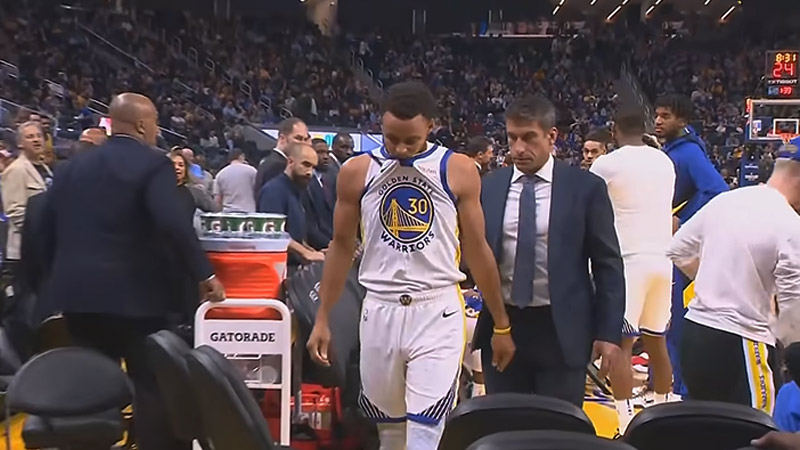
Over a legendary 17-year NBA career spanning from 2009 to 2026, Stephen Curry has missed a total of 298 games, including 282 regular-season games and 16 playoff matchups.
Despite a reputation for early-career durability issues, Curry has appeared in 1,224 out of 1,522 possible franchise games, maintaining a significant presence for the Golden State Warriors.
His absences often stemmed from chronic ankle issues, a major hand fracture in 2019, and a severe knee injury during the 2025–26 season.
Understanding these numbers is crucial, as the Warriors hold a mere .369 winning percentage when their superstar is sidelined.
How Many Regular-Season Games Has Steph Curry Missed?
Analyzing the regular-season data reveals that Curry has been available for approximately 79% of all possible games throughout his tenure with the Golden State Warriors.
The following table provides a comprehensive season-by-season breakdown of his availability and the primary reasons for his time away from the court.
| Season | Team Games | Games Played | Games Missed | Primary Injury / Reason |
|---|---|---|---|---|
| 2009–10 | 82 | 80 | 2 | Rookie season availability |
| 2010–11 | 82 | 74 | 8 | Minor right ankle sprains |
| 2011–12 | 66 | 26 | 40 | Right ankle surgery (Lockout-shortened) |
| 2012–13 | 82 | 78 | 4 | Ankle management |
| 2013–14 | 82 | 78 | 4 | Minor strains |
| 2014–15 | 82 | 80 | 2 | Rest (First MVP Season) |
| 2015–16 | 82 | 79 | 3 | Minor inflammation (Unanimous MVP) |
| 2016–17 | 82 | 79 | 3 | End-of-season rest |
| 2017–18 | 82 | 51 | 31 | Severe ankle & Grade 2 MCL sprain |
| 2018–19 | 82 | 69 | 13 | Left groin strain |
| 2019–20 | 65 | 5 | 60 | Broken left hand |
| 2020–21 | 72 | 63 | 9 | Tailbone contusion |
| 2021–22 | 82 | 64 | 18 | Sprained left foot ligament |
| 2022–23 | 82 | 56 | 26 | Shoulder subluxation & leg tears |
| 2023–24 | 82 | 74 | 8 | Minor ankle rolls & rest |
| 2024–25 | 82 | 70 | 12 | Knee soreness & rest |
| 2025–26 | 82 | 43 | 39 | Patellofemoral knee pain & bone bruise |
| Total | 1,351 | 1,069 | 282 | Career Summary |
Detailed Breakdown of the Steph Curry Injury History
To understand the longevity of a high-impact athlete like Curry, one must look past the raw numbers and examine the specific medical challenges he faced across different eras of his career.
From mechanical issues in his youth to impact-related trauma as a veteran, his medical history is a roadmap of professional resilience.
The Early-Career Chronic Ankle Challenges
During the early 2010s, there were significant concerns regarding Curry’s ability to remain a permanent fixture in the league. The 2011–12 season was the most critical period, where he was sidelined for 40 out of 66 possible games.
After multiple right ankle sprains, he eventually required surgery that limited his availability and led to a cautious approach to his minutes for several subsequent years.
This era established a narrative of “fragility” that he would eventually dismantle through rigorous physical conditioning and specialized footwear.
The Impact of the 2019–20 Broken Left Hand
The narrative of Curry’s health shifted from chronic issues to fluke accidents during the 2019–20 campaign. Just four games into the season, Curry suffered a broken left hand that necessitated a lengthy recovery period, causing him to miss 60 games.
Because the Warriors were omitted from the pandemic-era “bubble” later that year, Curry had no further opportunity to improve his games-played tally for that season. This remains the longest single absence of his career for a non-lower-body injury.
Managing Patellofemoral Knee Pain in the 2025–26 Season
As Curry moved into his late 30s, the physical toll of his high-motion playing style became more apparent. The 2025–26 season saw him miss 39 games due to patellofemoral knee pain syndrome and a significant bone bruise.
Unlike the ankle issues of his youth, these later injuries were largely degenerative or stress-related, requiring more strategic load management to ensure he could still perform at an elite level during active appearances.
How Do the Golden State Warriors Perform Without Steph Curry?
The strategic importance of Curry to the Warriors’ system is best illustrated by the team’s performance during his absences. He does not simply provide scoring; his “gravity” on the court opens opportunities for every other player in the lineup.
The Struggle of the .369 Regular-Season Win Rate
Data indicates that the Warriors have found it exceptionally difficult to maintain a winning trajectory without their leader. Throughout his career, the franchise holds a 104–178 record in the regular season when Curry is absent.
This equates to a winning percentage of just .369, which is often the difference between being a top-tier contender and missing the postseason entirely. The drop-off in offensive efficiency without his presence remains one of the most drastic in modern NBA history.
Surprising Postseason Resilience and the 11–5 Anomaly
While the regular-season struggles are well-documented, the Warriors have shown a surprising ability to persevere in the playoffs without Curry. Out of 171 franchise playoff games since 2009, Curry has missed only 16. In those 16 matches, the Warriors managed an 11–5 record.
This suggests that while Curry is essential for the long-term grind of the regular season, the team’s championship-caliber infrastructure has occasionally been able to compensate for his absence in short-term playoff bursts.
What Are the Primary Reasons for Steph Curry’s Time Sidelined?
While individual injuries vary, the reasons behind Curry’s missed games can be categorized into three distinct buckets that have evolved over his 17-year career:
- Chronic Mechanical Issues: Specifically his early-career right ankle surgeries and subsequent management through the 2012–13 season.
- Acute Impact Trauma: Injuries like the broken left hand in 2019 or the foot ligament sprain caused by a collision with Marcus Smart in 2022.
- Strategic Load Management: As the Warriors reached late-season positions or dealt with minor inflammation (such as shin issues in 2015-16), Curry would often be held out to prioritize playoff health.
- Late-Career Degeneration: Recent issues such as knee soreness and patellofemoral pain that represent the natural wear and tear of a 17-season career.
Common Questions on Steph Curry’s Availability
Did Steph Curry Miss the Entire 2019-20 Season?
Not entirely, but he missed the vast majority of it. Curry played in only 5 games that season. A broken left hand suffered early in the year sidelined him for 60 games, and the Warriors’ poor record combined with the pandemic shutdown meant he did not return for the end of that campaign.
How Many Playoff Games Has Curry Missed in His Career?
Curry has missed exactly 16 playoff games. Most of these absences occurred during two specific championship runs. In 2015–16, he missed 6 games due to ankle and MCL sprains, and in 2017–18, he missed another 6 games while recovering from a Grade 2 MCL sprain.
Which Season Had Curry’s Worst Injury?
Statistically, the 2019–20 season saw the most games missed (60), but the 2011–12 season was arguably “worse” for his career outlook as it involved surgery and chronic stability issues that threatened his future in the league.
The 2025–26 season also stands out as a significant hurdle, with 39 games missed due to knee pain.
Conclusion: The legacy of resilience and career longevity
Reflecting on Stephen Curry’s 17 years in the NBA, the narrative of his health has shifted from one of doubt to one of immense admiration.
With 1,069 regular-season appearances and 155 playoff games, Curry has proven that he is far more durable than his early-career critics suggested.
While 298 missed games may seem high, the context of his career—including multiple championship runs and deep playoff pushes—highlights a player who has consistently shown up when the stakes were highest.
The “Curry Effect” is not just about the games he plays, but the void left behind when he is absent. A winning percentage that falls from elite levels to a .369 mark without him proves that he remains the most valuable component of the Golden State Warriors’ dynasty.
As he enters the final chapters of his professional journey, his ability to manage late-career ailments like the 2025–26 knee issues will be the determining factor in the Warriors’ quest for further glory.
Despite the injuries, the data tells a story of a superstar who overcame physical limitations to redefine the game of basketball.