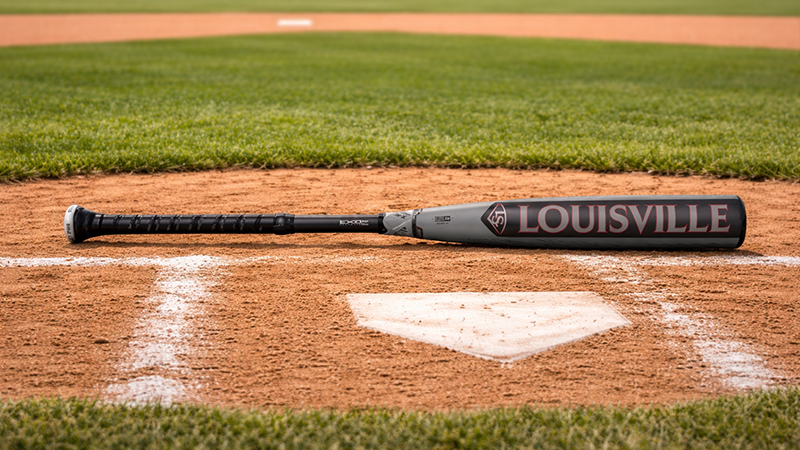
In the high-stakes world of competitive baseball and softball, a composite bat is more than just a piece of equipment; it is a precision-engineered investment.
With premium models frequently exceeding the $300 to $500 price point, understanding the lifecycle, maintenance, and structural limitations of these tools is critical for players, parents, and coaches alike.
As a world-class SEO content strategist, I have synthesized data from manufacturer guidelines, expert maintenance protocols, and real-world player experiences to provide the definitive resource on composite bat lifespan. This guide explores the intersection of high-performance engineering and practical durability.
The Lifecycle of a Composite Bat: Expectation vs. Reality
One of the most frequent points of contention in the dugout is exactly how long a composite bat should last. The answer is rarely a simple date on a calendar, but rather a calculation of swing volume and impact stress.
1. The Statistical Lifespan
According to industry standards, a composite bat typically provides peak performance for one to three seasons. In terms of raw usage, this translates to approximately 1,000 to 1,500 competitive swings, or a total threshold of up to 4,000 hits depending on the intensity of the contact.
2. The Manufacturer’s Benchmark
Most major manufacturers provide a one-year limited warranty from the date of purchase. This window is the industry’s “safety zone,” implying that a bat should comfortably survive 12 months of standard play. Some forum contributors suggest that the “true” replacement cycle intended by manufacturers is roughly every two years.
3. Real-World Variance: “Tanks” vs. “Glass.”
Data from active players reveals a massive delta in durability between specific models and brands:
- The Durability Kings: Models like the Easton SCN5 and the “Green Catty” (Louisville Slugger) have earned reputations as “tanks,” with some users reporting lifespans of nearly four seasons or a staggering 10,000 swings.
- The Performance Peaks: Conversely, high-performance “hot” bats—such as certain entries in the Louisville Slugger Z-series or the Easton ADV—are often reported to have much shorter lifespans, sometimes failing within a single season of heavy use.
The “Silent Killers”: Environmental and Mechanical Threats
To dominate search rankings and provide genuine user value, we must address the “gaps” in standard product manuals. While a bat is built for impact, several external factors act as catalysts for structural failure.
1. The Critical Temperature Threshold
Composite materials are essentially layers of carbon fiber bound by resin. Physics dictates that these materials become brittle in cold weather.
- The Danger Zone: Performance drops and the risk of cracking skyrockets when temperatures fall below 60°F.
- The Failure Point: Usage in temperatures below 40°F is widely considered a “death sentence” for composite barrels. In these conditions, the ball becomes harder and the composite layers cannot flex, leading to immediate catastrophic cracking.
2. Batting Cage Hazards
While it is tempting to use a game bat for year-round practice, the dimpled balls used in many commercial batting cages are significantly denser than standard leather-bound balls.
Repeated impact with these “machine balls” can compress the composite layers beyond their recovery point, “killing” the bat’s pop prematurely.
3. The “Team Bat” Tax
The quickest way to deplete the “swing budget” of a $400 bat is to make it the community “team bat.” A bat shared by 10 to 12 players will accumulate a season’s worth of wear in just a few games. Expert players often advise: “Buy your own bat and don’t let anyone else swing it” to ensure you are the only one utilizing its finite lifespan.
Proactive Maintenance: The “World-Class” Break-In Protocol
A composite bat is not “game-ready” the moment it comes out of the wrapper. To maximize both the longevity and the “pop” of the barrel, a strategic break-in period is required.
1. The 150-Swing Methodology
To properly seat the resin and fibers, a player should perform a graduated break-in:
- Swings 1–50: Hits at 50% power using a tee.
- Swings 51–100: Hits at 75% power with soft toss.
- Swings 101–150: Full-power swings against live pitching.
2. The Rotation Rule
To ensure even wear and prevent “flat spots” or localized stress fractures, the player must rotate the barrel 1/4 turn after every single hit.
This simple mechanical habit distributes the impact force across the entire circumference of the barrel, significantly extending the time before a crack develops.
3. Climate-Controlled Storage
Storing a bat in a garage or a car trunk subjects it to extreme temperature fluctuations that can weaken the composite bond. Strategic owners store their equipment in climate-controlled environments to maintain the integrity of the resin.
Youth Baseball Considerations: Strategy Over Hardware
For parents of 10U to 12U players, the “composite bat” question involves additional layers of ROI analysis.
1. The Growth Factor
In youth sports, a bat often “expires” because the player outgrows it before it actually breaks. A 10-year-old may jump from a 29-inch drop 10 to a 31-inch drop 8 in a single year. Investing in a “forever bat” at this age is often a strategic error.
2. Skill vs. Gear
While a “hot” bat like a Marucci Cat X or Rawlings Icon provides a larger sweet spot and less vibration, it cannot replace fundamental mechanics.
Expert consensus suggests that for many youth players, the money spent on a $500 bat might provide a better return if invested in professional hitting lessons.
As one coach noted, a skilled player with a one-piece alloy bat will often outperform an unskilled player with the most expensive composite on the market.
Diagnostic Checklist: Is Your Bat “Dead”?
Knowing when to retire a bat is essential for safety and performance. Use these three markers to evaluate your equipment:
- Visual Fractures: Any visible crack, no matter how small, indicates the composite layers have separated. At this point, the bat is unsafe and legally “dead” for sanctioned play.
- Acoustic Changes: A healthy composite bat has a distinct “crack” or “ping.” If the sound changes to a dull “thud,” the internal structure may be compromised.
- The Performance Drop: If a bat that was previously “hot” suddenly loses its “pop”—meaning the ball no longer jumps off the barrel with the same exit velocity—the material has likely reached its elastic limit.
Enhanced FAQ: Expert Insights for Strategic Players
Q: Can I use my composite bat in the rain?
While the water itself doesn’t hurt the composite, a wet ball becomes significantly heavier. Hitting “heavy balls” increases the impact stress and can lead to premature cracking.
Q: Is it true that a composite bat gets “hotter” right before it breaks?
Yes. As the composite fibers break down and the resin loosens, the barrel becomes more flexible, creating a greater “trampoline effect”. However, this is the “twilight” of the bat’s life; a break or crack is usually imminent.
Q: Should I buy a used composite bat to save money?
This is high-risk. Since you cannot see the “swing count” or know if the bat was used in 30°F weather, you may be buying a bat that is on the verge of failure with no warranty recourse.
Conclusion
To dominate the diamond, you must treat your equipment with the same rigor a corporation treats its assets. A composite bat is a high-performance tool with a finite utility.
By following a strict break-in protocol, avoiding “silent killers” like cold weather and machine balls, and resisting the urge to provide a “team bat,” you can ensure that your investment pays dividends in the form of home runs and line drives.
Final Strategic Recommendations:
- Keep your receipts: Warranties are your only insurance against “lemon” bats that fail in 366 days.
- Have a “Practice” Bat: Use a cheaper alloy bat or an older composite for cage work and save your “Gamer” for the plate.
- Monitor the Thermometer: If it’s under 60°F, leave the composite in the bag.