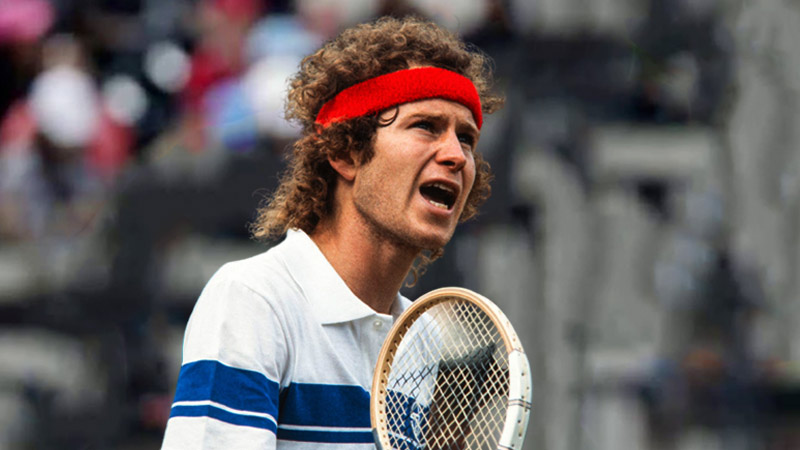
The career of John McEnroe offers a unique case study in athletic precision, tactical intelligence, and psychological intensity.
While many remember him for his volatile outbursts, an analytical examination of his data reveals a player whose technical efficiency and dual-dominance in both singles and doubles may never be replicated in the modern era.
He was a former world No. 1 in both singles and doubles, a feat that underscores a level of versatility rarely seen today.
The Statistical Foundation of Greatness
To understand McEnroe’s standing in history, one must first look at the raw data of his career. His ability to maintain elite performance across two distinct disciplines—singles and doubles—is his most significant differentiator.
| Metric | Achievement | Significance |
|---|---|---|
| Total Career Titles | 155 | Open Era record (77 singles, 77 doubles). |
| 1984 Win Percentage | 96.5% | Best single-season win rate of the Open Era (82–3 record). |
| Grand Slam Singles | 7 Titles | 3 Wimbledon, 4 US Open. |
| Grand Slam Doubles | 9 Titles | Highlighting his elite net play and teamwork. |
| Simultaneous Ranking | World No. 1 | Only male player to hold No. 1 in singles and doubles simultaneously. |
The 1984 Masterclass: A Season of Near Perfection
The year 1984 stands as the pinnacle of McEnroe’s career and remains a benchmark for dominance in professional tennis.
Finishing the year with an 82–3 singles record, he achieved a 96.5% win rate that has yet to be surpassed by legends like Roger Federer, Rafael Nadal, or Novak Djokovic.
This season was not merely about winning; it was about the manner in which he dismantled the tour. His efficiency during this period was a result of a refined serve-and-volley game that left opponents with no tactical recourse.
During this historic run, he secured both Wimbledon and the US Open, cementing his status as the premier player of the early 1980s.
Technical Analysis: The “Stiletto” Philosophy
Arthur Ashe, one of the sport’s most respected tacticians, famously described McEnroe’s style as a “stiletto” rather than a sledgehammer.
This description captures the essence of his technical brilliance. While his contemporaries might have relied on raw power, McEnroe utilized precision shots and incredible court awareness to cut his opponents apart.
The Left-Handed Advantage
- The Serve: He utilized an exceptional left-handed serve with heavy spin. The unique angles he created forced opponents out of their comfort zones, making his serve-and-volley transition seamless.
- Net Touch: His unmatched net touch allowed him to execute volleys with a softness and accuracy that turned defensive positions into offensive winners instantly.
- Tactical Geometry: He viewed the court differently, using angles to minimize his movement while maximizing the distance his opponents had to travel.
The Dual King: A Rare Versatility
In the modern landscape of tennis, players typically specialize in either singles or doubles to preserve their physical longevity. McEnroe defied this trend, becoming the only male player in history to win more than 70 titles in both categories.
His commitment to both formats wasn’t just about quantity; it was about excellence. Holding the world No. 1 ranking in both singles and doubles at the same time required a level of mental and physical stamina that is almost inconceivable in today’s game.
His 9 men’s doubles majors, combined with his 7 singles majors, bring his total Grand Slam count to 16, reinforcing his status as one of the most talented players to ever hold a racket.
Psychology and the “Bad Boy” Persona
It is impossible to analyze McEnroe without addressing his on-court persona. While his famous temper and fiery outbursts—such as the “You cannot be serious!” rant—often drew the most media attention, they were also deeply integrated into his competitive drive.
- Intense Rivalries: His battles with Björn Borg and Jimmy Connors are legendary. These matches were not just physical contests but psychological wars.
- Pressure as a Catalyst: Often, his arguments with umpires and racket throwing served as a way to recalibrate his focus or disrupt the rhythm of an opponent.
- The Double-Edged Sword: While his intensity fueled his 155 career titles, it also made him a polarizing figure who redefined the expectations of athlete behavior in a traditionally polite sport.
Historical Context: Comparing the Eras
When evaluating how good McEnroe truly was, one must look at his peer group. He played during a “Golden Era” where he had to contend with the baseline consistency of Borg and the relentless aggression of Connors.
To emerge from that era with 7 singles majors and 77 singles titles required more than just talent; it required a revolutionary approach to the game.
His Open Era record of 155 career titles serves as a testament to his longevity and his refusal to prioritize one format over another.
While modern players may have more singles majors, none have demonstrated the same comprehensive mastery of every facet of tennis—singles, doubles, and mixed play—that McEnroe did.
The Verdict on the McEnroe Legacy
John McEnroe was not just a “great” player; he was a technical innovator who proved that precision could overcome power. His ability to dominate two different disciplines of the sport simultaneously remains the gold standard for versatility.
Whether it was the tactical brilliance of his left-handed serve or the intensity of his rivalries, McEnroe changed the trajectory of tennis.
For those looking to understand the mechanics of winning, McEnroe’s career offers a masterclass in using every inch of the court and every ounce of competitive fire.
He remains a singular figure—the “Stiletto King” whose records, particularly his dual No. 1 rankings and his 1984 win percentage, may stand for another generation.