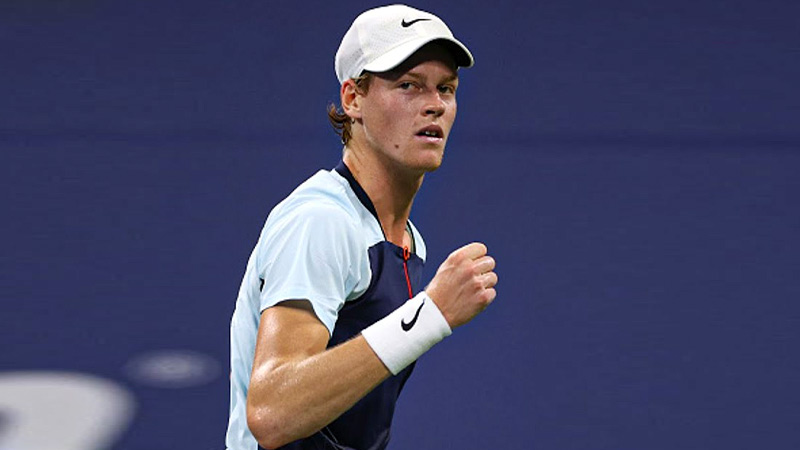
The landscape of professional tennis is currently undergoing a transformative shift, defined by the rise of a new standard in athletic and technical precision.
At the center of this evolution is Jannik Sinner, who has established himself as the premier force in the sport.
His ascent to the World No. 1 ranking is not merely a result of talent but is the product of a systematic, machine-like approach to consistency and competitive execution.
By securing multiple Grand Slam titles and maintaining a relentless level of performance, he has redefined the requirements for reaching the absolute pinnacle of men’s professional tennis.
The Technical Framework of a Modern Champion
The foundation of Sinner’s dominance lies in his comprehensive baseline game, which allows him to dictate terms against any opponent.
Unlike traditional styles that may rely on heavy topspin or defensive attrition, his approach is built on speed, timing, and aggressive positioning.
| Technical Pillar | Strategic Advantage | Performance Outcome |
|---|---|---|
| Groundstroke Profile | Features lethal, flat strikes on both the forehand and backhand wings. | Minimizes the opponent’s reaction time and forces errors. |
| Strike Timing | Exceptional ability to take the ball early on the rise. | Negates the opponent’s pace and controls the court geometry. |
| Baseline Positioning | Maintains a high-pressure stance close to the baseline. | Constantly rushes the opponent, preventing them from establishing a rhythm. |
| Court Coverage | Utilizes elite foot speed and advanced anticipation. | Neutralizes offensive plays and creates counter-attacking opportunities. |
The Mechanics of Precision: Hitting on the Rise
One of the most distinctive elements of Sinner’s technical repertoire is his commitment to taking the ball early. In professional tennis, “taking the ball on the rise” requires a level of hand-eye coordination and timing that few can sustain over five sets.
By striking the ball before it reaches the apex of its bounce, Sinner effectively steals time from his opponent.
This mechanical efficiency creates a compounding pressure. As the opponent attempts to find depth, Sinner’s ability to redirect that pace with flat, penetrating groundstrokes creates a cycle of defensive urgency for the other player.
This style is particularly effective on modern hard courts, where the surface rewards those who can maintain linear power without sacrificing accuracy.
Psychological Resilience and the “No Weak Spots” Phenomenon
Technical proficiency is only one aspect of Sinner’s success; his mental fortitude provides the infrastructure for his physical skills. Competitors on the ATP Tour have noted a chilling reality when facing the Italian: there are virtually no identifiable weak spots to exploit. This creates a unique psychological burden for his rivals.
- Relentless Depth: Every shot is delivered with a purpose, consistently landing deep in the court to push opponents back.
- Pace Management: He maintains a high average ball speed that forces opponents to earn every single point.
- Mental Durability: His resilience ensures that his level of play does not fluctuate during high-stakes moments in Grand Slam finals.
- Adaptability: He has shown a remarkable capacity to adjust his tactics mid-match, a trait that has secured his position at the sport’s summit.
For players like Carlos Alcaraz and Lorenzo Musetti, Sinner represents the “toughest test” in tennis today. The difficulty lies not in a single “weapon” but in the lack of a “release valve.”
Most players have a wing or a specific situation where their level drops; with Sinner, the machine-like consistency remains constant regardless of the scoreline or the duration of the match.
Defensive Innovation: Converting Neutrality into Offense
While Sinner is often celebrated for his offensive firepower, his defensive capabilities are what truly separate him from the field.
His elite court coverage is not just about retrieving balls; it is about strategic repositioning. Through superior anticipation and foot speed, he can transition from a defensive or neutral position into an immediate offensive opportunity.
In modern tennis, “sliding” on hard courts has become a necessity for elite movement. Sinner has mastered this, using his length and flexibility to reach balls that would be winners against most other players.
However, rather than simply lobbing the ball back to stay in the point, he uses his core strength to stabilize and strike through the ball, often ending the point with a counter-punching winner. This ability to turn the tables in a single stroke makes him an exhausting opponent to play against.
Comparative Analysis: The Competitive Landscape
To understand the magnitude of Sinner’s World No. 1 status, one must look at how he compares to the traditional archetypes of the sport.
While the previous generation relied on a mix of extreme spin, variety, and endurance, Sinner’s game is a distillation of pure efficiency.
- Consistency: Unlike players who go through “peaks and valleys” within a season, Sinner’s output is characterized by a steady, high-performance baseline.
- Technical Completeness: There is no “safe side” to play to; both his forehand and backhand are equally dangerous.
- Efficiency of Motion: His strokes are compact and repeatable, reducing the likelihood of mechanical breakdown under pressure.
The Strategic Impact on the Professional Tour
Sinner’s ascendancy has forced a recalibration across the professional circuit. Players are being forced to rethink their training regimens and tactical approaches to match the sheer physical and mental demand he places on them. His success has established a new “gold standard” for what it means to be a modern professional athlete.
The “machine” moniker often applied to him reflects this perceived lack of human error. In a sport where matches are won and lost on thin margins, Sinner has widened those margins in his favor through sheer preparation and execution.
His multiple Grand Slam titles are a testament to his ability to peak during the most demanding fortnights in the sporting calendar.
Summary of Performance Metrics
The following attributes define the current era of Sinner’s dominance:
- World Ranking: Currently holds the No. 1 position in the world.
- Major Success: Multiple Grand Slam champion.
- Technical Style: Complete baseline game with lethal flat strokes.
- Mental Trait: Exceptional resilience and “machine-like” focus.
- Movement: Superior court coverage and anticipation.
Conclusion: The Future of Professional Standards
Jannik Sinner’s rise to the pinnacle of tennis represents more than just a personal achievement; it signifies a new era of the sport.
By combining technical perfection with an unwavering mental approach, he has set a benchmark that will define the next decade of competition.
His ability to maintain a machine-like level of consistency ensures that he remains the primary obstacle for any player aspiring to greatness.
As the tour continues to evolve, Sinner’s blueprint of early timing, flat power, and defensive transition will likely become the model for the next generation of aspiring champions.
The “Sinner Era” is not defined by a single shot or a lucky break, but by a total commitment to excellence and an analytical approach to every aspect of the game.
For now, he stands alone at the top, a testament to what is possible when talent is refined by systematic discipline.