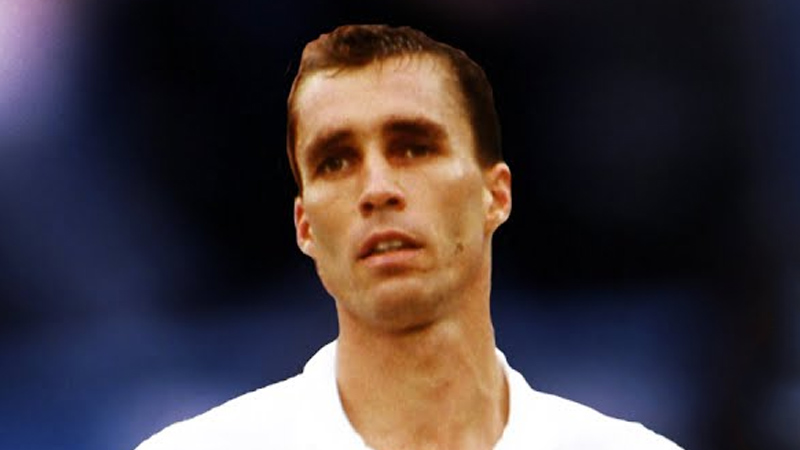
Ivan Lendl was exceptionally great, universally ranked among the all-time top 10 men’s players.
Often called the “Father of Modern Tennis,” he revolutionized the sport in the 1980s by replacing the classic touch-and-volley style with aggressive power and heavy topspin. Lendl secured eight Grand Slam titles and spent 270 weeks at World No. 1.
His relentless physical conditioning and scientific approach to preparation set the blueprint for today’s elite athletes. With 94 career titles and 19 Major finals, Lendl’s dominance remains a cornerstone of professional tennis history.
How Good Was Ivan Lendl at His Peak?
To understand Lendl’s greatness, one must look at his absolute dominance during the mid-to-late 1980s.
He was the defining force of men’s professional tennis, maintaining a level of excellence that allowed him to outlast legendary rivals like John McEnroe and Jimmy Connors.
His career was defined by a ruthless efficiency and a win percentage that rivals any modern icon.
| Category | Career Achievement | Historical Ranking |
|---|---|---|
| Grand Slam Titles | 8 (3 US Open, 3 French Open, 2 Australian Open) | Tied 9th all-time |
| Grand Slam Finals | 19 | 5th all-time |
| Total ATP Singles Titles | 94 | 4th in the Open Era |
| Weeks at World No. 1 | 270 | 4th all-time |
| Career Match Win % | 81.5% (1,068–242 record) | 5th in the Open Era |
Lendl’s peak wasn’t just about winning; it was about the crushing nature of his victories. He is the only male player in history to win more than 90% of his total matches in five separate seasons.
This “90% Rule” highlights a level of week-in, week-out reliability that few have ever replicated.
Why Is Ivan Lendl Called the Father of Modern Tennis?
Lendl did more than just win trophies; he fundamentally altered how the game is played and prepared for at the professional level. Before his emergence, the circuit relied heavily on variety, touch, and serve-and-volley tactics.
Lendl replaced this with a “power-baseline” archetype that has become the standard for the modern era.
The Power-Baseline Archetype and Tactical Innovation
Lendl introduced a brand of heavy, aggressive tennis that relied on extreme topspin from the baseline. One of his greatest contributions was the pioneering of the inside-out forehand.
By running around his backhand to blast heavy forehands from the ad-court, he dictated the flow of the point in a way that was entirely new to the sport.
Opponents described his groundstrokes as creating a “quicksand” effect; the longer a baseline rally lasted, the more inevitable his victory became, as he would eventually suffocate his opponent with pace and depth.
The Professionalization of Athletic Preparation
Beyond his on-court tactics, Lendl brought a rigorous, scientific approach to physical preparation that was foreign to the tour in the 1980s. He was the first true professional athlete in the sport, treating his body and equipment like high-performance machinery.
- Nutrition and Conditioning: He was the first to hire a dedicated personal nutritionist to optimize his physical output and incorporated structured weightlifting and strict aerobic conditioning into his daily routine.
- Equipment Customization: He rigorously customized his racket’s weight, balance, and string tension to match exact court conditions, a practice now common among top stars.
- Simulation Training: He went as far as laying down identical court surfaces at his own home estate to practice under the exact specifications of upcoming tournaments.
What Records Highlight Ivan Lendl’s Consistency?
Consistency was the hallmark of Lendl’s career. While many players have peaks and valleys, Lendl remained at the pinnacle of the sport for over a decade, setting records for longevity that even the modern “Big Three” find difficult to match.
- 8 Consecutive US Open Finals: From 1982 to 1989, Lendl reached the final of the US Open every single year. This historic streak of consistency on hard courts remains unmatched by Roger Federer, Rafael Nadal, or Novak Djokovic.
- 465 Consecutive Weeks in the Top 3: Lendl held a spot in the ATP top three for a staggering 465 consecutive weeks between 1982 and 1991. This record edges out both Roger Federer (432 weeks) and Novak Djokovic (399 weeks).
- 9 Consecutive Year-End Championship Finals: From 1980 to 1988, Lendl reached nine consecutive finals of the season-ending championships, winning five titles.
- Massive Match Volume: He is one of the few players to surpass 1,000 career match wins, finishing with a 1,068–242 record.
The Wimbledon Challenge: A Strategic Transformation
The only major void in Lendl’s legendary career was a title at Wimbledon. Despite his dominance on hard and clay courts, the grass at SW19 proved to be his most difficult obstacle.
His struggle there was not due to a lack of effort, but rather the clash between his baseline-heavy style and the low-bouncing, fast grass of that era.
Redesigning His Game for Grass
In a display of his legendary work ethic, Lendl drastically altered his baseline-oriented game into a serve-and-volley style specifically to conquer Wimbledon. He practiced for weeks on grass and adjusted his tactical approach to accommodate the surface’s demands.
This transition was a testament to his intelligence and adaptability as an athlete.
Heartbreak in Back-to-Back Finals
His efforts nearly paid off as he reached the Wimbledon finals in consecutive years. However, he fell short in both instances, losing to Boris Becker in 1986 and Pat Cash in 1987.
While he never captured the elusive title, his willingness to reinvent himself late in his career remains one of the most respected chapters of his legacy.
Ivan Lendl’s Legacy as a Championship Coach
Lendl’s “tennis engineering” mindset didn’t end with his retirement in 1994. He transitioned into coaching with the same discipline and scientific rigor he applied to his own game, becoming one of the most successful coaches in the modern era.
The Andy Murray Partnership
Lendl’s most famous coaching stint was with Andy Murray. He famously helped Murray break through his mental barriers after the British star had lost several early Grand Slam finals.
Lendl instilled his trademark mental toughness and structural discipline into Murray’s game.
Under Lendl’s guidance, Murray reached World No. 1 and won three Grand Slam titles, including two historic championships at Wimbledon—the very tournament that had eluded Lendl himself.
Mentoring the Next Generation
Even in his mid-60s, Lendl remains a highly sought-after strategist on the ATP tour. He continues to influence the game by serving as a coach and consultant for modern stars like Hubert Hurkacz.
Operating out of Florida, he runs high-intensity training sessions that help modern players refine their tactics and physical conditioning.
What Is Ivan Lendl Doing Today?
While he is no longer competing on the ATP tour, Lendl has not lost his competitive fire. He has remained active in the sporting world, finding new ways to challenge himself and contribute to the tennis community.
Transition to Competitive Pickleball
Interestingly, Lendl has fully transitioned his competitive drive into pickleball. Far from playing casually, he competes in senior tournament circuits.
He and his partner, Mikael Pernfors, recently won the Men’s Doubles title at the Pictona Challenge in the 60-69 age bracket.
While he admits he initially “hated” the sport, he has grown to love doubles pickleball because it requires less grueling running than tennis while still providing a high-level competitive outlet.
Role as a Tennis Ambassador
Lendl continues to be a respected public figure and ambassador for the sport. He frequently appears at major tournaments to honor the game’s new generation.
A highlight of his recent public appearances was being selected to present the US Open men’s singles trophy at Flushing Meadows, a fitting tribute to his historic legacy of eight consecutive finals at that event.
Common Questions About Ivan Lendl’s Greatness
Was Ivan Lendl better than John McEnroe?
While both were legends, Lendl eventually took control of their rivalry as the 1980s progressed. Lendl’s scientific approach and physical dominance allowed him to outlast the more instinctual style of McEnroe.
Lendl finished with more weeks at World No. 1 (270 vs. 170) and a higher number of total career titles.
Why did Lendl never win Wimbledon?
Lendl’s game was built on heavy topspin and baseline rallies, which were less effective on the extremely fast, low-bouncing grass of the 1980s.
Despite reaching two finals and completely changing his style to serve-and-volley, he was unable to overcome specialists like Boris Becker and Pat Cash on that specific surface.
How many Grand Slams did Ivan Lendl win?
Ivan Lendl won a total of 8 Grand Slam singles titles. His haul included three US Open titles, three French Open titles, and two Australian Open titles. He also reached an additional 11 finals, bringing his total to 19 Major final appearances.
Is Ivan Lendl still coaching?
Yes, Lendl remains an active coach and consultant. He currently works with ATP star Hubert Hurkacz, providing the same high-level strategic insights that helped Andy Murray reach the top of the rankings.
Conclusion: The Engineer of the Modern Game
Ivan Lendl’s impact on tennis is immeasurable. By combining physical power with a scientific mindset, he didn’t just win matches; he engineered the modern era of the sport.
Whether through his records, his tactical innovations, or his successful coaching career, his legacy remains a permanent fixture in the history of tennis greatness.