Watch any Formula 1 broadcast and you will hear “the paddock” mentioned again and again. Drivers stroll through it, team bosses negotiate in it, and celebrities pose for photos in it. Yet most fans have never set foot inside.
The F1 paddock is the private working village behind the pit garages, where every team, official and journalist sets up for a race weekend. It is part office, part restaurant, part newsroom and part social club. And it packs up and moves to a new country almost every other week.
In this guide, you will learn exactly what the paddock is, where the name comes from and how it differs from the pit lane.
You will also meet the people who work there and discover the realistic ways a fan can get inside. Whether you are planning your first Grand Prix trip or simply want to understand the sport more deeply, consider this your access pass.
What Is an F1 Paddock?
The F1 paddock is the secure, pass-only area directly behind the pit garages at a Grand Prix circuit. It is where the 11 teams on the 2026 grid base their hospitality units, engineering offices and logistics, and where officials, media and guests gather between sessions.
Think of it as a temporary town with a strict guest list. The public grandstands face the track, while the paddock sits behind the garages, screened from general view by fences, gates and security checkpoints.
Three features define it:
- Restricted access. Entry requires an official credential, scanned at the gates each time you go in.
- Team headquarters on the road. Each team runs its trackside operation from here, from strategy briefings to sponsor meetings.
- The social heart of the sport. Contracts are discussed, rumours start and partnerships form over coffee in the paddock.
In short, if the track is the stage, the paddock is the backstage.
Where Does the Word “Paddock” Come From?
The word is far older than motor racing. “Paddock” grew out of the Old English pearroc, meaning an enclosure, and for centuries it simply described a small fenced field near a house or stable.
Horse racing gave the word its sporting meaning. At a racecourse, the paddock is the enclosure where horses are saddled, inspected and paraded before a race, and where owners, trainers and jockeys meet.
When motor racing took off in the early 20th century, British circuits borrowed the term for the area where cars were prepared and teams gathered.
Formula 1 kept the name when the World Championship began in 1950. Over the following decades, the paddock evolved from a muddy field of vans and tents into the polished, multi-storey hospitality complex fans see today.
F1 Paddock vs Pit Lane vs Garage vs Grid
These areas sit side by side, which is why fans often mix them up. The easiest way to picture the layout is to start at the track and walk backwards: track, pit wall, pit lane, garages, then the paddock.
| Area | Where it sits | What happens there | Who gets in |
|---|---|---|---|
| Grid | On the track, at the start line | Cars line up before the start; pre-race interviews and the national anthem | Teams, drivers, officials, accredited media and selected guests |
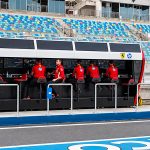
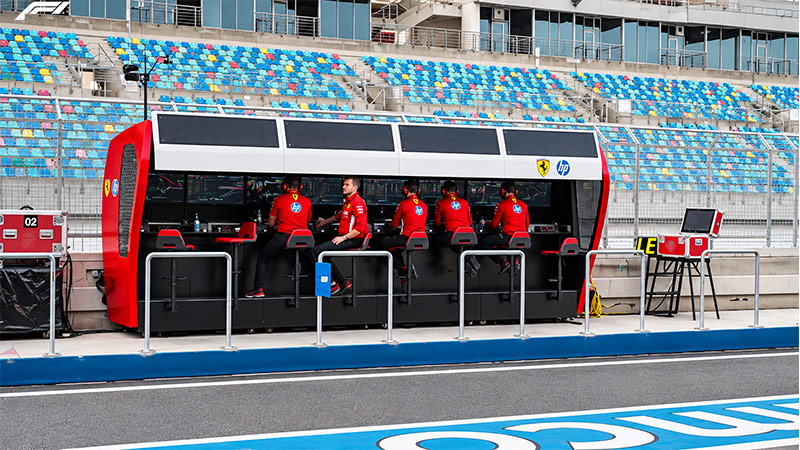
| Pit wall | Between the track and the pit lane | Engineers and strategists watch data and call race strategy | The team’s pit wall crew |
| Pit lane | The lane running alongside the main straight | Pit stops and car releases, under a speed limit (typically 80 km/h, lower at tight venues such as Monaco) | Team crews, officials and media at set times |
| Garage | The building facing the pit lane | Cars are built, set up and repaired | Team personnel and invited guests |
| Paddock | Directly behind the garages | Hospitality, offices, media work and meetings | Paddock pass holders only |
A quick rule of thumb: if someone was “in the pits”, they were near the cars. If they were “in the paddock”, they were behind the scenes, most likely in a team hospitality unit.
Inside the Paddock: What You Will Find
The paddock is laid out like a compact street, with team buildings lined up on either side and officials, media and suppliers close by. Here is what fills it.
Team motorhomes and hospitality units
At European rounds, teams transport multi-storey hospitality buildings on fleets of trucks. Crews spend several days assembling them before the cars turn a wheel, then take them apart soon after the chequered flag. At long-haul rounds, teams usually move into permanent paddock buildings provided by the circuit.
Inside, you will find meeting rooms, a kitchen serving hundreds of meals a day, private driver rooms for rest and physiotherapy, and lounges for sponsors and guests.
Engineering and logistics
Behind the glamour sit the practical spaces: freight areas for spare parts, Pirelli’s tyre fitting zone and team offices linked to the factory back home. Engineers often move between the garage and these spaces many times a day.
Media centre and media pen
Accredited journalists, photographers and broadcasters work from the media centre. Drivers speak to them in the media pen, a fenced zone where interviews run back to back after each session.
Official offices
The FIA, the sport’s governing body, has offices for the stewards and technical officials. Formula One Management, which runs the championship commercially, oversees broadcasting and event operations from nearby.
Who You Will Find in the Paddock
The paddock brings together everyone who makes a Grand Prix happen, not just the 22 drivers. On any race weekend you are likely to cross paths with:
- Drivers, moving between their team building, the garage and media duties.
- Team principals and executives, who hold meetings with partners, rivals and the sport’s leadership.
- Engineers, mechanics and support staff, from data analysts to logistics coordinators. F1’s sporting rules cap the number of operational staff who work directly on the cars.
- Officials, including FIA stewards, technical delegates and the race director’s team.
- Media, from television crews and photographers to print and digital journalists.
- Sponsors and partners, often hosting their own clients in team hospitality.
- VIP guests and celebrities, invited by teams, sponsors or the championship itself.
- Hospitality crews, the chefs, baristas and hosts who keep thousands of people fed.
This mix is what gives the paddock its unique energy. A world champion can walk past a chef, a chief executive and a junior photographer within the same minute.
A Race Weekend in the Paddock, Day by Day
The paddock’s mood shifts sharply across a standard Grand Prix weekend, from quiet construction site to packed showcase.
- Early in the week: the build. Trucks and freight arrive, motorhomes go up and garages are fitted out. Few outsiders are around, and the atmosphere is all about hard work.
- Thursday: media day. Drivers arrive for press conferences and team interviews, while cars go through technical checks. It is one of the best days to see the paddock relaxed and accessible.
- Friday: practice. Engineers chase data in the garages and debrief late into the evening. F1’s curfew rules limit how late operational staff can work during parts of the weekend.
- Saturday: qualifying. Guest numbers rise sharply as hospitality fills up. Tension builds around the garages as the session approaches.
- Sunday: race day. Crowds, celebrities and broadcasters peak before the start. Within hours of the chequered flag, crews begin packing for the next round.
Sprint weekends compress this rhythm. Friday hosts a single practice session followed by sprint qualifying, so the paddock gets busy a day earlier.
How Can Fans Get Into the F1 Paddock?
Paddock access is deliberately scarce, but it is not out of reach. These are the realistic routes, starting with the most widely available.
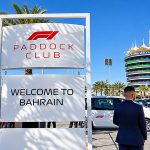
- F1 Paddock Club. This is the championship’s official premium hospitality, usually located above the pit garages. Packages typically include fine dining, track views and a guided pit lane walk, and prices often run to several thousand US dollars per person for a weekend.
- Official experience packages. F1 Experiences, the sport’s own hospitality programme, sells packages that can include paddock tours, pit lane walks and driver appearances.
- Team and sponsor invitations. Many paddock guests are clients, partners or employees of the teams and their sponsors.
- Competitions. Teams, sponsors and broadcasters regularly run prize draws for paddock passes.
- Working credentials. Team staff, officials and accredited media earn their passes through their jobs.
Some circuits also offer Thursday pit lane walks to selected ticket holders. These get you close to the garages, though not into the paddock itself.
Before you buy, check the details. A Paddock Club package does not always allow free movement through the team paddock, so confirm exactly which zones are included. Credentials are personal and non-transferable, so buy only through official channels and avoid resold passes.
Paddock Etiquette and Insider Tips
The paddock is a workplace first and a showcase second, so a little etiquette goes a long way.
- Dress smart casual. Neat, comfortable clothing fits in everywhere, and supportive shoes matter because you will walk far more than you expect.
- Keep your pass visible. Security checks are frequent, and a hidden credential slows everyone down.
- Respect working moments. Drivers and engineers are on a tight schedule, so save autograph requests for organised signing sessions.
- Ask before photographing people. Public areas are usually fine, but team buildings and garages often display confidential data.
- Arrive early. Thursday afternoons and Sunday mornings offer the best atmosphere and the most chances to spot familiar faces.
- Plan for the weather. Many paddocks have little shade, so carry water and sun protection at hot venues and a light layer at cooler ones.
Quick-Reference Paddock Glossary
Save this table for your next race weekend; it covers the terms you will hear most often.
| Term | Meaning |
|---|---|
| Accreditation | The official approval process that grants a paddock or media pass |
| Garage | The team’s working space facing the pit lane, where cars are prepared |
| Grid walk | Pre-race access to the starting grid, offered to some guests and media |
| Hospitality | Team or championship areas where guests are hosted with food and views |
| Media pen | The fenced zone where drivers give interviews after sessions |
| Motorhome | A team’s transportable multi-storey hospitality and office building |
| Paddock | The restricted area behind the garages where teams, officials and media work |
| Paddock Club | F1’s official premium hospitality, usually above the pit garages |
| Parc fermé | The controlled condition and area where cars are held under FIA rules |
| Pit lane | The speed-limited lane where pit stops take place |
| Pit wall | The stand where engineers monitor the race and call strategy |
| Scrutineering | Technical checks confirming each car meets the rules |
Conclusion
The F1 paddock is more than a car park behind the garages. It is the sport’s travelling headquarters, where engineering, business, media and hospitality meet in one tightly guarded space.
Understanding how it works, from the motorhomes and media pen to the difference between the paddock and pit lane, gives you a far richer view of every Grand Prix you watch.
For most fans, getting inside takes planning, budget or a little luck, yet the routes are real: the Paddock Club, official experience packages, partner invitations and team competitions.
Whichever path you choose, buy only through official channels and know exactly what your pass includes. Do that, and your first steps behind the barriers could become a lifelong racing memory.