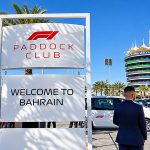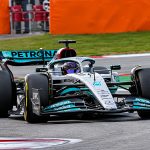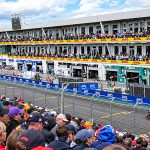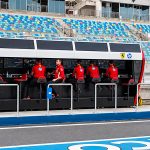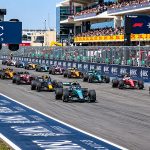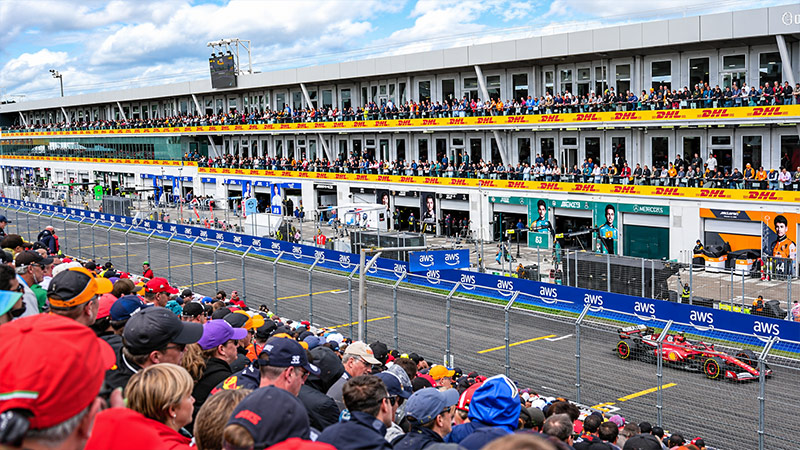
Picture this: twenty cars thunder down the main straight while you watch from a terrace above the team garages, a glass of champagne in hand.
A chef has just plated your lunch. A former race winner is explaining tyre strategy a few metres away. That is F1 hospitality, and it has become one of the most sought-after experiences in world sport.
Demand has never been stronger. Every 2026 Grand Prix had sold out by the summer break, and close to 3.7 million people attended race weekends in that stretch, up 6% on the same races a year earlier.
More than 830 million people now follow the sport, which means premium places at the track get harder to secure every season.
Whether you are planning a once-in-a-lifetime trip or entertaining your most important clients, this guide covers everything you need to know: what F1 hospitality is, how the main tiers compare, what is included, what it costs, which races deliver the best experience, and how to book safely for the 2027 season.
What Is F1 Hospitality?
F1 hospitality is a premium race-weekend package that pairs a reserved space at the circuit with food, drinks, comfort and exclusive access.
Instead of a plain grandstand seat, you get a lounge or suite, usually with a view of the track, all-day dining, an open bar and extras such as pit lane walks, track tours or paddock visits.
Think of it as the difference between watching a concert from the crowd and watching it from a private box with backstage passes. The racing is the same. Everything around it is different.
F1 hospitality vs. a standard grandstand ticket
| Feature | Grandstand ticket | Hospitality package |
|---|---|---|
| Where you sit | Open-air stand, exposed to sun and rain | Climate-controlled lounge, often with a terrace or reserved seat |
| Food and drink | Bought from vendors, often with long queues | Chef-led dining and open bar included |
| Access | Public fan zones only | Private entrances, plus pit lane walks or paddock tours with many packages |
| Comfort | Shared facilities | Private restrooms, cloakroom, live timing screens, Wi-Fi |
| Typical 3-day price | Hundreds of dollars | From about $1,000 to more than $35,000 |
Who provides F1 hospitality?
Three groups deliver almost every package you will find:
- Formula 1 itself, through F1 Experiences, the sport’s official experience, hospitality and travel programme. It runs the F1 Experiences Lounge, Champions Club, F1 Paddock Club suites and F1 Garage.
- Race promoters, the companies that stage each Grand Prix. They run their own lounges, clubs and VIP areas, often with one-day and two-day options.
- The teams, which host guests in branded suites and offer insider experiences such as garage tours.
The Main Types of F1 Hospitality, From Entry Level to VVIP
F1 hospitality works like a ladder. Each step up brings a better view, closer access and more exclusive perks. Here is how the six main tiers compare.
1. F1 Experiences Lounge
The entry point to official F1 hospitality. These trackside lounges offer good views of the action, quality food and open bars in a relaxed, social setting.
At some races, three-day packages start just above $1,000, making this the most affordable way to upgrade from a grandstand seat.
2. Circuit and promoter hospitality
Every circuit runs its own premium areas, from fan lounges to VIP garden clubs. These packages are often the best value on the calendar and frequently come with flexible one-day or two-day tickets.
The catch is demand: the cheaper promoter packages tend to sell out very quickly, so early booking matters.
3. Champions Club
The Champions Club by F1 Experiences is all-inclusive mid-tier hospitality. Expect privileged trackside views, international cuisine, open bars and talks from F1 insiders, who can include legendary drivers, F1 media personalities, team executives or the FIA safety car driver. Many packages add a pit lane walk, a guided track tour or a photo with the championship trophy.
4. F1 Paddock Club
The Paddock Club is the benchmark of F1 hospitality. At most circuits it sits directly above the team garages, overlooking the pit lane and the start-finish straight, so you see pit stops, the grid and the podium up close.
Gourmet menus and free-flowing drinks run all weekend, and many packages include a guided tour of the F1 paddock. Some suites carry a distinct identity, such as House 44, a VIP experience created with Lewis Hamilton.
5. Team hospitality
Several teams sell their own suites, usually inside the Paddock Club. Packages can include garage tours, sessions with team staff and, at selected events, appearances by drivers or senior executives.
For fans of one team, this is the closest you can get to feeling part of the operation. Prices are usually on request and sit above the standard Paddock Club.
6. F1 Garage
The most exclusive hospitality in the sport. F1 Garage places you inside a pit garage next to the teams, with menus from Gordon Ramsay and his executive chefs, a three-day pass to the F1 paddock and, at some races, access to the podium celebration.
It is offered only at selected races, and three-day prices typically start around $25,000 to $30,000.
A special case: Monaco
Monaco plays by its own rules. Beyond the Paddock Club, guests can watch from harbour yachts, private balconies and terraces overlooking the circuit. These options are priced individually and often sell long before the season begins.
What Is Included in an F1 Hospitality Package?
Inclusions vary by race and tier, but most packages are built from the same core elements:
- Views: a terrace, balcony or reserved seat facing the track, plus live timing and TV screens indoors so you never miss a moment.
- Food: breakfast, lunch and afternoon snacks, ranging from quality buffets in lounges to multi-course menus in the Paddock Club and F1 Garage.
- Drinks: an open bar with champagne, wine, beer, cocktails and soft drinks throughout the day.
- Access experiences: pit lane walks, guided track tours on an open-top truck, grid walks, paddock tours and photos with the championship trophy.
- Insider content: talks and Q&A sessions with former drivers, broadcasters and team personnel.
- Comfort: air conditioning, private restrooms, cloakrooms and a calm space away from the crowds.
- Extras: welcome gifts, lanyards and, with many official packages, optional hotels and transfers.
What is usually not included
Read the fine print before you buy. Most packages exclude flights, hotels, local transport and parking unless they are sold as a bundle. A meeting with a current driver is never guaranteed, even at the highest tiers. Some lounges also have no direct track view, so check whether a reserved grandstand seat comes with your package.
How Much Does F1 Hospitality Cost?
F1 hospitality costs from about $1,000 to more than $35,000 per person for a three-day weekend. Where you land on that scale depends on the tier and, just as much, on the race. The table below shows typical 2026 starting prices.
| Tier | Typical 3-day price per person (USD) | Best for |
|---|---|---|
| F1 Experiences Lounge | From about $1,000 | First-time upgrades and groups of friends |
| Circuit and promoter hospitality | $2,000 to $5,000 | Value seekers who book early |
| Champions Club | $3,000 to $6,000 | Fans who want insider talks and premium dining |
| F1 Paddock Club | $5,500 to $15,000 | Client entertainment and bucket-list trips |
| Team suites | On request, usually above Paddock Club | Devoted fans of one team |
| F1 Garage | $25,000 to $35,000+ | The ultimate VVIP experience |
What drives the price?
- The race itself. Demand varies hugely. A three-day Paddock Club pass at the Azerbaijan Grand Prix started around $5,500, while Las Vegas started around $15,000. That is nearly three times the price for the same brand of hospitality. Monaco, Silverstone and Singapore are often priced on request.
- Location of the suite. Pit lane and start-finish views command the highest prices.
- Number of days. One-day and two-day passes, where available, cut the cost sharply. Sunday is usually the most expensive day.
- Inclusions. Paddock tours, podium access and celebrity chefs all add value and cost.
- Timing. The cheapest options sell first. Early-bird discounts still exist, but they are becoming rarer.
Plan the full trip budget
The package is only part of the bill. Hotel rates in host cities climb sharply on race weekends, so add flights, accommodation, transfers and personal spending before you commit. For a long-haul race, travel and hotels can add several thousand dollars per person to the ticket price.
Who Is F1 Hospitality For?
F1 hospitality suits anyone who wants comfort, access and a memorable day, but four groups get the most from it.
Corporate hosts
For businesses, a Grand Prix offers something a dinner or golf day cannot: three full days of shared excitement with natural breaks for conversation between sessions. The audience is broad, too. Women make up 42% of F1’s audience and three-quarters of its new fans, and 43% of the fanbase is under 35. That makes a race weekend relevant to clients, partners and teams across generations. Many official providers also offer private suites and dedicated corporate packages for larger groups.
Dedicated fans
If you have followed F1 for years, hospitality turns watching into understanding. Pit lane walks, paddock tours and talks from insiders reveal the detail that television cannot show. The Champions Club and Paddock Club are popular choices for a true bucket-list weekend.
Milestone celebrations
Birthdays, anniversaries and retirements deserve something special. Destination races such as Monaco, Singapore and Abu Dhabi combine world-class racing with a luxury holiday.
First-time race-goers
A first Grand Prix can be overwhelming, with large crowds, long walks and unpredictable weather. Hospitality removes most of that stress, giving newcomers a comfortable base, clear views and expert commentary to follow the action.
The Best F1 Races for Hospitality in 2027
The 2027 season features 24 Grands Prix in 22 countries, running from Bahrain on 12 to 14 March to Abu Dhabi on 10 to 12 December. A record 10 races will host Sprint events, which means more competitive sessions for hospitality guests to enjoy across the weekend. Portugal and Turkey return to the calendar, while the Dutch Grand Prix and Barcelona drop off.
These races stand out for premium guests:
| Race | Why it stands out | Hospitality tip |
|---|---|---|
| Monaco | Harbour yachts, balconies and the most glamorous setting in sport. Hosts its first ever Sprint in 2027. | Paddock Club is often priced on request. Book as early as possible. |
| Great Britain (Silverstone) | The home of British motor racing, with a record 564,000 crowd in 2026. A Sprint weekend in 2027. | Hospitality spares you the busiest queues and walks of the weekend. |
| Singapore | A spectacular night race around Marina Bay, with concerts after the action. | Air-conditioned suites make a real difference in the tropical humidity. |
| Las Vegas | A night race on the Strip, with some of the most extravagant packages on the calendar. | Expect the highest Paddock Club prices, from around $15,000 in 2026. |
| Abu Dhabi | The twilight season finale at Yas Marina, often where titles are decided. A Sprint weekend in 2027. | Combine the race with a winter holiday in the UAE. |
| Italy (Monza) | The Temple of Speed and its passionate tifosi. A Sprint weekend in 2027. | Look for packages with podium views for the famous track invasion. |
| Japan (Suzuka) | A driver favourite with some of the most dedicated fans in the world. Attendance rose 18% in 2026. | Demand is rising fast, so book soon after packages go on sale. |
If budget is your priority, races such as Azerbaijan, China and Austria have historically offered some of the lowest Paddock Club starting prices on the calendar.
How to Choose and Book F1 Hospitality Safely
The right package depends on your goal, your budget and the race. Follow these steps to make a confident decision.
- Define your purpose. Client entertainment calls for privacy, space to talk and reliable service. A personal trip may favour insider access or a lively atmosphere.
- Set a total budget. Include the package, flights, hotels, transfers and spending money, not just the ticket price.
- Shortlist your races. Weigh climate, time zone, travel distance and the local experience around the race, not only the circuit.
- Check the view. Ask whether the lounge faces the track, the pit lane or only screens, and whether a reserved grandstand seat is included.
- Choose the number of days. A one-day or two-day pass can stretch your budget, while a full three-day package gives the complete experience.
- Compare inclusions line by line. Look for paddock tours, pit lane walks, transport and the drinks policy.
- Book early. Affordable packages sell out first, and the most popular races can sell out months in advance.
Buy only through official channels
At these prices, where you buy matters as much as what you buy. The safest options are:
- F1 Experiences, the official experience, hospitality and travel programme of Formula 1, and its authorised sales agents.
- The race promoter, through the circuit’s own ticketing.
- The teams, for team-branded packages.
- Official resale platforms endorsed by the promoter, if a race is sold out.
Paddock Club passes are often physical tickets that need delivery or collection at the circuit, and some are registered to a name with ID checks at entry. A ticket bought from an unofficial reseller may not get you through the gate.
Red flags to watch for
- Prices far below the published market rate
- Sellers on social media or general marketplaces
- Requests for bank transfers to individuals
- No clear company details, refund terms or customer support
- Vague descriptions of the view, inclusions or location of the suite
Conclusion
F1 hospitality turns a race weekend into a complete experience. You trade queues and crowded stands for great views, fine food, open bars and access most fans never see. The right tier depends on your goal and budget.
The F1 Experiences Lounge and circuit clubs offer a smart first step. Champions Club adds insider talks and premium dining.
The Paddock Club remains the benchmark, while F1 Garage and team suites sit at the top. With 2026 races selling out and 10 Sprint weekends on the 2027 calendar, demand will stay high.