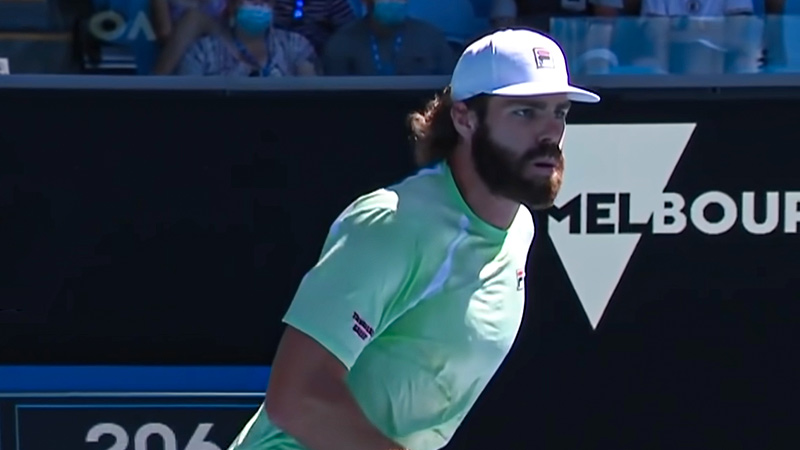
Yes, Reilly Opelka does play doubles on the ATP Tour, though he participates selectively to enhance his singles performance and maintain match rhythm during long tournament weeks.
While he is primarily recognized as a towering singles threat, Opelka holds a professional career record of 21–25 and secured a notable ATP doubles title at the 2021 Atlanta Open.
His participation is often viewed as a professional paradox; he is simultaneously a successful occasional competitor and the discipline’s most vocal critic, frequently advocating for the reduction of doubles prize money and the restructuring of the professional circuit to benefit singles players.
Analyzing the Reilly Opelka Doubles Statistics
To understand the scope of his secondary discipline, one must look at the data points that define his “part-time” career on the doubles court. Despite not playing a full schedule, his efficiency in specific events has yielded significant results.
| Metric | Achievement / Statistic |
|---|---|
| Career Record | 21–25 |
| ATP Doubles Titles | 1 (2021 Atlanta Open) |
| Career-High Ranking | No. 38 (Also reported as No. 89) |
| Grand Slam Best Result | 2nd Round (2017 US Open) |
| Laver Cup Record | 0–2 (Representing Team World) |
Major Career Milestones: The 2021 Atlanta Open Title
The pinnacle of his doubles career occurred during the North American hardcourt swing in 2021. This victory demonstrated that when paired with a high-caliber partner, his serve-dominant game can dismantle established doubles specialist teams.
A Formidable Partnership with Jannik Sinner
At the 2021 Atlanta Open, an ATP 250 tournament, Opelka teamed up with the Italian superstar Jannik Sinner. The duo combined Opelka’s massive serve and net presence with Sinner’s exceptional baseline coverage and return game.
Throughout the draw, they showcased a unique on-court chemistry that allowed them to navigate tight sets against veteran pairs.
In the final, they faced the established American-Australian tandem of Steve Johnson and Jordan Thompson, securing the championship in a hard-fought battle.
Breaking into the Doubles Elite Rankings
This title run was not just a singular achievement but a catalyst for his standing in the professional rankings. The points garnered from the Atlanta victory propelled him into the doubles Top 100 for the first time in his career.
While reports on his peak ranking vary—with some data citing No. 89 and others No. 38—the impact of this win solidified his ability to compete at the highest level of the game when he chooses to enter the draw.
Why Does Reilly Opelka Play Doubles if He Criticizes It?
It is a valid question for many fans: why does a player who frequently “blasts” the doubles circuit continue to enter its draws? The answer lies in a blend of tactical development and interpersonal relationships on the tour.
Developmental Benefits for Net Play
For a player standing 6’11”, the transition from the baseline to the net is a critical component of a winning strategy. Opelka utilizes doubles draws as a low-pressure environment to practice his “net rush” and sharpen his volleys.
The increased volume of serve-and-volley points in a doubles match provides a level of specific practice that a standard training session cannot replicate.
By staying in the rhythm of match play through doubles, he ensures his reflexes remain sharp for his primary singles campaign.
Social Connection and Mental Reset
The professional tour can be an isolating environment, and Opelka often uses doubles as a social outlet. He strictly enters draws with close friends from the singles tour rather than seeking out high-ranking doubles specialists.
This allows him to stay loose and enjoy the competitive environment with his “inner circle,” such as Jannik Sinner, Tommy Paul, and Taylor Fritz. This mental reset can be vital during grueling weeks at Masters 1000 events or Grand Slams.
The Controversy: Public Critique of Doubles Specialists
Despite his own success in the format, Opelka has garnered significant headlines for his outspoken and often harsh criticism of the dedicated doubles circuit. He is widely considered the most vocal critic of the discipline on the modern tour.
Challenging the Talent Level of Dedicated Specialists
The core of his argument rests on the idea of “talent” and marketability. Opelka has frequently stated on social media that modern doubles draws fail to attract large crowds or television viewership because the dedicated specialists lack the same level of talent found in elite singles players.
He argues that the public is more interested in seeing singles stars cross over into doubles rather than watching pairs who specialize solely in the four-player format.
Proposals for ATP Tour Structural Reform
His critiques extend beyond social media commentary and into the realm of structural change. Opelka actively supports ATP proposals aimed at downsizing doubles brackets and reallocating prize money to singles competitors.
He believes that the current financial distribution should favor those who carry the most commercial weight—the singles players. This stance has created a polarized environment, placing him at odds with many of the world’s top-ranked doubles specialists.
Primary Partners: The Circle of Friends
Opelka’s choice of partners is a direct reflection of his philosophy on the game. He prioritizes camaraderie and singles-style play over tactical doubles specialization.
- Jannik Sinner: His most successful partner to date. Beyond their Atlanta title, the two share a close off-court friendship that translates into a relaxed and effective on-court dynamic.
- Taylor Fritz: A partnership rooted in their development years. Together, they won the prestigious USTA Boys’ 18s National Doubles Championship before both transitioned to the professional ranks.
- Tommy Paul: A frequent collaborator during the North American hardcourt swings. The two Americans often team up at events like the Citi Open or the Canadian Open to maintain match fitness.
2026 Indian Wells: A Recent Return to the Doubles Court
The “Opelka-Sinner” tandem returned to the spotlight in March 2026, generating significant interest from fans and media alike. Their appearance at the BNP Paribas Open served as a reminder of the drawing power that top singles stars bring to the doubles court.
A High-Profile Wildcard Entry
Accepting a wildcard entry, Opelka and Sinner reunited for the 2026 Indian Wells event. The announcement of their pairing immediately became one of the most anticipated storylines of the first week.
For Opelka, this was an opportunity to test his game on one of the biggest stages in tennis after periods of focused singles play or injury recovery.
Testing the Limits Against the World Number Ones
The draw was not kind to the wildcard duo, as they were pitted against the world No. 1 tandem of Marcel Granollers and Horacio Zeballos in the opening round.
Despite the vast difference in doubles experience, Opelka and Sinner put up a formidable fight, eventually falling 4–6, 4–6.
The match underscored Opelka’s argument: even a “part-time” doubles player with elite singles skills can compete neck-and-neck with the best specialists in the world.
Frequently Asked Questions About Reilly Opelka’s Doubles Career
Has Reilly Opelka ever won a Grand Slam title in doubles?
No, his best result in a Grand Slam doubles draw was reaching the second round of the 2017 US Open. He generally prioritizes his physical energy for singles matches during the two-week duration of a Major.
What is the “Reilly Opelka Doubles Paradox”?
This refers to the irony that Opelka is a successful ATP doubles champion (winning the 2021 Atlanta Open) while simultaneously being the tour’s most vocal advocate for defunding and downsizing the doubles circuit.
Why did Opelka and Sinner play together at Indian Wells in 2026?
They accepted a wildcard to reunite their popular partnership. For both players, it served as a high-intensity practice session for their net games and a way to enjoy the tournament week as close friends.
Does he play with doubles specialists?
Rarely. Opelka typically chooses to play with close friends from the singles tour, such as Tommy Paul and Taylor Fritz, rather than professional doubles specialists.
What does Opelka want to change about the ATP doubles circuit?
He has publicly supported proposals to reduce the size of doubles draws and move a portion of the tournament prize money over to the singles side of the bracket.
The Future of the Giant on the Doubles Court
While Reilly Opelka’s future in doubles remains secondary to his singles aspirations, his impact on the discipline is undeniable.
Whether he is capturing titles in Atlanta or sparking heated debates on social media about the “talent gap” in professional tennis, he remains a central figure in the conversation.
For fans of the sport, watching Opelka on the doubles court offers a unique glimpse into a more relaxed version of the American giant.
It provides a platform to witness his massive serve and improving net game in a format that he clearly masters, even if he remains its harshest critic.
As long as he continues to receive wildcards and maintain high-profile friendships with stars like Jannik Sinner, the tennis world can expect to see the “Opelka Paradox” continue to unfold on the world’s biggest stages.