
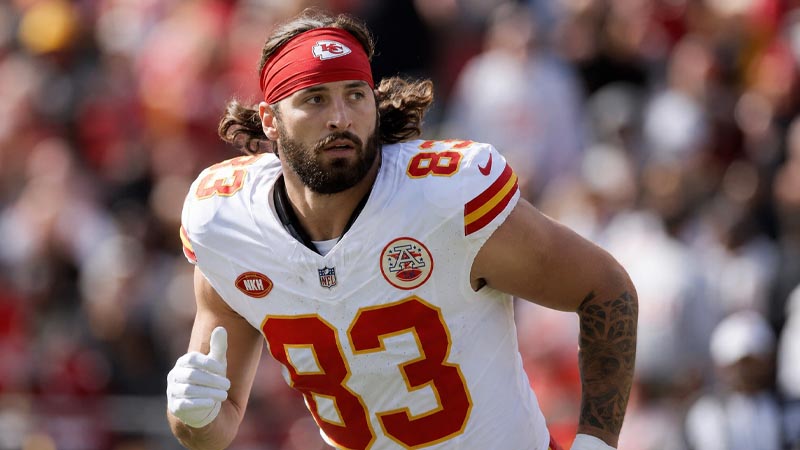
In the high-stakes environment of the National Football League, every player faces immense physical and mental pressure. However, for Kansas City Chiefs tight end Noah Gray, the challenge extends beyond the defensive line.
Gray is one of a select group of professional athletes competing at the highest level while managing Type 1 Diabetes (T1D).
His story is not just one of athletic talent, but of the rigorous discipline required to balance a demanding professional career with a complex autoimmune condition.
The Sudden Shift: Diagnosis at Duke University
The transition from high school to collegiate athletics is notoriously difficult, but for Noah Gray, his freshman year at Duke University brought a challenge he never anticipated.
At age 18, while most of his peers were focused solely on playbooks and academics, Gray began experiencing alarming physical changes that signaled a significant health crisis.
The onset of Type 1 Diabetes often presents with a cluster of symptoms that can be easily mistaken for the physical toll of intense training. For Gray, the warning signs were undeniable:
- Extreme Fatigue: A level of exhaustion that went beyond the typical recovery needs of a college athlete.
- Rapid Weight Loss: An unexplained and sudden drop in body mass, which is a critical red flag for T1D as the body begins to burn fat and muscle for energy.
- Vision Changes: Blurred or fluctuating vision caused by high blood sugar levels affecting the lenses of the eyes.
These symptoms culminated in a formal diagnosis of Type 1 Diabetes during his first year at Duke. For an athlete whose body is his primary tool for success, a chronic diagnosis of this nature could have been a career-ending obstacle. Instead, it became the foundation for a new level of professional discipline.
| Early Warning Signs Experienced by Noah Gray | Physiological Impact on Athletic Performance |
|---|---|
| Extreme Fatigue | Significant reduction in aerobic capacity and recovery speed. |
| Significant Weight Loss | Loss of lean muscle mass, essential for the tight end position. |
| Vision Fluctuations | Impairment in hand-eye coordination and reacting to high-velocity passes. |
The Management Playbook: Precision in Professional Sports
Managing Type 1 Diabetes as an NFL athlete requires a level of precision that mirrors a complex offensive scheme.
Unlike Type 2 Diabetes, which can sometimes be managed through lifestyle changes, T1D is an autoimmune condition where the pancreas produces little to no insulin. For Gray, this means he must manually assume the role of his pancreas every hour of every day.
His routine is built on a foundation of modern medical technology and meticulous planning. To maintain peak performance on the field, Gray utilizes a multi-faceted approach to blood sugar management:
- Continuous Glucose Monitors (CGMs): These devices provide real-time data on his blood sugar levels, allowing him to see trends and make adjustments before levels become dangerous.
- Insulin Pumps: These wearable devices deliver a steady stream of insulin, which can be adjusted based on his activity level.
- Manual Injections: In some instances, Gray utilizes traditional injections to ensure his insulin levels are tailored specifically to the immediate demands of his athletic schedule.
The “athletic schedule” of an NFL player is incredibly volatile. Game days involve high-intensity bursts of energy, adrenaline spikes, and varying levels of physical stress, all of which can cause blood sugar to fluctuate wildly.
Gray must balance his carbohydrate intake and insulin dosage to ensure he neither enters a state of hypoglycemia (low blood sugar), which could cause dizziness or fainting, nor hyperglycemia (high blood sugar), which can lead to cramping and fatigue.
Balancing the Biological Ledger: Game Day Logistics
On Sundays, the focus for the Kansas City Chiefs is on the scoreboard. For Noah Gray, there is a second scoreboard that is equally important: his glucose levels.
The physical demands of the tight end position—blocking 300-pound linemen, sprinting downfield, and taking high-impact hits—require a constant supply of energy.
The following table outlines the strategic adjustments required to manage T1D during different phases of the NFL season:
| Phase of Play | T1D Management Strategy |
|---|---|
| Off-Season Training | Focusing on base metabolic rates and adjusting insulin for high-volume lifting. |
| Training Camp | Managing extreme heat and humidity, which can accelerate insulin absorption. |
| Pre-Game Preparation | Precise “carb-loading” and insulin titration based on the projected snap count. |
| Live Game Action | Constant monitoring via CGM; quick-acting glucose available on the sidelines. |
| Post-Game Recovery | Addressing delayed hypoglycemia that can occur hours after intense exertion. |
Beyond the Field: Advocacy and Mentorship
Noah Gray’s impact extends far beyond the yardage he gains for the Chiefs. He has embraced his platform to become a leading voice for the T1D community.
By being visible on one of the world’s largest athletic stages, he provides a powerful counter-narrative to the idea that a chronic illness must limit one’s aspirations.
Gray works closely with Breakthrough T1D (formerly known as the Juvenile Diabetes Research Foundation or JDRF). His involvement is focused on two primary pillars:
- Mentorship: Gray spends time interacting with and mentoring children who are newly diagnosed with Type 1 Diabetes.
- Inspiration: He serves as a living example that the “discipline” required for T1D can actually enhance the discipline required for professional success.
For a child diagnosed at age 7 or 8, seeing a professional athlete like Noah Gray wear a CGM on his arm while catching passes in the NFL is transformative.
It shifts the perception of the disease from a disability to a manageable condition that requires elite-level management skills.
The Psychological Edge of Chronic Management
While the physical challenges of T1D are well-documented, the psychological resilience required is often overlooked. To succeed in the NFL with T1D, an athlete must possess a high degree of emotional intelligence and self-awareness.
- Constant Vigilance: There are no “off days” with T1D. This constant state of awareness can translate into a heightened sense of focus on the football field.
- Adaptability: When a blood sugar reading is unexpected, Gray must adapt instantly. This mirrors the need for “in-game adjustments” that define great NFL players.
- Accountability: Managing a chronic condition requires 100% personal accountability, a trait that is highly valued in the Chiefs’ locker room.
Conclusion: A Standard of Excellence
Noah Gray’s career is a testament to the fact that medical challenges do not define an individual’s potential; rather, the response to those challenges does.
By integrating advanced medical technology with the rigorous demands of the NFL, Gray has established a blueprint for other athletes living with Type 1 Diabetes.
His journey from a symptomatic freshman at Duke to a key contributor for the Kansas City Chiefs serves as a powerful reminder that with the right tools, discipline, and support system, greatness is achievable regardless of the obstacles.
As he continues to perform at an elite level, Gray remains a beacon of hope for the millions of individuals managing T1D, proving every Sunday that they too can compete in whatever “arena” they choose.






