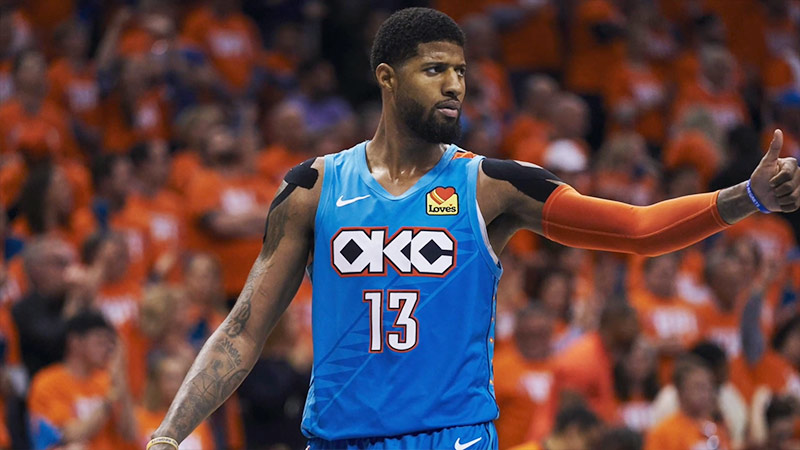
Yes, Paul George underwent two separate shoulder surgeries in 2019 to repair structural damage in both arms. These operations addressed a partial-thickness rotator cuff tear in his right shoulder and a labrum tear in his left shoulder.
Despite playing at an MVP level for the Oklahoma City Thunder, the structural instability eventually limited his range of motion.
Following these procedures, George was traded to the LA Clippers and underwent a six-month rehabilitation process before debuting in November 2019. Today, he continues to perform at an elite level, demonstrating remarkable physical resilience.
Medical Breakdown of the 2019 Double Shoulder Procedures
To understand the severity of these procedures, one must look at the specific anatomical repairs performed on each joint. Both surgeries were essential for restoring the stability required for high-impact professional basketball.
Repairing the Right Shoulder Supraspinatus Tendon
On May 7, 2019, George underwent the first of his two procedures to address a partial-thickness supraspinatus tendon tear in his right shoulder.
The supraspinatus is a critical component of the rotator cuff, responsible for the initial stages of arm abduction and stabilizing the humerus within the shoulder socket.
The surgical intervention involved anchoring the torn tissue back to the humerus bone to ensure the joint could withstand the torque of shooting and defensive maneuvering.
This procedure was necessitated by an injury that had been nagging him for months, significantly hindering his ability to perform at peak capacity.
Stabilizing the Left Shoulder Glenoid Labrum
Roughly five weeks after the first operation, on June 11, 2019, George returned to the operating room for a second successful procedure. This surgery focused on the left shoulder, where he had sustained a small tear in the glenoid labrum.
The labrum is a cuff of cartilage that deepens the shoulder socket, providing a stable base for the arm bone.
Unlike muscle tissue, joint cartilage has limited blood flow, which naturally complicates the healing process and necessitates a more cautious rehabilitation timeline. The arthroscopic repair aimed to stabilize the joint and prevent recurring subluxations or dislocations.
The Biological Challenges of Joint Cartilage Healing
The dual nature of these recoveries presented a unique challenge for George’s medical team. Because the labrum and rotator cuff serve different mechanical functions, the rehabilitation protocols had to be meticulously phased.
The limited vascularity of the labrum meant that the left shoulder required a longer period of immobilization compared to the right.
George spent a significant portion of the 2019 offseason with his arms in braces, unable to engage in traditional basketball activities while the cellular repair processes took hold in the connective tissues.
Origin of Injury: Playing Through Structural Instability
These injuries did not occur in isolation but were the result of accumulated stress during a grueling competitive season. Analyzing the timeline reveals how George managed the pain before finally opting for surgery.
The February 2019 Catalyst Against Denver
The initial trauma to George’s right shoulder occurred on February 26, 2019, during a regular-season game against the Denver Nuggets.
At the time, George was in the midst of one of the most statistically impressive seasons of his career, emerging as a finalist for the league’s Most Valuable Player award.
The impact during the Nuggets game caused the initial tear, but the competitive stakes led George to attempt to play through the injury rather than seeking immediate surgical intervention.
Utilization of Kinesiology Tape and Pain Management
As the 2018–19 season progressed, observers noted George’s frequent use of black kinesiology tape (KT tape) on his shoulders. This taping was a visible indicator of the internal struggle to maintain joint stability.
The tape provides external support to the muscles and helps facilitate better proprioception, but it cannot fix the underlying structural damage of a torn tendon or labrum.
George utilized these therapeutic aids to navigate the final months of the season, showing immense mental fortitude while his physical capabilities were being compromised.
The Final Week Collapse and Playoff Performance
By the final week of the regular season, the condition of his right shoulder had deteriorated to a critical point. Reports indicated that George was essentially unable to lift his arm during the closing days of the schedule.
Despite this extreme limitation, he participated in the 2019 NBA Playoffs, where the Thunder eventually suffered a first-round exit.
The structural instability in both shoulders was a primary factor in his decreased efficiency during the postseason, as the mechanical requirements of shooting and rebounding became nearly impossible to fulfill without severe pain.
Rehabilitation Timeline and the Clippers Era Transition
The recovery period coincided with one of the most significant shifts in George’s career. While his body healed, his professional landscape changed entirely through a high-profile move to Los Angeles.
- The Historic Trade: In July 2019, while still recovering from his dual operations and wearing protective braces, George requested and received a trade to the LA Clippers. This move was part of a blockbuster deal involving a record-breaking haul of draft picks.
- Missing Training Camp: The extensive nature of the labrum recovery meant that George was forced to miss the entirety of the 2019 Clippers training camp and the preseason schedule.
- Six-Month Recovery Window: From the date of his final surgery in June, George underwent nearly six months of intensive physical therapy to regain full range of motion and strength in both upper extremities.
- The November Debut: George finally returned to official game action on November 14, 2019. He missed the first 11 games of the 2019–20 regular season as the team prioritized his long-term health over immediate availability.
- Franchise Integration: His return marked a successful transition to a new team system, proving that his shoulders could once again handle the rigors of a full NBA workload.
A Broader History of Resilience: 2014 to 2025
While the 2019 surgeries were pivotal, they represent only a portion of George’s extensive medical history. His ability to return from catastrophic lower-body injuries is equally significant to his athletic narrative.
The 2014 Compound Tibia and Fibula Fracture
The most well-known injury in George’s career took place on August 1, 2014, during a televised Team USA scrimmage.
While attempting to contest a shot, he landed awkwardly against the basket stanchion, resulting in a horrific open fracture of both the tibia and fibula in his right leg.
This injury required emergent orthopedic surgery to insert a titanium rod into his leg. Many analysts questioned if he would ever return to elite form, yet George successfully transitioned back to an All-Star level, setting a precedent for his future recoveries.
Addressing Modern Ailments: Knee and Groin Recovery
Even late into his career, George has continued to face significant physical hurdles. In July 2025, he underwent arthroscopic surgery on his left knee to correct a mechanical issue sustained during an offseason workout.
This procedure, combined with persistent groin and adductor muscle strains, led to a 259-day absence from game action. He was also treated with therapeutic injections to manage a left adductor strain during his first year in Philadelphia.
Utilizing Unconventional Recovery Windows
Interestingly, a 25-game suspension served during the 2025–26 season provided George with an unexpected and extended window for physical restoration.
This period away from the high-impact environment of the court allowed his body to fully heal from the lingering knee and adductor ailments that had bothered him earlier in the year.
When he finally returned to the lineup on March 25, 2026, he appeared at full strength, eventually leading his team through a competitive postseason run.
Frequently Asked Questions Regarding George’s Health
How many surgeries has Paul George had?
Throughout his career, George has undergone four major surgical procedures: two shoulder operations in 2019, an orthopedic leg surgery in 2014, and an arthroscopic knee surgery in 2025.
Is Paul George currently healthy?
Yes, as of his most recent activities with the Philadelphia 76ers, George is medically cleared and fully healthy. He has successfully moved past his previous joint and muscle issues.
What caused his 2025 absence?
His 2025 sidelining was due to a combination of an offseason knee procedure and a left adductor (groin) muscle strain that required therapeutic injections.
Did he ever suffer an elbow injury?
Yes, during his tenure with the LA Clippers in the 2021–22 season, George dealt with a torn ulnar collateral ligament (UCL) in his right elbow, which sidelined him for approximately three months.
How does he manage minor injuries?
George has a history of playing through various soft tissue injuries, including hamstring strains and calf contusions, often utilizing splits or specialized taping to stay on the court.
The Legacy of Elite Orthopedic Recovery in Pro Sports
Paul George’s career serves as a masterclass in modern sports medicine and athlete resilience. His journey from the catastrophic leg fracture of 2014 through the double shoulder surgeries of 2019 and into the knee procedures of 2025 highlights the evolving capabilities of orthopedic science.
Each return to All-NBA or All-Star levels of play reaffirms that structural damage, when addressed with precise surgical intervention and disciplined rehabilitation, does not have to be career-ending.
For franchises and fans alike, George remains the gold standard for navigating the complex intersection of elite performance and physical vulnerability.
His current healthy status is a testament to nearly a decade of consistent medical management and personal dedication to the craft of recovery.