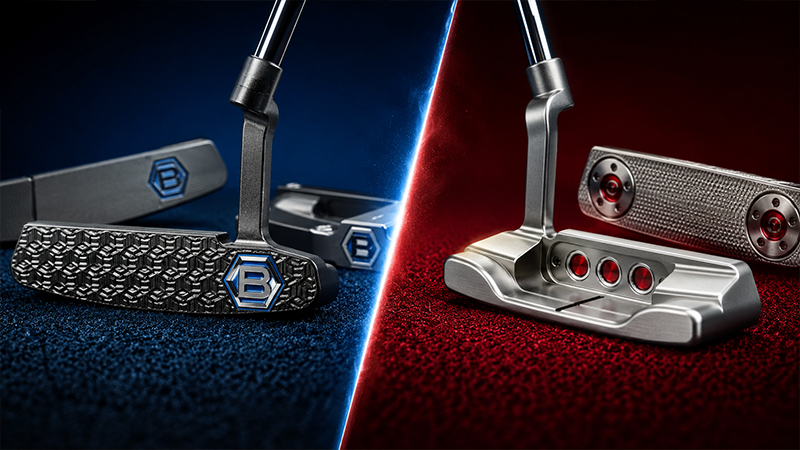
The selection of a high-end putter often comes down to a choice between two industry leaders: Bettinardi and Scotty Cameron.
Both brands occupy the premium tier of the market, offering milled designs that are considered the gold standard for serious golfers.
However, choosing between them requires an understanding of how they differ in feedback, sensory experience, and technical application.
The Role of the Premium Putter in Golf
Before comparing specific models, it is necessary to acknowledge that a high price point does not guarantee better performance on the green.
Both Bettinardi and Scotty Cameron are frequently described as overpriced or overrated by some segments of the golfing community. The consensus among experienced users is that these tools are only as effective as the person using them.
A premium putter may enhance a good stroke, but it will not fundamentally correct a poor one. In fact, even with these high-end options, golfers still experience common frustrations like three-putting or, in extreme cases, five-putting.
Sensory Comparison: Feel and Sound
One of the most significant distinctions between these two brands is the sensory feedback provided at impact.
The Softness Hierarchy
Golfers who prioritize a “soft” feel often lean toward Scotty Cameron. Within the hierarchy of milled putters, Scotty Cameron is frequently cited as producing the softest feel at impact. This is particularly true for models that utilize face inserts, which provide a more muted sensation.
In contrast, Bettinardi putters generally offer a firmer feel. Users have compared the sensation of a Bettinardi to that of a Toulon, noting that it is less muted than a Scotty Cameron but softer than a Rife.
For golfers who prefer a “clickier” sound and more immediate feedback through their hands, the firmer milling of a Bettinardi is often preferred.
Auditory Feedback
For many players, the “feel” of a putter is actually determined by the sound it makes. This is known as “ear-based” feedback. Because Bettinardi putters tend to be firmer, they produce a more distinct sound that can help a player diagnose the quality of their strike.
One of the most praised features of the Bettinardi line is this precise feedback, which tells the golfer exactly why a putt was missed or when it was struck perfectly.
Technical Performance and Weighting
While both brands produce exceptional equipment, their approaches to weighting and face technology differ.
Face Milling and Inserts
A common point of comparison is the face construction. For example, some Scotty Cameron models, such as the Squareback 2, utilize face inserts.
Some users find that a fully milled face, like those found on most Bettinardi models, provides a more consistent feel and superior weighting compared to these insert-based designs.
The Success of the Queen B Series
The Bettinardi Queen B series, specifically the QB6, is often highlighted for its performance. Users have reported improved success with the QB6, particularly on putts outside of five feet, when compared to traditional Scotty Cameron models like the California Monterey. The weighting of the Queen B series is frequently cited as a reason for this improved performance.
Specialized Designs: Armlock Putters
Bettinardi has also carved out a specific niche in the “armlock” putter market. Golfers looking for this specific style of putting often find Bettinardi to be a more innovative or committed provider in this category compared to the standard offerings from Scotty Cameron.
Market Presence and the Importance of Fitting
While technical specifications are important, the practical reality of buying a putter often comes down to what is available for testing and fitting.
Accessibility and Fitting
Scotty Cameron, being a Titleist brand, enjoys much wider distribution. This makes it significantly easier for the average golfer to find a professional fitting.
Having access to various lengths and models in person is a major advantage for Scotty Cameron. In many regions, Bettinardi putters are less common in retail stores, which can make it difficult for golfers to get a proper fitting before purchasing.
Aesthetics and Longevity
Both brands have loyal followers who stay with a single putter for decades. Some users have gamed the same Scotty Cameron for over 20 years without feeling the need to switch.
On the other hand, the unique aesthetic of Bettinardi—such as the honeycomb face milling—appeals to those looking for something different from the traditional look of a Scotty.
Decision Factors: Which Brand Should You Choose?
Choosing between these two brands should not be based on which is “better,” but which suits your specific needs.
- Choose Scotty Cameron if: You prefer a very soft, muted feel at impact, require a wide variety of models for a local fitting, or prefer the prestige and availability associated with the Titleist brand.
- Choose Bettinardi if: You want clear, informative feedback to help diagnose your stroke, prefer a firmer or “clickier” feel, or are interested in specialized options like the Queen B series or armlock designs.
Conclusion
The Bettinardi vs. Scotty Cameron debate is a matter of personal preference regarding feel, sound, and visual appeal. Both brands provide premium tools that can help a golfer with a consistent stroke achieve better results.
However, neither brand is a substitute for skill, and both have been described as overpriced for the performance they deliver.
Ultimately, the best putter is the one that provides you with the most confidence on the green, whether that is the soft touch of a Scotty or the informative feedback of a Bettinardi.