The distinct hiss of a pressurized can opening is a ritual for every tennis player, signaling the start of a match with equipment that is at the peak of its performance.
While most players focus on the tension of their strings or the weight of their racquet, the most critical interaction in the game occurs at the microscopic level where the ball’s fuzzy exterior meets the court and the strings.
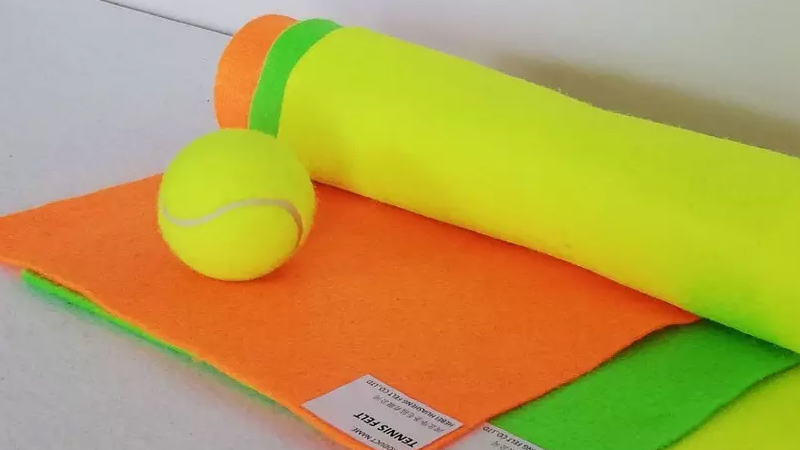
This exterior, known as the nap, is not merely a soft covering; it is a sophisticated piece of material science engineered to balance the conflicting demands of aerodynamics, durability, and tactile feedback.
The Material Composition: A Strategic Blend of Nature and Innovation
At the highest levels of the sport, the feel of a tennis ball is a carefully calibrated composite. The primary materials used in this construction are wool and nylon, occasionally supplemented by cotton to achieve specific playability profiles.
The Role of Premium Wool
For professional-grade equipment, manufacturers prioritize high-quality wool, which typically constitutes 65% to 70% of the total felt blend. Wool is selected for its unique physical properties that synthetic fibers cannot fully replicate.
It provides a “soft” bounce, allowing the ball to compress against the racquet strings for a fraction of a second longer, which translates to better control and feel for the player.
Furthermore, wool has a natural ability to hold in heat during intense play, maintaining the internal temperature of the pressurized core to ensure a consistent rebound throughout the set.
The Necessity of Synthetic Nylon
While wool provides the “touch,” nylon provides the “toughness”. Pure wool felt would disintegrate rapidly under the high-friction environment of a modern hard court.
Nylon fibers are integrated into the weave to act as a structural anchor, allowing the felt to survive being struck at speeds exceeding 120 mph.
This synthetic addition is what allows the ball to maintain its structural integrity during extended rallies on abrasive surfaces.
The Aerodynamics of the Nap: Controlling Flight and Spin
The “fuzz” on a tennis ball is technically referred to as the nap, and its functional purpose is rooted in fluid dynamics. Without this textured surface, a tennis ball would behave like a massive marble—unpredictable, excessively fast, and nearly impossible to control with spin.
The nap creates aerodynamic drag, which serves as a natural braking system in flight. This drag is essential because it slows the ball down just enough to make it playable across the length of a standard court.
More importantly, the texture of the felt is what allows a player to generate spin. As the racquet moves across the ball, the fibers of the felt “grab” the air and the strings.
This interaction creates a pressure differential—known in physics as the Magnus effect—which causes the ball to dip sharply on a topspin shot or float on a slice.
The Precision of the “Dog Bone” Manufacturing Process
The application of felt to the rubber core is a feat of industrial precision. Because the ball must be a perfect sphere with no weak points or uneven edges, the felt cannot simply be wrapped around it like a blanket.
Instead, factories use a specialized cutting process where the felt is stamped into two identical shapes that resemble “dog bones” or dumbbells.
These two pieces are designed to fit together perfectly, like the skin of a citrus fruit, leaving a curved seam that has become the iconic visual hallmark of the tennis ball.
Once cut, these pieces are wrapped around a hollow rubber core. This core is typically a 3 mm thick compound of natural and synthetic rubber, designed for optimal elasticity.
The felt pieces are glued on tightly and the entire assembly is then steamed. This steaming process is critical; it causes the fibers to fluff up and the adhesive to cure, ensuring the felt is permanently bonded to the rubber center and ready to withstand the rigors of competitive play.
Choosing the Right Felt: Surface-Specific Engineering
Not all tennis ball felt is created equal. Manufacturers like Wilson, Penn, and Babolat offer different felt configurations tailored to specific court environments.
- Extra Duty Felt: This is the standard for hard courts. The felt is woven more tightly and often contains a higher percentage of synthetic fibers to resist the “grinding” effect of acrylic and sand-based surfaces. It is designed to stay on the ball longer, even when subjected to extreme friction.
- Regular Duty Felt: Often referred to as “All Court” felt, this version is designed for softer surfaces like clay or grass. Because these courts are less abrasive, the felt is engineered to be thinner or more “lively” to prevent the ball from becoming too heavy as it picks up moisture or dirt from the court.
- Pressureless Felt: Used primarily for practice and ball machines, these balls rely on a thicker rubber core for bounce rather than internal air pressure. The felt on these balls is often thicker and more durable to compensate for the thousands of repetitions they will endure in a training setting.
The Evolution of Visibility: Why Optic Yellow?
Until the late 20th century, tennis balls were predominantly white or black. The transition to the modern “optic yellow” was a data-driven decision aimed at improving the experience for both players and spectators.
Optic yellow is technically a fluorescent yellow-green. This specific shade was chosen because it sits at the peak of the human eye’s visible light spectrum, making it easier to track against various backgrounds.
For television audiences, this color was a revolution, as it allowed the ball to be clearly seen moving across the screen at high speeds.
Today, the dyes used in this felt are engineered to be UV-resistant, ensuring that the ball remains highly visible even under the harsh glare of stadium lights or direct sunlight.
Maintaining Performance: When Does the Felt “Die”?
A tennis ball is considered “dead” not just when it loses its internal pressure, but when the felt has been compromised.
As the nap wears down, the ball loses its ability to create drag and take spin. This is why professional tournaments change balls every nine games—to ensure that the aerodynamic properties provided by the felt remain consistent for the athletes.
For the recreational player, the sign of a spent ball is often a “smooth” appearance. When the fuzz is gone, the ball will fly faster and longer than intended, often leading to unforced errors that have nothing to do with the player’s technique and everything to do with the exhaustion of the material.
Enhanced FAQ: Understanding the Science of the Ball
Is the felt on a tennis ball real wool?
Yes, high-quality tennis balls use a significant amount of natural wool, typically between 65% and 70% of the felt blend. This provides the heat retention and soft feel required for elite performance.
Why are tennis balls fuzzy?
The “fuzz” or nap is essential for aerodynamics. It creates drag to slow the ball down and provides the texture necessary for the racquet strings to “grab” the ball and generate spin.
What is the difference between Extra Duty and Regular Duty felt?
Extra Duty felt is designed for hard courts and features a tighter, more durable weave of wool and nylon. Regular Duty felt is thinner and designed for softer surfaces like clay, where abrasion is less of a concern.
How is the felt attached to the ball?
The felt is cut into two “dog bone” shapes, wrapped around a rubber core, glued, and then steamed to create a tight, seamless bond.
Why are tennis balls yellow instead of white?
The “optic yellow” color was introduced to maximize visibility for players and television viewers, as it is the easiest color for the human eye to track during fast-paced movement.
Conclusion: The Craftsmanship Behind the Match
The next time you step onto the court, take a moment to look closely at the ball before your first serve. That optic yellow sphere is a culmination of decades of material science and precision engineering.
From the specific ratio of wool and nylon to the dumbbell-shaped precision of the cut, every element of the felt is designed to give you more control, more spin, and a more consistent game.
Whether you are playing with Wilson US Open Extra Duty balls for their pro-level consistency, Penn Championship balls for their durability, or Babolat Gold All Court balls for their versatility, you are benefiting from a legacy of innovation that turns a simple rubber core into the world-class equipment that defines the sport of tennis.