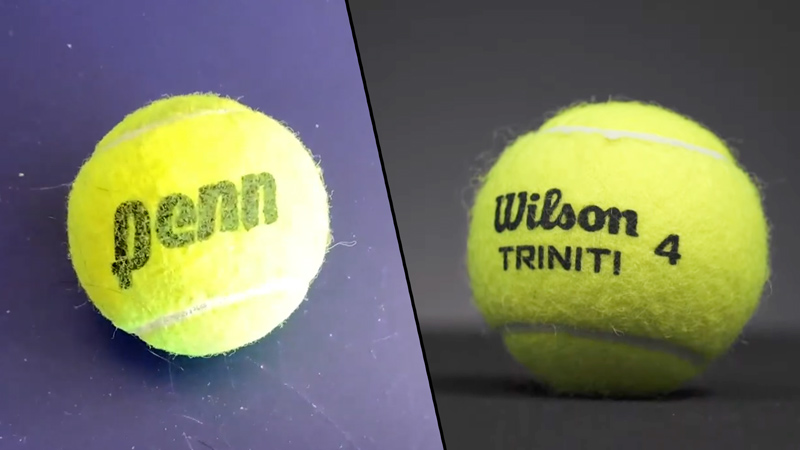
The selection of a tennis ball is often treated as an afterthought by recreational players, yet for those competing at high levels or training rigorously, this choice represents a fundamental intersection of physics, economics, and personal performance.
The debate between Penn and Wilson is the defining rivalry in the industry, akin to the brand loyalty seen in global soft drink or tech giants.
While neither manufacturer is universally superior, they cater to distinct demographics: those prioritizing the “feel” of a match-grade ball and those seeking the maximum lifespan for practice sessions.
This analysis breaks down the technical specifications, player perceptions, and durability metrics of these two industry leaders to help you determine which brand deserves a permanent spot in your bag.
The Technical Foundations: How Construction Dictates Play
To understand why a Wilson ball feels different from a Penn ball, one must look at the internal and external engineering.
Every tennis ball consists of a pressurized rubber core wrapped in felt. However, the density of that rubber and the composition of the felt vary significantly between brands.
The Wilson Philosophy: Precision and Control
Wilson, particularly with its flagship US Open model, focuses on a softer, lighter experience.
The rubber core is designed to absorb a greater percentage of the impact from the racket strings, which translates to superior control for the player. When a ball “sinks” into the strings, the player has a millisecond longer to dictate direction and spin.
This is why many high-level competitors prefer Wilson for tournament play; the ball feels “right” in the hand and provides predictable feedback upon impact.
The Penn Philosophy: Power and Longevity
In contrast, Penn balls—especially the Pro Penn Marathon—are engineered with a firmer, heavier construction. These balls are designed to cut through the air with higher velocity.
The heavier feel provides a sensation of stability during baseline exchanges. For players who rely on power and “heavy” shots, the Penn ball offers a consistency that resists deformation over longer periods.
Performance Metrics: The “Feel” Factor
Player feedback consistently highlights a psychological and tactile divide between the two brands. In community discussions among experienced players, Penn is often described as feeling more consistent and “lighter” through the air, despite being technically firmer.
On the other hand, some players find that Wilson balls can begin to feel “weird” or inconsistent after about an hour of heavy baseline hitting, with some comparing the sensation to the ball getting wet or heavy.
The Wilson US Open ball is widely regarded as the gold standard for its initial 20 minutes of play. During this window, the fuzz integrity is at its peak, providing an elite level of playability that few other brands can match.
However, this peak is often short-lived. Once that initial “new ball” window closes, the fluff can lose its structure, causing the ball to feel “dead” or unresponsive.
The Durability Paradox: Match Play vs. Training
For the majority of players, the “best” ball is the one that provides the most value for their dollar. This is where Penn typically gains a competitive edge.
Why Penn Dominates the Practice Court
The Pro Penn Marathon is frequently cited as the most durable ball on the market. It is known for its ability to maintain its bounce and internal pressure long after other balls would have been discarded.
Community feedback suggests that these balls “refuse to die,” making them the ideal choice for coaching clinics and repetitive practice sessions.
Furthermore, the aesthetic durability of Penn is a notable advantage. In environments like tennis clinics where hundreds of balls are used, Penn balls are often the only ones that maintain their bright, high-visibility yellow color over time.
While color does not technically affect the physics of the bounce, it has a significant impact on player visibility and the perceived quality of the session.
The Wilson Lifecycle
While Wilson produces excellent match balls, their lifespan is generally shorter than Penn’s. They play exceptionally well “right out of the can” but tend to lose their fluff and bounce faster.
For a player who is rich in resources and can afford to open a new can every set, Wilson is an excellent choice. However, for the average club player, the rapid decline in playability can be a deterrent.
Economic Considerations: The Bulk Buying Factor
The financial aspect of tennis cannot be ignored. For many players, the decision is made at the checkout counter. Penn has successfully captured the value-conscious segment of the market by partnering with bulk retailers.
It is common for players to opt for Penn simply because 24-packs are readily available at an affordable price point through outlets like Costco.
However, there is a caveat to bulk buying. Some players have reported that balls purchased in bulk—particularly in specific geographical regions like Utah—may be high-altitude versions.
These specialized balls are designed for thin air and can feel “awful” or lack consistency if used in standard environments, leading to a loss of player confidence.
Environmental and Surface Adaptability
A critical but often overlooked factor is the “Duty” of the ball. Both Penn and Wilson offer specialized versions based on the court surface.
- Extra Duty Balls: These feature a thicker, wool-blend felt. They are specifically engineered to withstand the abrasive nature of hard courts, resisting the “shredding” that occurs during high-friction contact.
- Regular Duty Balls: These utilize a thinner felt. They are designed for clay or indoor courts where moisture absorption is a concern. A ball that soaks up moisture becomes heavy and sluggish, but Regular Duty felt helps mitigate this.
When comparing the two brands, their Extra Duty offerings are often considered equivalent in terms of basic functionality. The real differentiation occurs in their premium tiers, where Pro Penn’s longevity is pitted against the Wilson US Open’s elite feel.
Beyond the Big Two: When to Consider Alternatives
While Penn and Wilson control the majority of the market, a truly informed player should be aware of other high-performance options.
- Dunlop: This brand is frequently praised by loyalists for its incredible durability. Some players claim that Dunlop balls “never seem to die,” making them a strong competitor to the Pro Penn for those who prioritize longevity.
- Babolat: These are often the preferred choice for clay court specialists, as the brand has a deep heritage in European clay court tennis.
- Generic Brands: Most experts advise avoiding “no-name” or store-brand balls (such as those from large discount retailers). These often suffer from excessive felt and structural imbalances that can cause the ball to “wobble” in the air.
Comparison Summary
| Feature | Penn (Pro Penn Marathon) | Wilson (US Open) |
|---|---|---|
| Primary Advantage | Durability and longevity | Feel and precision control |
| Racket Impact | Firmer, heavier sensation | Softer, lighter sensation |
| Lifespan | Stays “live” for multiple sessions | Peaks early, dies faster |
| Best Use Case | Hard court practice/clinics | Competitive match play |
| Visuals | Maintains color longer | Fuzz loses integrity quickly |
Expert Recommendations: Which Should You Buy?
The “better” ball is the one that aligns with your specific goals for that day on the court.
Scenario A: The Competitive Match
If you are playing a league match or a tournament where every point counts, Wilson US Open balls are the recommended choice.
The superior control and softer feel allow for a more nuanced game, provided you are willing to use a fresh can for the match. The official status of these balls in major tournaments like the US Open is a testament to their performance standards.
Scenario B: The Long Practice Session
If you are heading to the court for two hours of serve practice or baseline drilling, Pro Penn Marathon balls are the superior investment. Their resistance to going dead ensures that your practice remains consistent from the first minute to the last.
Scenario C: The Budget-Conscious Recreationalist
If you play once a week for fun and want to keep costs low, the standard Penn Championship balls purchased in bulk are the industry standard for a reason. They provide a reliable, predictable experience at a fraction of the cost of premium match balls.
Enhanced FAQ: Addressing Common Player Concerns
Q: Does the color of a tennis ball affect its bounce?
A: No, the color is purely aesthetic. However, the ability of a ball to maintain its brightness is an indicator of felt quality. Penn balls are often praised for staying bright longer, which helps with visibility during play.
Q: Why do some balls feel “heavy” even if they are the same weight?
A: This is usually due to the density of the rubber core and the thickness of the felt. A ball with thicker, “Extra Duty” felt will feel heavier on the racket because it creates more friction and air resistance.
: Are “High Altitude” balls necessary?
A: Yes, if you are playing at an elevation above 3,000 feet. Standard pressurized balls will bounce uncontrollably high in thin air. High-altitude balls are manufactured with lower internal pressure to compensate for this environment.
Q: Can I use Regular Duty balls on a hard court?
A: You can, but they will wear out extremely fast. The felt on a Regular Duty ball is not designed to withstand the “sandpaper” effect of a hard court, and you will likely see the ball go bald within a single set.
Final Verdict
The choice between Penn and Wilson ultimately comes down to a trade-off between longevity and peak performance.
Penn is the workhorse of the tennis world. Its firmer core and durable felt make it the undisputed king of the practice court and the preferred choice for those who want their equipment to last.
Wilson is the thoroughbred. It offers a refined, soft feel that provides the control necessary for high-stakes competition, even if that brilliance is temporary.
For the most balanced experience, many players find success using Wilson for their matches to capitalize on the feel, while stocking their ball hoppers with Penn for the hundreds of practice repetitions that make those match wins possible.
Regardless of your choice, understanding these nuances will ensure that the only thing you have to worry about on the court is your footwork.