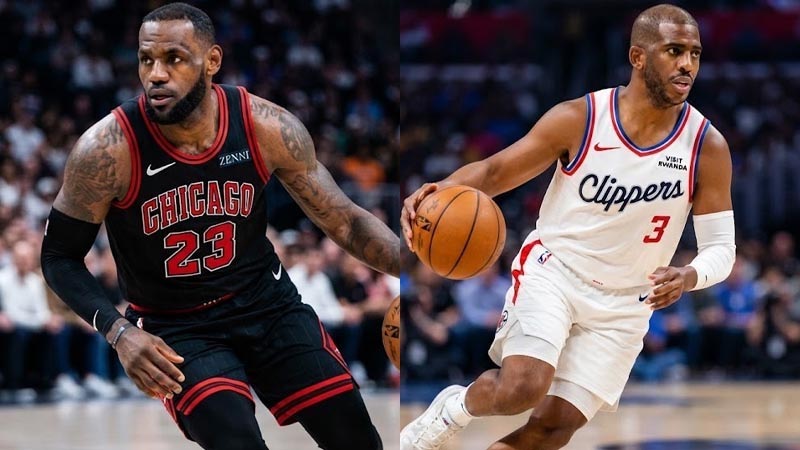
The landscape of professional basketball is often defined by fierce rivalries and competitive tension.
However, the enduring relationship between LeBron James and Chris Paul stands as a unique case study in professional loyalty, personal mentorship, and the evolution of the modern athlete.
This analysis explores the intricacies of their bond, clarifying long-standing misconceptions while examining how their “brotherhood” has influenced the culture of the NBA.
The Definitive Answer: Biological Reality vs. Chosen Family
To address the most frequent inquiry regarding these two icons: LeBron James and Chris Paul are not biologically related. They do not share a lineage or a household of origin.
Despite the frequent use of the term “brother” in their public interactions and social media posts, their connection is rooted in a shared history that began during their formative years on the high school basketball circuit.
In professional sports, the term “brotherhood” is often used loosely to describe teammates. For James and Paul, however, the terminology reflects a deep-seated commitment that transcends the locker room.
This is a “chosen family” dynamic, a phenomenon where individuals build bonds that mirror the intensity and permanence of biological relations through shared experiences, mutual respect, and long-term investment in each other’s success.
The Genesis of a Bond: From AAU to the National Stage
The roots of this relationship extend back to the early 2000s. Before the world knew them as “King James” or “CP3,” they were elite high school prospects navigating the high-pressure environment of the Amateur Athletic Union (AAU) and national scouting camps.
During this era, the foundations of their friendship were laid. While LeBron James entered the NBA directly from high school in 2003 as a generational prodigy, Chris Paul honed his skills at Wake Forest University before being drafted in 2005.
Despite their different paths to the professional ranks, the two remained in constant contact, supporting one another as they transitioned from teenage stars to the faces of their respective franchises.
This early alignment was crucial; they were among the few peers who could truly understand the unique pressures of carrying the expectations of entire cities and a global fan base.
The “Banana Boat” Era: Redefining Player Autonomy
One cannot discuss the relationship between James and Paul without acknowledging the famous “Banana Boat Crew.” This inner circle, which also includes future Hall of Famers Dwyane Wade and Carmelo Anthony, represents more than just a group of friends on vacation.
In the mid-2010s, a photograph of the group vacationing together became a cultural touchstone for the NBA. While the media initially focused on the leisure aspect of the trip, the underlying significance was the shift in player power.
This group pioneered a new era where players took control of their narratives and career trajectories. Their friendship proved that elite competitors could be allies off the court, collaborating on business ventures, social justice initiatives, and labor negotiations while maintaining a high level of competition when facing each other in the playoffs.
The Sanctity of Family: Godparents and the Next Generation
The depth of the James-Paul connection is most evident in their private lives, where the boundaries between their families have effectively dissolved.
In a significant gesture of trust and spiritual kinship, Chris Paul serves as the godfather to one of LeBron James’ sons.
In many cultures, the role of a godfather is not merely ceremonial; it is a lifelong commitment to the guidance and well-being of a child, signifying that Paul is considered a permanent member of the James family structure.
Furthermore, this bond has successfully transitioned to the next generation. LeBron James has publicly noted that their daughters share a close friendship, mirroring the bond their fathers established decades ago.
By fostering these connections among their children, James and Paul are ensuring that their legacy of mutual support continues long after their professional playing days conclude.
This multi-generational link solidifies their relationship as a true family unit rather than a professional convenience.
The Professional Intersection: Leadership and the NBPA
Beyond the personal and familial, James and Paul have been instrumental in shaping the business of basketball. Both have held significant leadership roles within the National Basketball Players Association (NBPA), with Paul serving as President for several years.
Their collaboration at the executive level of the union allowed them to advocate for better health benefits for retired players, improved working conditions, and a more equitable share of league revenue. Their ability to speak with a unified voice often provided the leverage needed during collective bargaining negotiations.
This professional alignment is a direct byproduct of the trust they built in their personal lives; because they share a fundamental philosophy on player empowerment, they were able to lead the league’s players through complex economic and social challenges with a cohesive strategy.
The Competitive Paradox: Rivalry Without Enmity
One of the most remarkable aspects of the James-Paul relationship is their ability to compete at the highest level without compromising their friendship.
Throughout their careers, they have faced off in high-stakes games, including the NBA Playoffs. On the court, they are known for their relentless “trash talk” and uncompromising physical play.
However, the moment the final buzzer sounds, the “brotherhood” resumes. This separation of professional duty and personal loyalty is a hallmark of their maturity.
They have mastered the art of the “professional rivalry,” demonstrating that one can strive to defeat an opponent while still wishing for their ultimate success and well-being.
This balance has set a standard for younger players, showing that the pursuit of a championship does not require the sacrifice of meaningful human connection.
FAQ: Addressing Common Inquiries
Why do people think LeBron James and Chris Paul are related?
The confusion often stems from their frequent use of the word “brother” when referring to each other in interviews and on social media.
Their visible closeness—attending each other’s family milestones and supporting one another’s career achievements—leads many casual observers to assume a biological link.
Are they part of the same draft class?
No. LeBron James was the first overall pick in the 2003 NBA Draft, entering directly from St. Vincent-St. Mary High School. Chris Paul was selected fourth overall in the 2005 NBA Draft after playing two seasons at Wake Forest University.
How many “Banana Boat” members are there?
The core group consists of four players: LeBron James, Chris Paul, Dwyane Wade, and Carmelo Anthony.
Have LeBron James and Chris Paul ever played on the same NBA team?
As of the current season, they have never been teammates on an NBA franchise. However, they have played together extensively for USA Basketball, winning Olympic gold medals, and have shared the court many times as teammates in the NBA All-Star Game.
What is the significance of Chris Paul being a godfather to LeBron’s son?
In the context of their friendship, it is the ultimate sign of trust. It moves the relationship from a professional friendship to a familial obligation, ensuring that Paul is an integral part of the James family’s personal life and future.
The Legacy of a Modern Brotherhood
The relationship between LeBron James and Chris Paul is a testament to the power of intentional friendship. While they are not brothers by blood, they have constructed a bond that is arguably more resilient because it was built through choice and shared values.
They have navigated the complexities of global fame, the pressures of elite competition, and the challenges of aging in a young man’s game, all while remaining each other’s primary confidants.
Their story is a reminder that in the high-velocity world of professional sports, the most enduring victories are often the ones found in the quiet moments of mutual support and the lifelong commitment to a “brother” found along the way.
As both players approach the final chapters of their legendary on-court careers, their legacy will be defined not just by their statistics or championships, but by the blueprint they provided for the next generation of athletes: a blueprint that prioritizes community, family, and the unwavering strength of a chosen brotherhood.