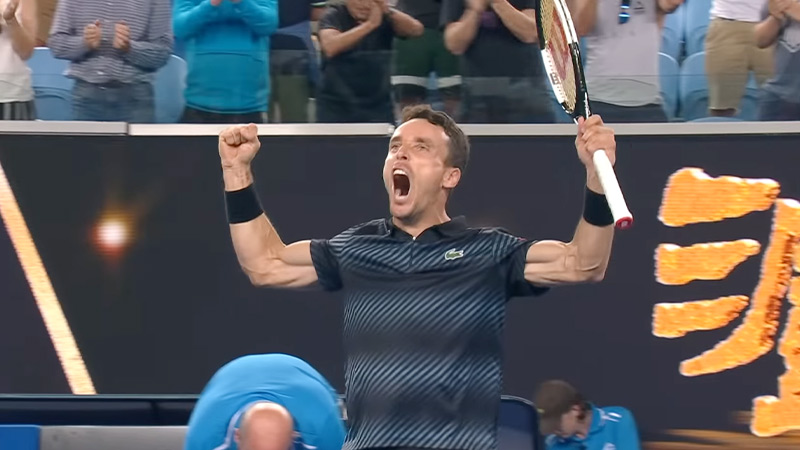
Roberto Bautista Agut was a world-class athlete who defined consistency on the ATP Tour for 21 years. Retiring in July 2026, “Bati” reached a career-high ranking of World No. 9 and secured 12 ATP titles.
Known as a “metronomic baseline machine,” he amassed a 436–302 record and earned over $20.4 million. His greatness is cemented by three victories over Novak Djokovic and a 2019 Wimbledon semifinal run.
Unlike traditional Spanish clay-specialists, his flat forehand thrived on hard and grass courts. He remains a symbol of professional resilience, elite counterpunching, and remarkable longevity in tennis’s most competitive era.
What Are Roberto Bautista Agut’s Major Career Achievements?
The professional journey of Bautista Agut is a testament to the power of incremental progress and unwavering dedication. Over two decades, he evolved from a reliable tour veteran into a legitimate top-tier threat capable of dismantling the world’s best players.
The Statistical Footprint of a Top-10 Regular
The longevity of Bautista Agut is perhaps his most impressive feat, maintaining a high level of play well into his late 30s. His statistical profile reflects a player who was almost impossible to beat without a high-risk offensive strategy.
- Career Win-Loss Record: 436 wins and 302 losses, yielding a 59.1% win rate.
- Peak Ranking: Achieved World No. 9 on November 4, 2019.
- Total ATP Titles: 12 singles trophies across various surfaces.
- Career Earnings: $20,435,141, ranking him 37th on the all-time list.
- Total Matches: Competed in more than 700 tour-level matches.
Major Titles and Grand Slam Milestones
While many players struggle to maintain form during the grueling Grand Slam fortnights, Bautista Agut excelled in the best-of-five format. His conditioning allowed him to outlast younger opponents, leading to deep runs in the world’s most prestigious tournaments.
- Wimbledon 2019: Reached the semifinals, his best Major result, eventually losing a competitive four-set match to Novak Djokovic.
- Dubai 2018: Captured his biggest title at the ATP 500 level, proving he could win prestigious hardcourt events.
- 2019 Davis Cup: Secured the “World Cup of tennis” for Spain by winning a crucial singles rubber in the final against Félix Auger-Aliassime.
- Australian Open 2019: Reached the quarterfinals, showcasing his ability to handle extreme heat and elite hardcourt competition.
- Masters 1000 Success: Reached the championship match at the 2016 Shanghai Masters, falling only to Andy Murray.
Analyzing the Playing Style of a Baseline Machine
Understanding why Bautista Agut was so effective requires an analysis of his technical deviations from the traditional Spanish school of tennis. While his peers often utilized heavy topspin and high-arcing trajectories, he opted for a flatter, more penetrating game.
The “Non-Traditional” Spanish Approach
Most Spanish players are synonymous with clay court dominance, but Bautista Agut was a different breed. His mechanics were better suited for the low-bouncing, fast-paced environments found in London or Doha.
- The Flat Forehand: His primary weapon was a clean, flat forehand hit with an Eastern grip. This allowed him to take time away from opponents by driving the ball through the court.
- Surface Versatility: Because he didn’t rely on heavy topspin, he was equally dangerous on grass and hard courts, where his flat shots stayed low and out of his opponents’ strike zones.
- Metronomic Accuracy: He was widely respected for his ability to hit the same spot on the court repeatedly without error, effectively suffocating his opponents.
Tactical Resilience and Mental Toughness
Beyond the technical aspects of his strokes, his psychological approach to the game was his greatest asset. He was famously unwilling to miss a ball, turning every match into a physical and mental battle.
- Elite Counterpunching: He possessed exceptional foot speed and court coverage, allowing him to turn defensive situations into offensive opportunities.
- Physical Stamina: Known for his extreme grit, he frequently forced top-tier opponents into multi-hour rallies that tested their physical limits.
- The “Bati” Standard: His nickname became synonymous with a professional who gives 100% effort regardless of the score or the prestige of the tournament.
How Did He Perform Against World Number One Players?
Bautista Agut earned the reputation of a “giant killer” because he was never intimidated by the stature of his opponents. He was one of the few players outside the “Big Three” who could consistently trouble the highest-ranked athletes in the world.
| Opponent | Number of Wins | Key Match Context |
|---|---|---|
| Novak Djokovic | 3 | Multiple wins on hard courts, including Doha and Miami, |
| Daniil Medvedev | 1 | Demonstrated his ability to out-maneuver defensive specialists |
| Top 10 Opponents | Numerous | A consistent threat to any player in the elite bracket for over a decade |
His three victories over Novak Djokovic are particularly significant. Djokovic is widely considered the greatest returner and baseliner in history, yet Bautista Agut was able to out-grind and out-think him on three separate occasions.
These wins solidified his status as an elite competitor who belonged at the pinnacle of the sport.
Why Was the 2019 Season His Career Peak?
While he was a fixture in the top tier for years, 2019 was the season where everything aligned for the Spanish star. It was the year he reached his highest ranking and achieved his most significant results on the biggest stages of the sport.
The Wimbledon Semifinal Breakthrough
Prior to 2019, many questioned if his flat-hitting style could translate to a Grand Slam semifinal. He answered those doubts in London, slicing through the draw with precision.
He reached the final four at Wimbledon, eventually taking a set off Novak Djokovic in a high-quality encounter. This run proved that his game was world-class on grass, a surface often difficult for Spanish players.
National Heroics in the Davis Cup
The end of 2019 provided one of the most emotional moments in tennis history. Despite facing immense personal tragedy during the tournament, Bautista Agut returned to the team to play the final.
He defeated Félix Auger-Aliassime in straight sets, providing the critical point Spain needed to lift the trophy alongside Rafael Nadal. This victory cemented his legacy as a national hero in Spain, demonstrating his incredible mental fortitude.
The Final Chapter: Retirement in July 2026
After 21 years of relentless competition, Bautista Agut decided to hang up his rackets in July 2026. His departure marked the end of an era for a player who had been a structural fixture in the ATP rankings for over ten years.
Final Competitive Appearance at Wimbledon
It was only fitting that his final competitive match took place on the lawns of Wimbledon, the site of his greatest Grand Slam achievement. In the first round of the 2026 championships, he faced the rising star Joao Fonseca.
While he bowed out in that match, the applause from the crowd recognized a career defined by integrity and hard work.
A Ceremonial Farewell in Huelva
To give his home fans a chance to say goodbye, he played his final ceremonial matches at the historic Copa del Rey exhibition in Huelva, Spain.
This event allowed the local community to celebrate a player who had represented the country with distinction in the Davis Cup and on the global tour. His retirement was not just the end of a career, but a celebration of a 21-year marathon.
Frequently Asked Questions About His Career
What was Roberto Bautista Agut’s highest ranking?
He reached a career-high of World No. 9 on November 4, 2019.
How many ATP titles did he win?
He won a total of 12 ATP singles titles, with his biggest victory coming at the 2018 Dubai Tennis Championships.
What is his record against Novak Djokovic?
He is one of the few players to have beaten Novak Djokovic three times during the Serbian’s period of dominance.
How much did he earn in prize money?
His career earnings totaled $20,435,141, which places him 37th on the all-time list of prize money leaders.
What was his best Grand Slam result?
His best performance was reaching the semifinals of Wimbledon in 2019.
What made his playing style unique for a Spanish player?
Unlike many of his compatriots who used heavy topspin, Bautista Agut used an Eastern grip to hit a very flat forehand, making him exceptionally dangerous on fast courts.
Conclusion: The Professional’s Professional
The legacy of Roberto Bautista Agut is not just defined by the trophies he won, but by the respect he earned from his peers.
In an era dominated by legendary figures, he carved out a space for himself through sheer persistence and tactical intelligence. He was a “baseline machine” who never gave an inch, forcing every opponent to earn their victory through sweat and toil.
As he moves into retirement, he leaves behind a blueprint for future generations: you don’t need the flashiest game to reach the top 10; you need a relentless spirit, a commitment to your unique style, and the mental toughness to stand toe-to-toe with the best in the world. His 21-year journey remains one of the most respected careers in modern tennis history.