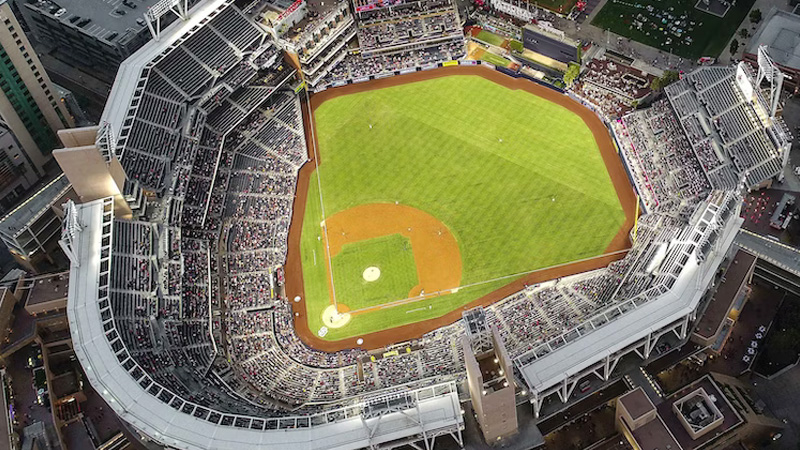
Welcome to the world of baseball stadiums in the United States! From iconic landmarks to modern architectural marvels, these stadiums serve as hallowed grounds for fans, showcasing the excitement and rich history of America’s favorite pastime.
In this blog, we will take you on a journey through some of the largest baseball stadiums in the country. Each stadium has its own unique charm, with distinct features, breathtaking views, and a rich tapestry of memories etched into its walls.
From the storied histories of legendary teams to the electric atmosphere created by passionate fans, these stadiums embody the spirit and soul of baseball.
So join us as we traverse the country, visiting renowned stadiums such as Dodger Stadium, Yankee Stadium, Wrigley Field, Fenway Park, and many more.
1. Dodger Stadium
- Address: 1000 Vin Scully Avenue, Los Angeles, CA 90012
- Capacity: Dodger Stadium has a seating capacity of over 56,000 spectators, making it the largest baseball stadium in terms of seating capacity.
- Opened: Dodger Stadium officially opened on April 10, 1962.
- Owner: The stadium is owned by the Los Angeles Dodgers, a Major League Baseball (MLB) team.
- Team: The Los Angeles Dodgers, one of the most storied and successful franchises in MLB history, call Dodger Stadium their home.
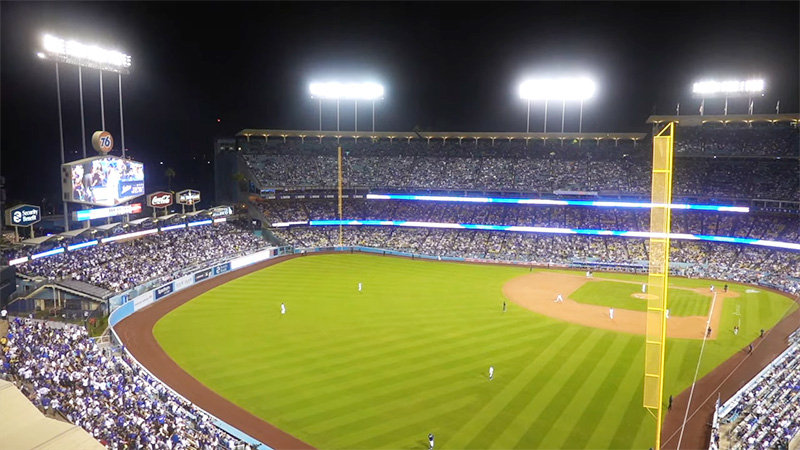
Overview: Dodger Stadium is a historic and iconic baseball stadium located in Los Angeles, California. It is situated in the Elysian Park neighborhood and offers breathtaking views of the San Gabriel Mountains and downtown Los Angeles.
The stadium is known for its beautiful setting and has become synonymous with the Dodgers franchise.
The stadium’s design features a unique mid-century modern aesthetic, with a sweeping roofline and open-air seating that allows fans to enjoy the California sunshine during games.
In addition to its baseball significance, Dodger Stadium has also played a role in the cultural fabric of Los Angeles.
It has been a gathering place for fans of all ages, providing a sense of community and camaraderie. The stadium’s iconic status has made it a landmark and tourist attraction in the city.
Over the years, Dodger Stadium has undergone several renovations and improvements to enhance the fan experience. These updates include the addition of restaurants, expanded concourses, upgraded seating, and improved amenities.
Dodger Stadium’s rich history, picturesque views, and passionate fan base make it a must-visit destination for baseball enthusiasts and sports fans alike.
2. Yankee Stadium
- Address: 1 East 161st Street, Bronx, NY 10451
- Capacity: Yankee Stadium has a seating capacity of 46,537 spectators.
- Opened: The current Yankee Stadium opened on April 2, 2009, replacing the original Yankee Stadium.
- Owner: The stadium is owned by Yankee Stadium LLC, a subsidiary of the New York Yankees.
- Team: The New York Yankees, one of the most successful and iconic franchises in Major League Baseball (MLB), call Yankee Stadium their home.
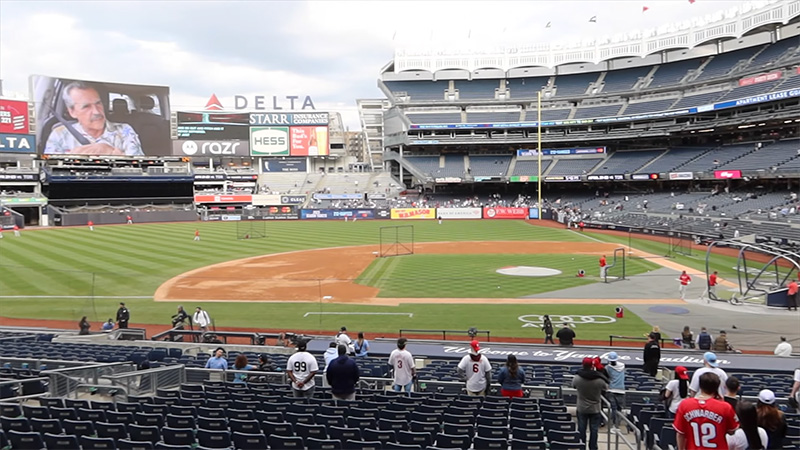
Overview: Yankee Stadium is a legendary and revered baseball stadium located in the Bronx borough of New York City. It stands as a testament to the rich history and tradition of the New York Yankees franchise.
The current Yankee Stadium was built to replace the original Yankee Stadium, which had been the home of the Yankees since 1923. The new stadium combines modern amenities with nods to the historic elements of its predecessor.
This stadium has witnessed numerous historic moments in baseball, including championship victories, record-breaking performances, and the presence of legendary players.
It has hosted multiple World Series games and All-Star Games, further solidifying its place in baseball history.
The design focuses on creating an immersive and fan-friendly experience. It features wider concourses, state-of-the-art video boards, and various dining options that cater to the tastes of fans.
Yankee Stadium’s legacy, combined with its modern amenities and connection to the New York Yankees, makes it an iconic destination for baseball enthusiasts and sports fans.
3. Wrigley Field
- Address: 1060 West Addison Street, Chicago, IL 60613
- Capacity: Wrigley Field has a seating capacity of approximately 41,649 spectators.
- Opened: Wrigley Field originally opened on April 23, 1914.
- Owner: The Ricketts family owns Wrigley Field through their company, Chicago Cubs Baseball Club, LLC.
- Team: The Chicago Cubs, one of the oldest and most beloved franchises in Major League Baseball (MLB), call Wrigley Field their home.
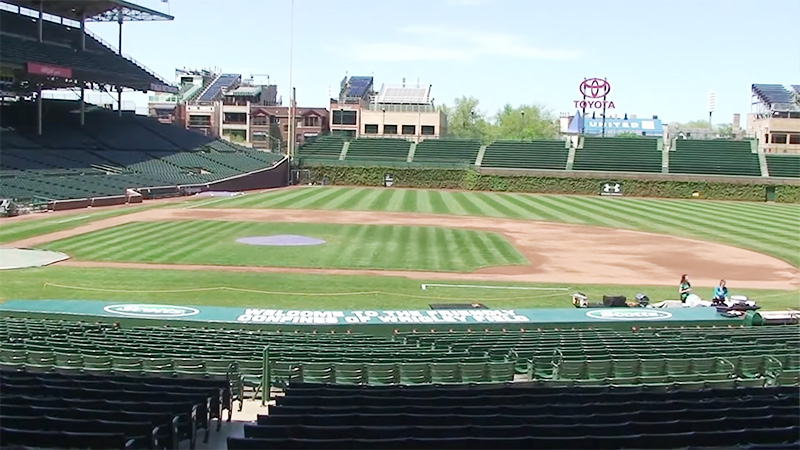
Overview: Wrigley Field is an iconic baseball stadium located in the Lakeview neighborhood of Chicago, Illinois. It is known for its historic charm, ivy-covered outfield walls, and its vibrant atmosphere on game days.
Wrigley Field holds a special place in baseball history, as it is one of the oldest ballparks in the country. Its classic features, such as the manually operated scoreboard, the iconic red marquee at the entrance, and the rooftop bleachers across the street, contribute to its timeless appeal.
Wrigley Field has witnessed its fair share of historic moments, including multiple World Series appearances by the Chicago Cubs. The stadium has a passionate and dedicated fan base that fills the stands, creating an electric atmosphere during games.
The tradition of singing “Take Me Out to the Ball Game” during the seventh-inning stretch, led by celebrities and fans, has become a beloved Wrigley Field tradition.
The stadium’s enduring charm and its ability to transport fans back to a bygone era ensure that Wrigley Field will continue to hold a special place in the hearts of baseball lovers for generations to come.
4. Fenway Park
- Address: 4 Jersey Street, Boston, MA 02215
- Capacity: Fenway Park has a seating capacity of approximately 37,755 spectators for night games and 37,949 for day games.
- Opened: Fenway Park originally opened on April 20, 1912.
- Owner: Fenway Sports Group owns Fenway Park. It is also the parent company of the Boston Red Sox.
- Team: The Boston Red Sox, one of the oldest and most storied franchises in Major League Baseball (MLB), call Fenway Park their home.
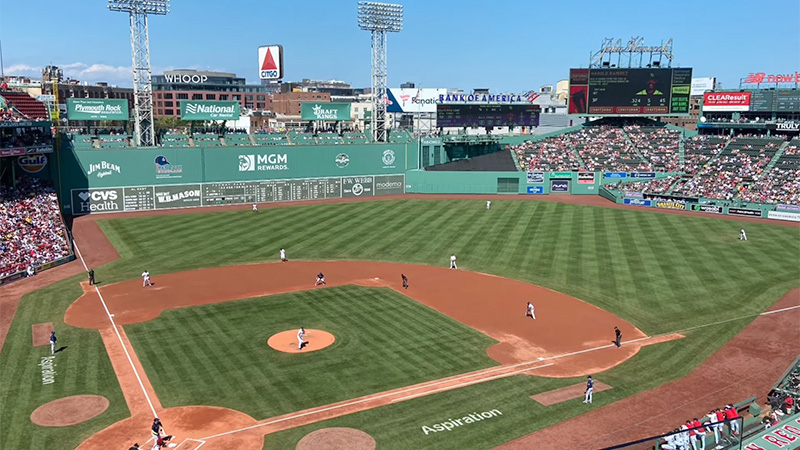
Overview: Fenway Park is a historic and revered baseball stadium located in the Fenway-Kenmore neighborhood of Boston, Massachusetts. It is renowned for its rich history, distinctive features, and passionate fan base.
Fenway Park stands as one of the oldest ballparks in the United States, showcasing classic architecture and unique characteristics that have made it an iconic landmark.
The “Green Monster,” a towering left-field wall covered in a hand-operated scoreboard, is one of Fenway Park’s most recognizable and beloved features.
The stadium has also hosted numerous concerts and other non-baseball events, further adding to its cultural significance.
The atmosphere at Fenway Park is electric, with dedicated and passionate fans known as “Red Sox Nation” filling the stands. The tradition of singing “Sweet Caroline” during the eighth inning has become a beloved Fenway Park ritual, fostering a sense of unity and camaraderie among fans.
Fenway Park’s legacy, combined with its distinctive features and connection to the Boston Red Sox, makes it an iconic destination for baseball enthusiasts and sports fans.
The stadium’s timeless charm and the unwavering support of its fans contribute to the enduring allure of Fenway Park as a cherished piece of baseball history.
5. Coors Field
- Address: 2001 Blake Street, Denver, CO 80205
- Capacity: Coors Field has a seating capacity of approximately 50,445 spectators.
- Opened: Coors Field officially opened on April 26, 1995.
- Owner: Coors Field is owned by the Colorado Rockies Baseball Club.
- Team: The Colorado Rockies, a Major League Baseball (MLB) team, call Coors Field their home.
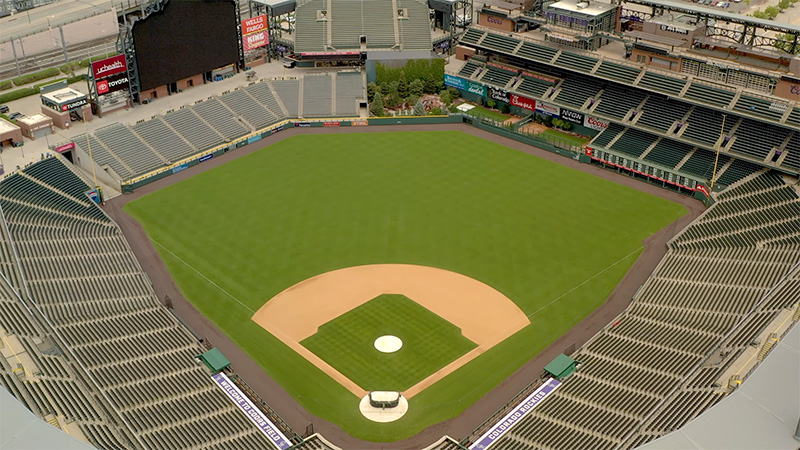
Overview: Coors Field is a renowned baseball stadium situated in downtown Denver, Colorado. It is recognized for its breathtaking views of the Rocky Mountains and its high-altitude environment, which adds an exciting element to the games played there.
The stadium was specifically designed to embrace the natural beauty of its surroundings. Its open-air seating allows fans to enjoy panoramic vistas of the nearby mountains, providing a unique backdrop for baseball games.
Coors Field’s architecture blends modern features with a classic feel, incorporating red brick façades and an inviting atmosphere.
One of the notable characteristics of Coors Field is its high-altitude environment. Located over 5,000 feet above sea level, the thin air affects the behavior of the baseball, leading to high-scoring games and long home runs.
This distinctive aspect has given Coors Field a reputation for being a hitter-friendly ballpark. Coors Field has hosted numerous memorable moments, including playoff games and the 1998 MLB All-Star Game.
It is a place where the majesty of nature meets the excitement of America’s pastime, creating an unforgettable experience for all who visit.
6. Chase Field
- Address: 401 E Jefferson St, Phoenix, AZ 85004
- Capacity: Chase Field has a seating capacity of approximately 48,519 spectators for baseball games.
- Opened: Chase Field, originally known as Bank One Ballpark, opened on March 31, 1998.
- Owner: The Maricopa County Stadium District owns Chase Field.
- Team: The Arizona Diamondbacks, a Major League Baseball (MLB) team, call Chase Field their home.
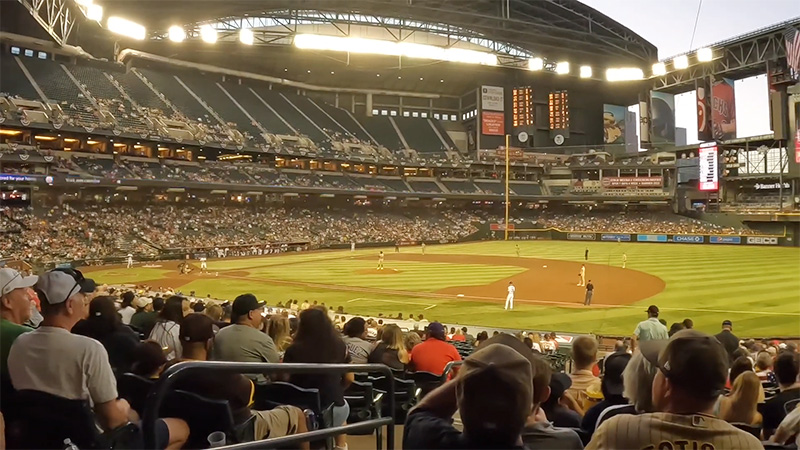
Overview: Chase Field is a prominent baseball stadium located in downtown Phoenix, Arizona. It is known for its unique retractable roof and distinctive architectural design.
The stadium’s most notable feature is its retractable roof, allowing games to be played comfortably regardless of the weather conditions outside.
The roof can be opened or closed in approximately four minutes, providing an adaptable and climate-controlled environment for games. Chase Field’s roof has become a symbol of innovation and versatility in baseball stadium design.
Chase Field has hosted several significant baseball events, including the 2001 World Series, where the Arizona Diamondbacks emerged as champions. The stadium has also been the site of Major League Baseball’s All-Star Game and various other sporting and entertainment events.
The fan experience at Chase Field is enhanced by a variety of amenities and modern features. The stadium offers a wide selection of concession options, restaurants, and lounge areas for spectators to enjoy.
Chase Field has seen some modifications and updates over the years to enhance the fan experience. These have included technological advancements, such as high-definition video boards, as well as renovations to seating areas and the addition of new amenities.
7. Busch Stadium
- Address: 700 Clark Ave, St. Louis, MO 63102
- Capacity: Busch Stadium has a seating capacity of approximately 44,494 spectators for baseball games.
- Opened: The current Busch Stadium opened on April 4, 2006, replacing the previous Busch Stadium.
- Owner: The St. Louis Cardinals, a Major League Baseball (MLB) team, own and operate Busch Stadium.
- Team: The St. Louis Cardinals call Busch Stadium their home.
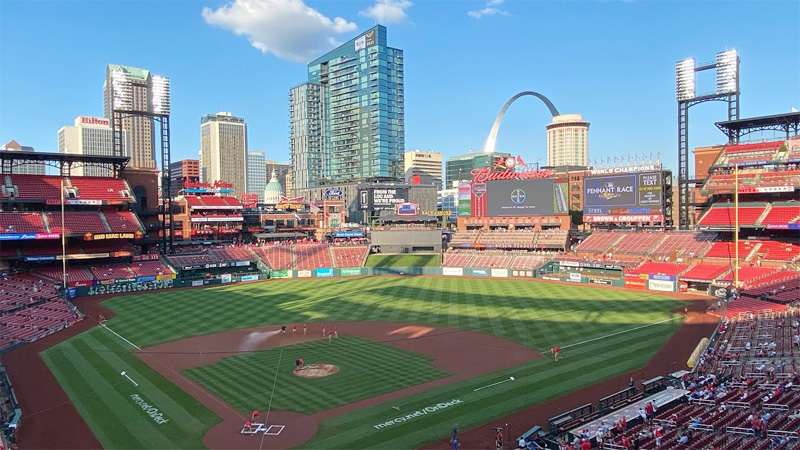
Overview: Busch Stadium is a renowned baseball stadium located in downtown St. Louis, Missouri. It is an integral part of the city’s rich baseball history and has become an iconic venue for sports and entertainment.
The stadium’s design blends modern amenities with traditional baseball aesthetics. Its red-brick exterior pays homage to the city’s architectural heritage, while the sweeping roofline and panoramic windows create a visually striking structure.
Busch Stadium has witnessed many memorable moments, including multiple World Series victories by the St. Louis Cardinals. It has also hosted numerous other events, such as All-Star Games, concerts, and college football games, further establishing its significance as a versatile venue.
The St. Louis Cardinals have a passionate and dedicated fan base, known as the “Cardinal Nation.” Their unwavering support and the rich history of the franchise create an electric atmosphere at Busch Stadium.
The tradition of singing “Take Me Out to the Ballgame” during the seventh-inning stretch, accompanied by the playing of “Here Comes the King” on the stadium organ, adds to the unique experience.
8. Angel Stadium
- Address: 2000 E Gene Autry Way, Anaheim, CA 92806
- Capacity: Angel Stadium has a seating capacity of approximately 45,050 spectators for baseball games.
- Opened: Angel Stadium, originally known as Anaheim Stadium, opened on April 19, 1966.
- Owner: The City of Anaheim owns Angel Stadium.
- Team: The Los Angeles Angels, a Major League Baseball (MLB) team, call Angel Stadium their home.
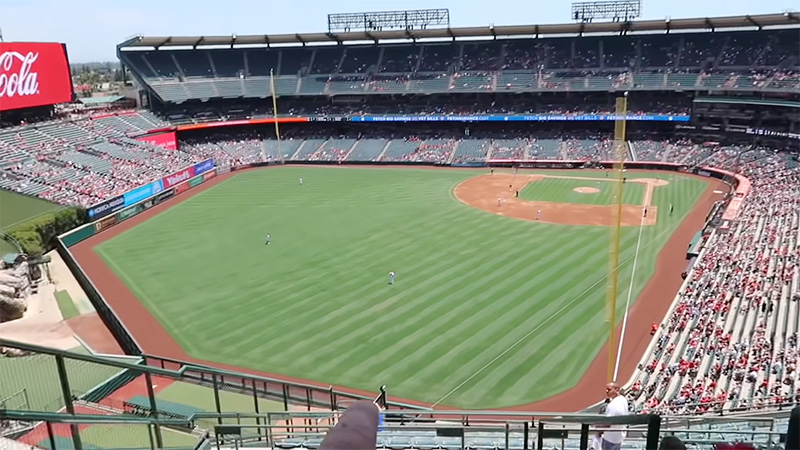
Overview: Angel Stadium, located in Anaheim, California, is a historic and beloved baseball stadium that has been the home of the Los Angeles Angels since its opening. The stadium is known for its picturesque setting, passionate fan base, and its place in baseball history.
Angel Stadium offers a family-friendly environment with a variety of seating options, including suites, club seats, and general admission.
The stadium provides excellent sightlines and a comfortable viewing experience for fans. Its open-air design allows spectators to enjoy the Southern California weather while watching games.
The stadium has undergone several renovations and improvements over the years to enhance the fan experience. These updates have included upgraded video displays, improved concessions, and modern amenities.
Beyond baseball, Angel Stadium has been utilized for concerts, charity events, and other non-baseball activities, showcasing its versatility as a venue.
The stadium’s legacy as the home of the Angels continues to evolve, providing a place for memorable moments and a gathering spot for fans to come together and support their team.
9. Guaranteed Rate Field
- Address: 333 W 35th Street, Chicago, IL 60616
- Capacity: Guaranteed Rate Field has a seating capacity of approximately 40,615 spectators for baseball games.
- Opened: Guaranteed Rate Field, originally known as Comiskey Park II, opened on April 18, 1991.
- Owner: Guaranteed Rate Field is owned by the Illinois Sports Facilities Authority.
- Team: The Chicago White Sox, a Major League Baseball (MLB) team, call Guaranteed Rate Field their home.
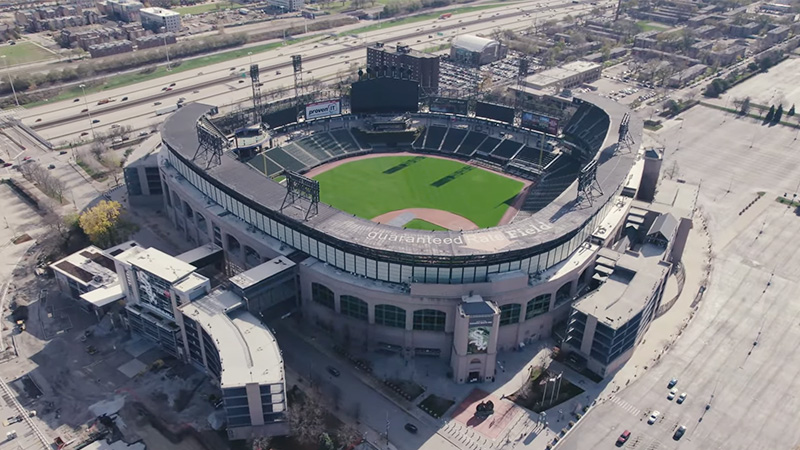
Overview: Guaranteed Rate Field, located on the South Side of Chicago, Illinois, is a notable baseball stadium and the home of the Chicago White Sox. It has a rich history and is known for its distinctive design and dedicated fan base.
The stadium was built to replace the original Comiskey Park and was designed as a modern, fan-friendly facility. It features a unique asymmetrical layout, with a recognizable pinwheel-shaped scoreboard in the center-field area.
The open-air seating provides excellent views of the game, and the intimate atmosphere creates a close connection between fans and players.
The Chicago White Sox have a passionate and dedicated fan base known as the “South Side faithful.” The team’s history and success have fostered a strong connection with the community.
The tradition of cheering along to the song “Na Na Hey Hey Kiss Him Goodbye” during opposing team pitcher changes is a unique aspect of the fan experience at Guaranteed Rate Field.
The stadium’s role in the White Sox’s history and its vibrant atmosphere continue to make it a special place for fans to gather and celebrate the game of baseball.
10. Kauffman Stadium
- Address: 1 Royal Way, Kansas City, MO 64129
- Capacity: Kauffman Stadium has a seating capacity of approximately 37,903 spectators for baseball games.
- Opened: Kauffman Stadium, originally known as Royals Stadium, opened on April 10, 1973.
- Owner: Jackson County Sports Complex Authority owns Kauffman Stadium.
- Team: The Kansas City Royals, a Major League Baseball (MLB) team, call Kauffman Stadium their home.
Overview: Kauffman Stadium, located in Kansas City, Missouri, is a revered baseball stadium and the home of the Kansas City Royals. It is known for its iconic features, vibrant atmosphere, and the team’s rich history.
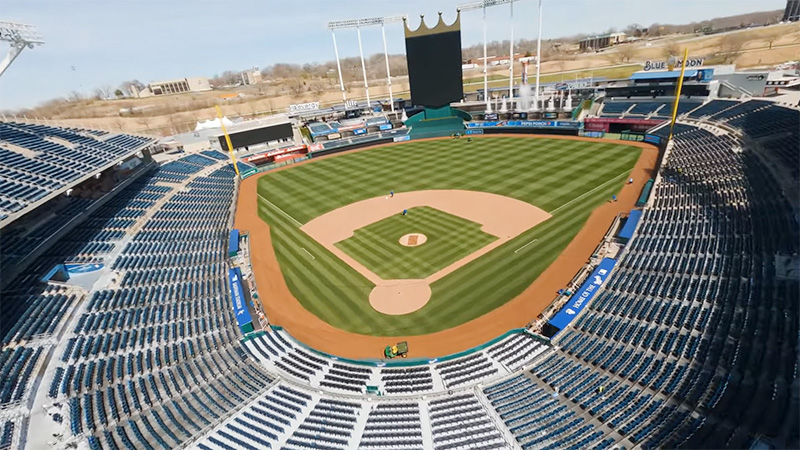
The stadium is renowned for its unique design, highlighted by the towering “Water Spectacular” fountains in the outfield, which provide a visually stunning backdrop during games.
These fountains have become a symbol of Kauffman Stadium and add to the overall charm of the ballpark. Kauffman Stadium has witnessed numerous historic moments, including the Royals’ World Series victories in 1985 and their return to the Fall Classic in 2014 and 2015.
The stadium offers a variety of seating options, including luxury suites, party decks, and picnic areas, catering to different preferences. The “Outfield Experience” provides interactive activities and games for fans of all ages.
The Kansas City Royals have a loyal and passionate fan base, known as the “Royal Nation.” The team’s connection with the community and their commitment to excellence on the field contribute to the vibrant atmosphere at Kauffman Stadium.
The stadium’s commitment to providing an exceptional experience for fans creates lasting memories and reinforces its role as a gathering place for the Kansas City community.
Conclusion
As we conclude our exploration of the largest baseball stadiums in the United States, we reflect on the awe-inspiring beauty, rich histories, and vibrant fan cultures that make these venues truly special.
From the West Coast to the East Coast and everywhere in between, each stadium holds its own unique place in the hearts of fans and the communities they call home.
We have visited legendary stadiums like Dodger Stadium, Yankee Stadium, and Fenway Park, witnessing the legacy of iconic teams and the passion of their loyal fan bases.
We’ve explored the fan experiences, from the exhilarating cheers that reverberate through the stands to the tantalizing aromas of ballpark concessions.
Each stadium offers a unique atmosphere, where traditions are honored, anthems are sung, and the love for the game is palpable.
These stadiums are not just structures of steel and concrete; they are living embodiments of the passion, unity, and resilience of the cities they represent.
They are stages upon which the heroes of the diamond dazzle and where ordinary moments become extraordinary.
So as we conclude our journey through these hallowed grounds, we hope you’ve gained a deeper appreciation for the majesty and significance of these stadiums.