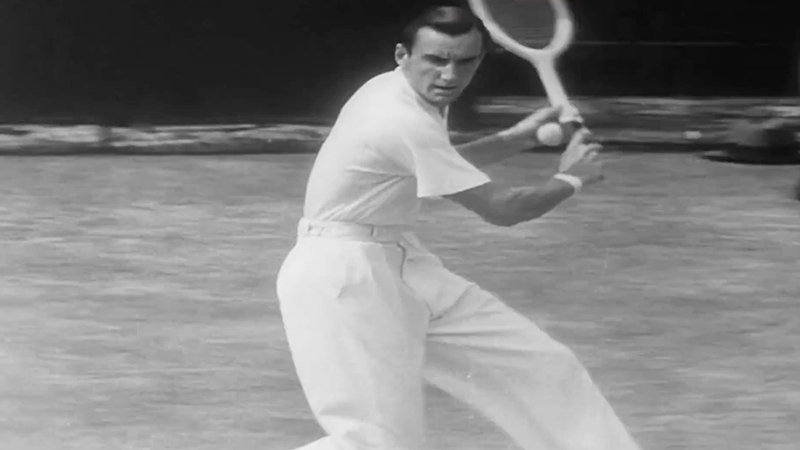
Fred Perry transitioned from a world-champion athlete to the founder of a global fashion empire before passing away in 1995 at age 85.
Originally a table tennis world champion, he dominated lawn tennis with three consecutive Wimbledon titles before launching his eponymous clothing brand in 1952. Following his death after a fall in Melbourne, the brand was acquired by the Japanese company Hit Union.
Today, Fred Perry remains a privately held powerhouse, navigating modern social challenges while maintaining its status as a premier streetwear staple through high-end collaborations and a commitment to subcultural heritage.
Who Was Fred Perry and What Was His Early Sporting Career?
Before becoming a household name in fashion, Fred Perry was an elite athlete who redefined British sports across two different disciplines.
Born in Stockport, England, his journey to the top of the athletic world was marked by a relentless drive for success and a refusal to conform to the traditional expectations of the sporting elite during the early 20th century.
Dominating the World of Table Tennis
Long before he picked up a tennis racket on the grass courts of London, Perry was a prodigy in the world of table tennis. In 1929, he reached the pinnacle of the sport by becoming the World Table Tennis Champion.
This early success provided the foundational agility and hand-eye coordination that would eventually serve him on the lawn tennis circuit.
His victory on the global stage at such a young age established him as a serious competitor and a versatile athlete who could master any discipline he put his mind to.
The Reign of a Lawn Tennis Champion
The transition from table tennis to lawn tennis was rapid and filled with unprecedented achievements. Perry secured eight Grand Slam singles titles during his career, a feat that cemented his place in history.
Most notably, he won the Wimbledon singles title three consecutive times between 1934 and 1936. He remains the last British male player to achieve such a dominant streak at the tournament.
Beyond individual glory, he was a pivotal team player, leading Great Britain to four consecutive Davis Cup titles from 1933 to 1936, a golden era for British tennis that was largely driven by his individual brilliance and competitive spirit.
Why Did Fred Perry Leave British Tennis to Build a Brand?
Despite his massive success, Perry’s relationship with the British tennis world was fraught with tension.
The establishment of the time was deeply rooted in class distinctions, and Perry, coming from a working-class background in Stockport, often felt like an interloper in a world reserved for the upper echelons of society.
This sense of alienation eventually led him to seek opportunities elsewhere, both professionally and geographically.
Rejecting Elitism and the British Establishment
The British tennis establishment of the 1930s was notoriously elitist and class-conscious. Perry’s straightforward, competitive nature often clashed with the rigid social protocols of the amateur era.
Feeling disillusioned by this environment, he made the monumental decision to turn professional in 1936.
At the time, turning professional meant he could no longer compete in traditional amateur tournaments like Wimbledon, essentially severing his ties with the official British tennis governing bodies.
This “outsider status” became a defining characteristic of his personal brand, one that would later resonate deeply with youth subcultures.
The Move to America and Professional Transition
Seeking a fresh start and a more meritocratic environment, Perry emigrated to the United States. His transition to American life was complete when he became a US citizen and served his new country in the US Army Air Force during World War II.
This period of his life marked a significant shift from being a British sporting hero to becoming a global figure.
The professional circuit in the US allowed him to capitalize on his fame and skill in ways that were restricted in the UK, laying the groundwork for his eventual move into the world of commerce and fashion.
How Did the Fred Perry Clothing Label Start?
The genesis of the Fred Perry brand was as much about functional innovation as it was about style. It began not as a fashion statement, but as a solution to a practical problem faced by athletes on the court.
This focus on performance and utility ensured that when the clothing eventually moved into the lifestyle space, it carried an authentic sporting pedigree that few other brands could match.
Engineering the First Modern Sweatband
The brand’s commercial journey began in the late 1940s when Perry collaborated with Tibby Wegner, an Austrian footballer. Together, they designed the world’s first sweatband, a simple yet revolutionary accessory for tennis players.
Before this innovation, players had few options for managing perspiration during intense matches.
The success of the sweatband proved that there was a massive market for specialized athletic gear that bore the name of a trusted champion, providing the momentum needed to expand into apparel.
The 1952 Launch of the Iconic Piqué Polo
Building on the success of their initial collaboration, Perry and Wegner officially launched the Fred Perry Shirt in 1952. This cotton piqué polo was designed to be both breathable and durable, featuring the soon-to-be-famous laurel wreath logo.
While other brands like Lacoste were already prominent in the tennis world, the Fred Perry shirt quickly distinguished itself through its fit and its association with Perry’s own “outsider” persona.
The shirt was an immediate hit, moving from the courts of Wimbledon to the streets of London, where it would eventually become a cultural icon.
Why Is the Laurel Wreath Linked to Subcultures?
The most fascinating aspect of the Fred Perry story is how a tennis shirt became the unofficial uniform for generations of British youth.
Unlike other heritage brands that struggle to remain relevant, Fred Perry was naturally adopted by various movements that saw their own values reflected in the brand’s history of independence and defiance.
From the Tennis Court to the Mod Movement
In the 1960s, the Fred Perry polo was adopted by the Mods, a subculture defined by a sharp, clean-cut aesthetic and a love for soul music and scooters.
The polo’s ability to look good under a suit jacket or on its own made it the perfect garment for the Mod lifestyle.
This adoption was a pivotal moment for the company, as it signaled a shift from being purely a sports brand to becoming a symbol of cool, urban identity.
Following the Mods, the brand was picked up by Skinheads, who valued the shirt’s durability and its distinctly British heritage.
Punks, Britpop, and the LGBTQ+ Community
The brand’s cultural reach continued to expand through the decades. In the 1970s and 80s, Punks incorporated the polo into their rebellious wardrobes, often pairing it with safety pins and leather.
By the 1990s, the Britpop movement brought the laurel wreath back to the forefront of mainstream fashion, with musicians from bands like Blur and Oasis frequently seen wearing the classic twin-tipped shirts.
Additionally, the brand found a strong following within the LGBTQ+ community, further cementing its reputation as a label that stands for inclusivity and diversity, regardless of the wearer’s background.
What Happened to the Business After Fred Perry Died?
The death of the founder is often a period of uncertainty for any namesake brand, but for Fred Perry, it marked the beginning of a new chapter of global expansion.
The transition from a family-run business to a subsidiary of a major international corporation allowed the brand to professionalize its operations while remaining true to its core identity.
The End of an Era in Melbourne
Fred Perry passed away in 1995 at the age of 85 after suffering a fall in Melbourne, Australia. His death was mourned across the sporting and fashion worlds, as he was one of the few individuals who had achieved legendary status in both.
At the time of his passing, the brand was already a global entity, but it faced the challenge of maintaining its heritage without its charismatic founder at the helm.
His family played a crucial role in ensuring that the leadership transition was handled with respect for his original vision.
Global Stewardship Under Hit Union
Shortly after his death, the brand was purchased by Hit Union, a Japanese apparel company. This acquisition was significant because Hit Union had already been a long-time partner, manufacturing and distributing Fred Perry products in Japan.
Under their ownership, the brand has continued to operate as a privately held business, focusing on maintaining the high quality and cultural relevance that Perry established.
Hit Union has successfully balanced the brand’s British heritage with a global business strategy, ensuring the laurel wreath remains a prestigious symbol in markets around the world.
How Has the Brand Handled Modern Political Controversy?
In recent years, the brand has had to navigate the difficult waters of political appropriation. When a brand becomes a symbol of subculture, it occasionally risks being adopted by groups whose values do not align with the company’s original mission.
The way Fred Perry handled this challenge provides a masterclass in brand integrity and corporate responsibility.
The Appropriation of the Black-and-Yellow Polo
In the late 2010s, a neo-fascist group known as the Proud Boys began using the black-and-yellow twin-tipped Fred Perry polo as a part of their unofficial uniform. This appropriation was a direct threat to the brand’s long-standing values of inclusivity and diversity.
For a company that had been embraced by everyone from Punks to the LGBTQ+ community, being associated with an extremist group was entirely unacceptable and required a swift, decisive response to protect its reputation.
Decisive Action and Corporate Social Responsibility
The company did not stay silent. They publicly and fiercely denounced the group, stating that their values were deeply rooted in “inclusivity, diversity, and independence”.
To back up their words with action, in September 2020, the company officially pulled the black-and-yellow colorway from sale in the United States and Canada.
They stated they would not sell the shirt in those regions until they were satisfied that the association with the group had ended. This bold move demonstrated that the brand valued its integrity and the safety of its diverse customer base over short-term sales.
Where Is the Fred Perry Brand Located Today?
Today, Fred Perry is more than just a clothing label; it is a cultural institution that continues to thrive in the competitive world of modern streetwear.
By blending its rich history with contemporary design, the brand has managed to stay relevant to new generations of consumers who value authenticity and heritage.
Maintaining Retail Presence and Flagship Success
The brand continues to expand its physical footprint, operating high-profile flagship stores in major fashion capitals.
One of the most notable is the flagship store in Soho, London, which serves as a hub for both the brand’s latest collections and its community-focused initiatives.
These physical spaces are designed to be more than just stores; they are environments where the brand’s history and its connection to music and subculture are celebrated.
This commitment to physical retail allows the company to maintain a direct connection with its audience.
Contemporary Collaborations and Future Outlook
To stay at the cutting edge of fashion, the brand frequently engages in high-profile collaborations with contemporary designers and artists.
Recent partnerships with designers like Craig Green have introduced the laurel wreath to the world of high-end runway fashion, proving that the classic polo can be reimagined in bold, new ways.
Furthermore, the company remains active in hosting global arts and sporting events, ensuring that it stays connected to the creative communities that first made it famous.
The future of Fred Perry looks secure as it continues to honor its founder’s “outsider” spirit while embracing the complexities of the modern world.
Frequently Asked Questions About Fred Perry’s Legacy
Who owns Fred Perry today?
The brand is owned by the Japanese company Hit Union.
When did Fred Perry die?
He passed away in 1995 at the age of 85.
What is the meaning of the logo?
The laurel wreath is a symbol of achievement and heritage in sports.
Why did he move to the US?
He was disillusioned by the elitism of the British tennis establishment.
Is the black-and-yellow polo available?
It was pulled from the US/Canada market in 2020 due to extremist appropriation.
Was he a world champion in other sports?
Yes, he was the World Table Tennis Champion in 1929.
Conclusion
The journey of Fred Perry—from a defiant champion in Stockport to a global icon of style—remains one of the most compelling stories in the history of British business.
By staying true to the values of independence and inclusivity, the brand has survived the death of its founder and the challenges of the modern era.
Whether on the tennis court or the city street, the laurel wreath continues to stand as a symbol for those who choose to forge their own path.
If you are looking for timeless style that carries a deep history of subcultural rebellion, the Fred Perry collection remains the definitive choice for the modern outsider.