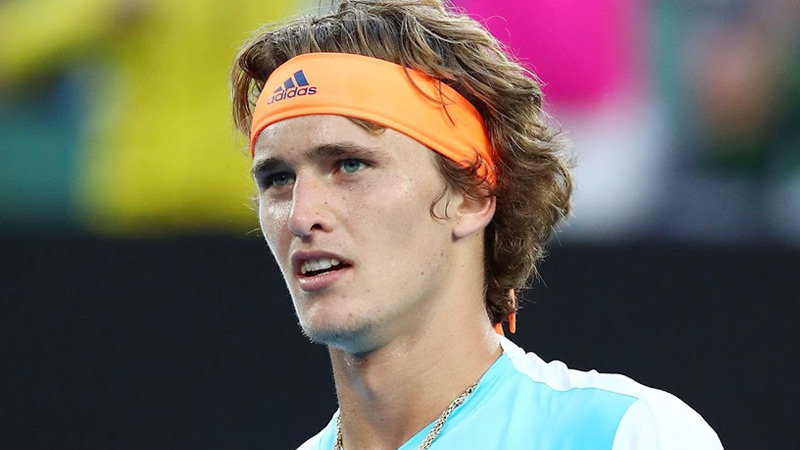
Alexander Zverev has suffered three career-altering injuries: a catastrophic 2022 ankle ligament tear involving seven ruptures, persistent back issues in early 2026, and a recent knee hyperextension at Wimbledon 2026.
Beyond physical trauma, Zverev manages Type 1 Diabetes, a chronic condition requiring on-court insulin injections.
While his 2022 ankle surgery was most severe, his 2026 season was defined by a knee slip against Jannik Sinner that hampered his serve and back pain that forced a Hamburg withdrawal.
These setbacks highlight his resilience as he continues competing at the highest levels of professional tennis.
The 2022 Ankle Catastrophe: How Many Ligaments Did Zverev Tear?
The most devastating moment of Alexander Zverev’s career occurred during the 2022 French Open semifinals against Rafael Nadal.
While lunging for a forehand on the clay, his right foot rolled violently inward, a movement known in sports medicine as a severe inversion injury. The resulting damage was extensive, requiring immediate surgical intervention to save his career and stabilize the joint.
| Injury Detail | Specific Medical Diagnosis |
|---|---|
| Total Ligaments Damaged | Seven (7) lateral ligaments |
| Primary Surgical Repair | All 3 main lateral ankle ligaments |
| Bone Involvement | Two (2) fractured bones in the right ankle |
| Immediate Response | Wheelchair evacuation and emergency surgery |
The Biomechanics of the Inversion Injury
The “violent inward roll” described in medical assessments of the 2022 incident highlights a high-energy trauma.
When an athlete’s foot catches on a surface like clay while the body’s momentum continues laterally, the tension placed on the lateral ligament complex exceeds its tensile strength.
In Zverev’s case, this resulted not just in a simple sprain, but in the complete rupture of the primary structural supports of the ankle.
From a physiological perspective, tearing seven ligaments simultaneously suggests a total disruption of the joint’s stability, which often involves the anterior talofibular ligament (ATFL) and the calcaneofibular ligament (CFL).
Surgery and the Grueling Rehabilitation Process
Following the injury, Zverev underwent corrective surgery to repair the three main lateral ligaments. The rehabilitation process for such a catastrophic tear is multi-phased, starting with non-weight-bearing immobilization to allow the surgical anchors and ligament tissue to knit back together.
According to the data, he missed the entirety of the 2022 season following the June incident. Months of intensive physical therapy were required to restore his range of motion, proprioception (the brain’s ability to sense the joint’s position), and the explosive lateral movement necessary for elite-level tennis.
Recent Knee Hyperextension and Its Impact on Performance
In July 2026, Zverev faced a new physical hurdle during the Wimbledon men’s singles final against Jannik Sinner. While chasing a drop shot, he slipped on the grass and overextended his right knee, falling to the turf in visible agony.
Although he managed to finish the match without a medical timeout, the internal damage was significant enough to alter his tactical approach and physical output for the remainder of the tournament.
The Wimbledon 2026 Final Incident
The slip occurred during the third set, a critical juncture in the championship match. Hyperextension happens when the knee joint is forced to straighten beyond its normal range of motion, often stressing the posterior capsule and the anterior cruciate ligament (ACL).
While Zverev avoided a total structural rupture like his 2022 ankle injury, the “overextension” caused immediate functional limitations. He finished the match, but the lack of a trainer’s intervention on-court did not mean the injury was minor.
How Knee Stability Affects Serve Speed
One of the most telling pieces of data following the 2026 knee injury was the measurable drop in Zverev’s serve speed.
In a professional serve, the legs provide the “kinetic chain” foundation; the player must push off the ground with tremendous force to generate upward momentum.
Zverev later confirmed that he could not properly “push off” his right leg due to the knee pain. This lack of explosive power directly translated to a less effective service game, illustrating how even a non-rupture injury can compromise an athlete’s primary weapons.
Managing Chronic Back Pain During the 2026 Clay Season
Before the knee issues at Wimbledon, Zverev’s 2026 season was already complicated by persistent back problems. This injury was not a singular traumatic event like his ankle or knee slips, but rather an accumulation of stress across a grueling spring schedule on clay courts.
The repetitive rotation and extension required in tennis can lead to significant lumbar strain or disc issues if not managed with precise rest and recovery protocols.
Withdrawal from the Bitpanda Hamburg Open
The back injury flared up significantly during the Rome Masters, specifically during a round-of-16 loss to Luciano Darderi. Following medical advice, Zverev made the difficult decision to withdraw from his hometown tournament, the Bitpanda Hamburg Open.
This withdrawal was a strategic medical necessity to prevent the “persistent back problems” from becoming a season-ending condition. In professional athletics, managing “flare-ups” is often as critical as recovering from acute trauma.
Strategic Recovery for the French Open Title
The decision to rest proved to be a masterclass in workload management. By skipping the Hamburg Open and focusing on recovery, Zverev was able to return to peak form in time for the 2026 French Open.
The results speak for themselves: he claimed his maiden French Open title in June 2026, just weeks after the back pain had threatened his season.
This success highlights the fine line athletes walk between pushing through pain and knowing when to prioritize medical intervention.
What Does Zverev Suffer From Permanently?
Beyond the headlines of torn ligaments and back strains, Alexander Zverev manages a lifelong chronic condition: Type 1 Diabetes. This is a permanent medical reality that requires constant vigilance, especially during five-set matches that can last several hours.
Managing blood glucose levels while performing at an elite physical level is a feat of medical engineering and personal discipline.
Living with Type 1 Diabetes Since Childhood
Zverev was diagnosed with Type 1 Diabetes at the age of four. Unlike Type 2, which can sometimes be managed through diet, Type 1 is an autoimmune condition where the pancreas produces little to no insulin.
For a professional athlete, this means the body cannot naturally regulate the sugar needed for fuel during intense exercise.
He has lived with this “invisible” challenge throughout his entire rise in the tennis world, only recently becoming more public about his management routine.
Insulin Management During Professional Matches
To maintain his performance, Zverev uses a glucose monitor to track his levels in real-time. During tournament changeovers, it is not uncommon to see him administering insulin injections directly on the court.
This is essential because the physical stress of a match can cause blood sugar to fluctuate wildly. If his levels drop too low (hypoglycemia), he faces dizziness and loss of coordination; if they are too high (hyperglycemia), it can lead to fatigue and cramping.
His ability to balance these levels while competing against the world’s best is a testament to his professionalism.
Frequently Asked Questions About Zverev’s Health
How many ligaments did Zverev tear in his ankle?
In total, seven lateral ligaments were damaged during his 2022 fall. However, the primary focus of his surgery was the repair of the three main lateral ligaments that provide the most stability to the ankle joint.
Does Alexander Zverev use an insulin pump?
While he uses a glucose monitor, he is frequently seen administering insulin injections manually during changeovers to keep his blood sugar stable. This allows him to adjust his dosage based on the immediate physical demands of the match.
What happened to Zverev’s serve in 2026?
His serve speed decreased significantly following a knee hyperextension at Wimbledon. The injury prevented him from “pushing off” his right leg with his usual force, breaking the kinetic chain necessary for his high-velocity serve.
Did Zverev win a Grand Slam despite his injuries?
Yes. Despite suffering from chronic back pain earlier in the season that forced a tournament withdrawal, Zverev recovered to win his first French Open title in June 2026.
Conclusion: The Resilience of a Champion
The medical history of Alexander Zverev is a roadmap of extreme physical trials. From the “catastrophic” seven-ligament tear in 2022 to the complex management of Type 1 Diabetes and recent knee and back setbacks, his career is defined by the ability to return from the brink.
His journey provides a unique look into the intersection of modern sports medicine and elite performance. For fans and aspiring athletes alike, Zverev’s story is not just about the injuries he suffered, but about the calculated, disciplined, and successful returns that followed each one.