The professional tennis circuit is a relentless machine, characterized by a calendar that demands near-constant presence and peak physical output.
When a high-profile athlete like Taylor Fritz suddenly vanishes from the later stages of a major tournament or becomes absent from immediate follow-up draws, the sporting community naturally seeks clarity.
The question of why the top-ranked American is not currently competing involves a blend of competitive reality, a complex medical history, and a shift in focus toward industry-wide equipment standards.
Understanding the current status of Taylor Fritz requires looking beyond the scoreboards. It is an exploration of how a season defined by physical recovery and technical frustration culminated in an unexpected early exit at the 2026 US Open.
The Immediate Catalyst: Elimination at Flushing Meadows
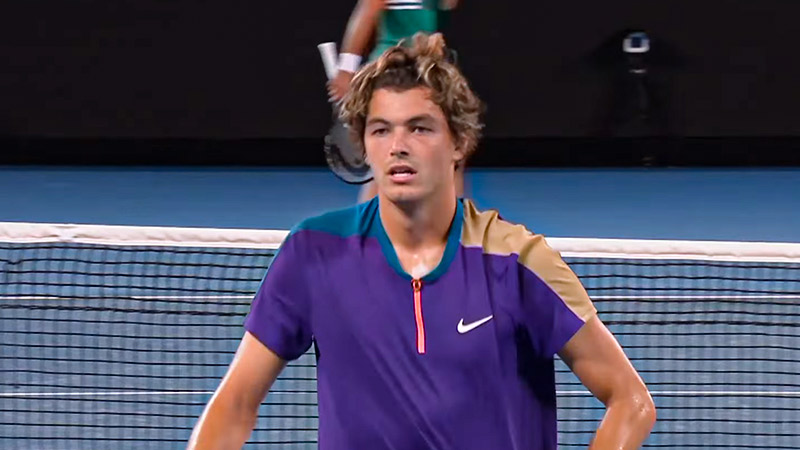
The primary reason Taylor Fritz is not currently active on the match courts is his third-round departure from the 2026 US Open.
In a sport where visibility is tied to advancement, his absence from the second week of the year’s final Grand Slam created a void in the American narrative.
His exit was not a routine defeat. Fritz faced Francisco Cerúndolo in a match that many analysts expected him to navigate with relative ease. The loss was particularly jarring because Fritz had established a commanding two-set lead.
In elite tennis, a two-set advantage is typically considered a statistical lock for a player of Fritz’s caliber. However, the subsequent collapse and loss to Cerúndolo shifted the conversation from Fritz’s championship potential to his immediate competitive future.
This elimination serves as the functional reason for his current lack of playing time. Unlike the team sports models of the NFL or NBA, where a roster spot guarantees a presence regardless of immediate performance, a tennis professional’s schedule is dictated by their survival in a tournament bracket.
Once eliminated, a player typically enters a period of training, rest, or, in Fritz’s case, a public dialogue regarding the conditions of the game.
Physical Context: The 2026 Medical Narrative
When a top-tier player loses a significant lead, the immediate assumption often falls on physical health. To understand Fritz’s current position, one must analyze his 2026 health profile.
Earlier in the 2026 season, Fritz faced significant hurdles that disrupted his momentum. He was forced to sideline himself for several weeks due to two specific issues:
- Chronic Right Knee Tendinitis: A persistent condition that often plagues hard-court specialists, requiring meticulous load management and physical therapy.
- Oblique Strain: An injury that directly impacts the service motion and rotational power, two pillars of Fritz’s aggressive baseline game.
Despite these prior setbacks, it is crucial to note that Fritz did not enter the US Open under a cloud of injury. Reports confirm that he arrived at Flushing Meadows in good health, suggesting that his physical preparation was not the culprit for his third-round exit.
Therefore, his current absence from the court is not a result of a new medical emergency or a recurrence of his knee or oblique issues, but rather the natural byproduct of a tournament loss.
The Pivot to Advocacy: The Wilson Tennis Ball Controversy
In the wake of his US Open elimination, Fritz’s public profile has shifted from active competitor to vocal critic. He has made significant headlines not for his forehand, but for his critique of the equipment used at the highest levels of the sport.
Fritz recently utilized social media to air grievances regarding Wilson tennis balls, specifically drawing a distinction between “retail” balls available to the public and the “tournament” balls provided to professionals. This rant has become the centerpiece of his post-tournament focus.
The core of his argument rests on consistency and quality control. Fritz suggests that the balls used in high-stakes competition may not meet the expectations of the players, potentially affecting the “feel,” flight path, and overall predictability of the game.
For a professional who relies on precise timing and massive power, even slight variations in equipment can lead to the type of performance fluctuations seen in his match against Cerúndolo.
By shifting his focus to this advocacy, Fritz is addressing a systemic concern that many of his peers have quietly discussed, effectively using his “off-time” to influence the technical standards of the ATP tour.
Market Analysis: Why This Matters for the Sport
The “why” behind Fritz not playing is also tied to the logistical structure of the tour. Following a major like the US Open, there is often a brief lull for top players before the tour moves into the Asian swing or the indoor European season.
For Fritz, this gap is an opportunity to reset both mentally and strategically. The loss of a two-set lead is a psychological blow that requires more than just physical recovery.
By engaging in the tennis ball debate, Fritz is also managing his brand. He is positioning himself as an intellectual stakeholder in the game’s development, ensuring his name remains in the headlines even when he is not holding a trophy.
From a strategic standpoint, this period of inactivity allows his coaching team to dissect the breakdown that occurred against Cerúndolo. If his physical health is indeed stable, the focus must shift to the tactical choices made during the third, fourth, and fifth sets of that match.
The Road Ahead: Returning to the Draw
While Fritz is not playing today, his return is inevitable. The professional circuit waits for no one, and the race for year-end rankings will necessitate his return to the court. Fans can expect Fritz to reappear as the tour shifts to its next major phase.
The anticipation surrounding his return will be high. Observers will be looking for two things:
- Mental Fortitude: How he handles the pressure of his next high-stakes match after the US Open collapse.
- Equipment Influence: Whether his public complaints lead to any tangible changes in how equipment manufacturers interact with the tour.
Conclusion
The absence of Taylor Fritz from the current tennis headlines is a multifaceted story. It is the story of a healthy player who suffered a heartbreaking tactical loss, a professional who refuses to stay silent about equipment standards, and an athlete navigating the peaks and valleys of a grueling global tour.
Fritz is not “gone”; he is simply in the transition phase that follows a major disappointment. By addressing his equipment concerns and allowing his body to maintain the health he fought so hard to regain earlier in the year, he is preparing for a final push in the 2026 season.
The narrative of Taylor Fritz is moving from the courts of New York to the boardrooms of equipment manufacturers, but his impact on the game remains as significant as ever.