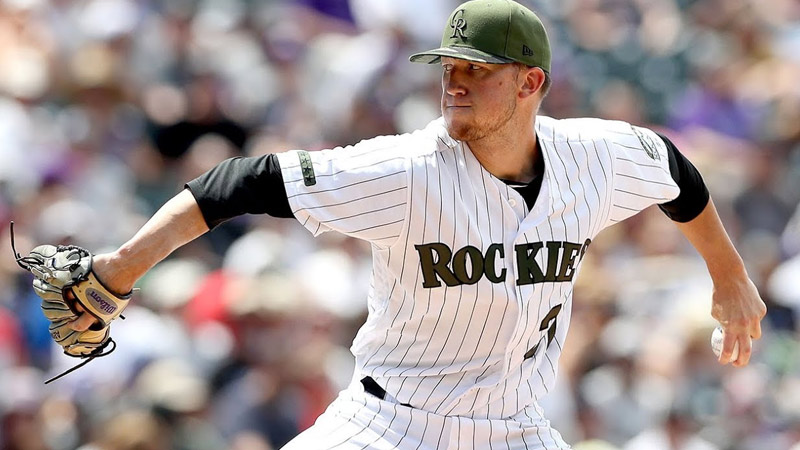
Evaluating Major League Baseball pitchers requires balancing standard baseline numbers against contextual environmental variables. Few players in modern baseball illustrate this complex analytical challenge as starkly as Kyle Freeland.
As a veteran left-handed starter for the Colorado Rockies, Freeland occupies a unique position in modern baseball.
Operating in the most demanding pitching environment in professional sports, his career trajectory provides a fascinating case study in peak performance, environmental adversity, regression, and rotational utility.
To answer the core question—How good is Kyle Freeland?—one must look beyond surface-level win-loss records and examine the intersection of pitch execution, altitude mechanics, contact management, and physical durability.
This comprehensive evaluation breaks down his landmark peak, analyzes four consecutive years of performance data, explores the environmental tax of Coors Field, and outlines his current role in professional baseball.
Summary & Performance Profile
Kyle Freeland’s major league career is defined by two distinct phases: a brilliant, historic peak in 2018, followed by a transition into a durable, back-of-the-rotation starter who faces ongoing challenges preventing runs and missing bats.
- Primary Position: Left-Handed Starting Pitcher, Colorado Rockies
- Career Milestone: 4th-place finish in National League Cy Young voting (2018)
- Franchise Record: Lowest single-season ERA in Colorado Rockies history (2.85 in 2018)
- Recent Performance Trend (2023–2026): Earned Run Averages ranging from 4.98 to 6.38 across varying workloads
- Pitching Style: Contact-oriented starter relying on defense, zone control, and inning volume rather than high strikeout rates
- Current Status: Recovering from a late-season neck injury sustained in 2026
The 2018 Benchmark: Examining the Peak Campaign
To understand Kyle Freeland’s baseline ability and high-water mark, any analysis must begin with his extraordinary 2018 season.
Pitching half his games at mile-high altitude, Freeland delivered one of the most statistically remarkable pitching campaigns in recent memory.
During that landmark year, Freeland posted a 2.85 Earned Run Average, setting a single-season franchise record for the Colorado Rockies. Navigating Coors Field with a sub-3.00 ERA is an anomaly in baseball history.
His ability to suppress hard contact, induce timely ground balls, and strand runners earned him a fourth-place finish in the National League Cy Young Award voting.
That season demonstrated what Freeland achieves when his command, movement, and sequencing operate at absolute peak precision.
However, sustaining that level of efficiency without elite, swing-and-miss strikeout numbers has proven difficult in subsequent seasons, as regression and environmental factors took hold.
Year-by-Year Quantitative Breakdown (2023–2026)
To gain an accurate understanding of Freeland’s current capability, we must evaluate his multi-year statistical output across the four most recent seasons.
The quantitative record reveals a consistent pattern of a back-of-the-rotation starter who provides inning volume but absorbs substantial damage.
Complete Performance Matrix (2023–2026)
| Season | Wins-Losses (W-L) | Earned Run Average (ERA) | Innings Pitched (IP) | Strikeouts (SO) | WHIP (Walks + Hits per IP) |
|---|---|---|---|---|---|
| 2023 | 6–14 | 5.03 | 155.2 | 94 | 1.47 |
| 2024 | 5–8 | 5.24 | 113.1 | 85 | 1.41 |
| 2025 | 5–17 | 4.98 | 162.2 | 124 | 1.42 |
| 2026 | 4–10 | 6.38 | 124.1 | 104 | 1.47 |
Detailed Seasonal Breakdown
1. The 2023 Campaign: Workload vs. Run Prevention
In 2023, Freeland functioned as a primary rotational anchor, completing 155.2 innings across his starts. While he fulfilled the essential role of an innings eater, his 5.03 ERA and 1.47 WHIP underscored persistent difficulties in suppressing base runners.
His strikeout total stood at 94 across 155.2 frames, averaging well under one strikeout per inning. This low strikeout rate forced him to rely heavily on fielders, leaving him vulnerable to hits falling in the vast Coors Field outfield grass. He concluded the year with a 6–14 record.
2. The 2024 Campaign: Shortened Output and Contact Exposure
The 2024 season saw Freeland log 113.1 innings of work, recording a 5.24 ERA and a 5–8 record. Although his WHIP saw a slight marginal reduction to 1.41, his strikeout count remained modest at 85.
With fewer innings logged, his inability to generate swing-and-miss outcomes left his pitch counts elevated early in contests, limiting his capacity to deep-navigate opposing lineups.
3. The 2025 Campaign: Peak Inning Volume and High Loss Totals
Freeland responded in 2025 with his highest workload of the four-year sample, accumulating 162.2 innings pitched. He lowered his ERA slightly under the five-run mark to 4.98 and generated a modern career-high 124 strikeouts.
Despite these localized improvements in strikeout volume and inning count, a lack of run support combined with timely opposition hits resulted in a career-high 17 losses, finishing the campaign at 5–17 with a 1.42 WHIP.
4. The 2026 Campaign: Statistical Trough and Injury Setbacks
The 2026 regular season proved to be the most challenging of his professional career. Over 124.1 innings pitched, Freeland’s ERA climbed to 6.38, accompanied by a 1.47 WHIP and a 4–10 win-loss record.
While he struck out 104 batters, high hit rates and elevated home run frequency created consistent early-inning traffic. His season ultimately came to an abrupt halt due to a late-season neck injury that sidelined him from active competition.
The Coors Field Dilemma: Altitude, Physics, and Aerodynamics
No evaluation of Kyle Freeland is valid without examining the physical environment in which he pitches half of his games. Pitching at 5,280 feet above sea level introduces atmospheric factors that directly alter baseball physics.
Environmental Pitching Dynamics at Coors Field
┌───────────────────────────────────────────────────────────┐
│ Thin Air Atmosphere                                      │
│  ├─► Reduces Magnus effect on breaking balls (less movement)│
│  ├─► Accelerates exit velocity on hit balls                │
│  └─► Expands outfield territory (increased BABIP)         │
└───────────────────────────────────────────────────────────┘
Aerodynamic Alterations
- Reduced Pitch Movement: The thinner air at altitude reduces atmospheric resistance, diminishing the aerodynamic spin effect (Magnus force) on breaking balls and off-speed pitches. Curveballs and sliders break less sharply, requiring pitchers to adjust their release points and target locations.
- Elevated Exit Velocities & Outfield Dimensions: Balls hit into the air travel further in thin air. To compensate for high-flying home runs, Coors Field features expansive outfield dimensions, creating vast gaps where soft-to-medium contact routinely falls for extra-base hits.
- Rest Recovery and Physical Strain: Pitching repeatedly at high elevation imposes additional physical wear on athletes, affecting recovery cycles between rotation starts.
Fans and analysts often debate the degree to which Coors Field impacts Freeland’s surface statistics. Supporters argue that his elevated ERAs are heavily inflated by his home environment and that his raw numbers obscure a competitive, baseline starter.
Conversely, skeptics emphasize that elite starters find ways to adapt, pointing out that an ERA hovering between 5.00 and 6.38 reflects baseline vulnerability regardless of venue.
Strikeout Rates and Contact Profiles: The Core Analytical Issue
When assessing why Freeland’s overall performance has diverged from his 2018 standard, sabermetric analysis points directly to contact management and strikeout capacity.
Career Evolution: Pitching Profile Shift
┌─────────────────────────────────────────────────────────────┐
│ 2018 Campaign: Elite Weak Contact + High Strand Rate        │
│                                                             │
│ Current Profile (2023-2026):                                │
│ Low Strikeout Totals ──► High In-Zone Contact ──► High WHIP  │
└─────────────────────────────────────────────────────────────┘
1. Inability to Miss Bats
In modern baseball, generating swings and misses is the most reliable way to prevent runs. Strikeouts eliminate defense-dependent variables, ball placement luck, and environmental elevation effects. Across recent seasons, Freeland’s strikeout output has hovered significantly below the league average for starting pitchers:
- 2023: 94 strikeouts in 155.2 IP (0.60 strikeouts per inning)
- 2024: 85 strikeouts in 113.1 IP (0.75 strikeouts per inning)
- 2025: 124 strikeouts in 162.2 IP (0.76 strikeouts per inning)
- 2026: 104 strikeouts in 124.1 IP (0.83 strikeouts per inning)
2. High Contact and Base Runner Traffic
Because Freeland does not consistently put batters away with strikes, opposing hitters put a high percentage of pitches into play. This constant contact leads to high hit totals and elevated home run exposure.
His WHIP figures—1.47 in 2023, 1.41 in 2024, 1.42 in 2025, and 1.47 in 2026—demonstrate that he consistently works with multiple runners on base, forcing him into high-stress pitching situations.
Fan Perception and Market Consensus
Public and expert opinions regarding Freeland are sharply divided, reflecting the tension between traditional pitching valuation and advanced environmental adjustments.
| Defensive Consensus | Critical Consensus |
|---|---|
| Unfairly penalized by altitude | Replacement-level output |
| Eats innings for a thin rotation | Excessive contact & hit rates |
| Local leader and competitor | High ERAs limit rotational ceiling |
The Defensive View
Adherents to this perspective view Freeland as a resilient, competitive left-hander who absorbs difficult innings in the league’s most taxing venue. T
hey emphasize that pitching in Denver wears down arms faster than anywhere else, and that having a starter who routinely takes the ball, covers 150+ innings, and competes with toughness provides real value to a club.
The Critical View
Critics focus strictly on outcome metrics. From an analytical standpoint, an ERA exceeding 5.00 over multiple years combined with a WHIP near 1.45 classifies a pitcher as a replacement-level or below-average rotational arm.
This viewpoint holds that regardless of venue, modern major league teams require higher swing-and-miss thresholds to compete effectively.
Physical Adversity: Analyzing the 2026 Neck Injury
Durability has historically been one of Freeland’s key attributes, allowing him to log heavy inning loads despite environmental hurdles. However, physical durability became a major concern during the 2026 season.
Late in the 2026 regular season, Freeland suffered a neck injury that forced him to the sideline. Neck and spinal-adjacent injuries are particularly tricky for starting pitchers because rotational mechanics, head stability, and delivery follow-through depend directly on cervical mobility and strength.
Injury Impact Flowchart
┌─────────────────────────────────────────────────────────────┐
│ 2026 Neck Injury Sidelining                                 │
│  ├─► Interrupts mechanical delivery and kinetic chain      │
│  ├─► Impairs pitch location and command                     │
│  └─► Raises rehabilitation hurdles for 2027 rebound         │
└─────────────────────────────────────────────────────────────┘
The neck injury compounded an already difficult 2026 season where his ERA reached 6.38. For a pitcher who relies on precise spot command rather than overpowering speed, any physical restriction that affects delivery mechanics can lead to missed targets over the heart of the plate.
Organizational Fit and Rotational Future
How does Kyle Freeland fit into future roster building and pitching strategy? Evaluating his ongoing utility requires matching his skill set against modern pitching demands.
Rotational Value Profile
┌─────────────────────────────────────────────────────────────┐
│ Role: 4th / 5th Starter / Inning Consumption Specialist     │
│ Strengths: Competitive Pitching, Inning Volume, Local Experience │
│ Vulnerabilities: High Contact Allowed, Low Strikeout Rates   │
└─────────────────────────────────────────────────────────────┘
- The Inning Consumption Role: Starting rotations require arms capable of absorbing innings to preserve bullpen depth. Even when allowing runs, a pitcher who can reach the 5th or 6th inning prevents bullpen burnout across a 162-game schedule.
- Veteran Leadership: As a seasoned veteran who has spent years navigating Colorado, Freeland offers valuable experience to younger pitchers adjusting to high-altitude pitching dynamics.
- Rebound Potential: If Freeland achieves full health following neck rehabilitation and adjusts his pitch sequencing to optimize soft contact, he can stabilize his ERA closer to his 2025 mark (4.98).
Final Analytical Verdict: How Good Is Kyle Freeland?
At his absolute best, Kyle Freeland proved that a focused left-hander can deliver Cy Young-caliber pitching even in the thin air of Denver.
His 2018 season remains a legendary achievement in Colorado baseball history.
In his current career stage, Freeland is a back-of-the-rotation starter who provides inning volume but carries noticeable performance limits.
His low strikeout rates and susceptibility to contact leave him with high ERAs (4.98 to 6.38 over recent years) and elevated WHIP metrics.
While environmental altitude factors exacerbate these numbers, his underlying profile is that of a competitive, durable veteran who functions best as a back-end inning eater rather than a top-tier rotational front-liner.