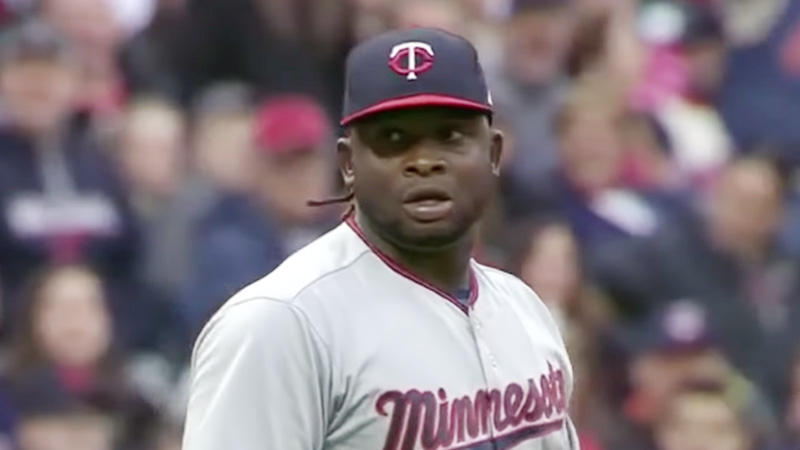
The evolution of Major League Baseball in the twenty-first century has been defined by the pursuit of efficiency, specifically through the “Three-True-Outcomes” philosophy.
At the center of this modern era stands Miguel Sanó, a player whose career serves as a definitive case study in the trade-offs between extreme power and technical consistency.
To understand how good Sanó truly was—and is—requires a nuanced look at the metrics that define success for a power specialist in today’s game.
The Architecture of a Three-True-Outcomes Profile
The term “Three-True-Outcomes” refers to a plate appearance that ends in one of three ways: a home run, a walk, or a strikeout.
This style of play effectively removes the defense from the equation, placing the entire outcome of the at-bat on the pitcher-batter duel. Miguel Sanó is the quintessential representation of this archetype.
His career has been a balance of immense raw strength and prodigious home run capability, tempered by the functional limitations of a low batting average and a high frequency of strikeouts.
While traditionalists might view a high strikeout rate as a failure, modern front offices often see it as a byproduct of a swing designed for maximum damage.
Professional Profile and Career Trajectory
Sanó’s tenure in the professional ranks spans nearly a decade, primarily marked by his impact in the American League. The following table summarizes his professional footprint:
| Category | Career Details |
|---|---|
| Primary Organization | Minnesota Twins (9 seasons) |
| Secondary Organization | Los Angeles Angels |
| Positions Played | Third Base, First Base, Designated Hitter |
| Peak Accolade | American League All-Star (2017) |
| Current Status | International and Winter Ball (Japan) |
The Elite Power Tier: Analyzing “The Good”
When evaluating Miguel Sanó, the conversation must begin with his raw, brute strength. From the moment he entered the professional scene, he was heralded as a generational talent.
This was not mere hyperbole; the physics of his swing produced exit velocities and distances that few of his peers could match. When Sanó makes contact, the ball travels an exceptionally long way.
His peak years showcased what a lineup looks like when anchored by such a presence. He functioned as a fearsome middle-of-the-order bat, capable of changing the momentum of a game with a single swing.
- The 2017 All-Star Campaign: Sanó’s 2017 season remains his most complete performance, earning him an All-Star nod and validating the “generational” hype that had followed him since his signing.
- The 2021 Power Surge: Even as his game evolved, the power remained elite. In 2021, Sanó hammered 34 home runs, proving that his ability to drive the ball out of any part of the park was still intact.
- Walks and Pressure: By adhering to the Three-True-Outcomes approach, Sanó remained a threat even when not hitting. His willingness to take walks maintained his .801 career OPS, a mark that signifies a highly productive offensive player despite a low batting average.
The Technical Limitations: Analyzing “The Bad”
The inverse of elite power is often a lack of contact, and for Sanó, this was a persistent hurdle. The primary downside to his approach was a chronic vulnerability to swinging and missing.
This lack of contact floor meant that when the home runs weren’t coming, there was little “small ball” or situational hitting to fall back on.
- The Average Gap: A career batting average of .233 highlights the “boom or bust” nature of his plate appearances.
- Mobility and Injury: One of the most significant factors in Sanó’s transition from a primary third baseman to a first baseman and designated hitter was his health. Lingering knee issues significantly sapped his mobility and defensive range.
- Impact on Longevity: These injuries did more than just affect his defense; they impacted his effectiveness during his later Major League stints, eventually leading to his transition into free agency and international play.
To assess Sanó’s value objectively, we must look at the cumulative data from his nine-season MLB career. These numbers reflect a player who prioritized impact over volume.
| Metric | MLB Career Total / Average | Contextual Significance |
|---|---|---|
| Home Runs (HR) | 164 | Represents elite power-per-at-bat efficiency. |
| Runs Batted In (RBI) | 424 | Demonstrates his value as a run producer in scoring opportunities. |
| Batting Average (BA) | .233 | Reflects the high-risk nature of his swing mechanics. |
| OPS | .801 | Indicates that his total offensive contribution remained above league average. |
The Physical Toll and Defensive Evolution
Sanó’s career path was also a story of physical adaptation. Standing as a massive presence on the field, he initially manned third base, a position requiring quick reflexes and lateral movement. However, as the aforementioned knee issues persisted, his role shifted.
- Third Base to First Base: The transition to first base was a necessity to preserve his legs and keep his bat in the lineup.
- The Designated Hitter Role: Eventually, the “DH” role became his primary home, allowing him to focus exclusively on his offensive output without the physical strain of defensive responsibilities.
- The International Pivot: The decline in MLB opportunities led Sanó to explore Japan and winter ball. This move is common for power specialists looking to refine their approach or prove their health to MLB scouts for a potential return.
How Good Was He?
In a professional context, “good” is relative to the role a player is asked to fill. If the objective is to find a high-average hitter who puts the ball in play to move runners, Sanó would not be the choice.
However, if the objective is to find a player who can generate runs instantly and provide elite power in the middle of a lineup, Sanó was among the best in the league at his peak.
Key takeaway points on his performance:
- Power is the most expensive tool in baseball. Sanó possessed it in abundance, which allowed him to maintain a 9-season career despite his high strikeout rates.
- The .801 OPS is the “Truth” of his career. It bridges the gap between the .233 average and the 164 home runs, showing that he was a net positive for his teams’ offenses.
- Health was the ultimate ceiling. Without the knee injuries, his mobility might have allowed for a more consistent defensive profile, potentially extending his tenure with the Minnesota Twins.
Conclusion: The Legacy of a Slugger
Miguel Sanó remains one of the most intriguing figures of the 2010s baseball era. He was a player who leaned entirely into the “Three-True-Outcomes” trend, for better and for worse. His 164 career home runs and All-Star status are a testament to what is possible when a player possesses immense raw strength.
While his struggles with contact and injuries ultimately moved him toward the international circuit, his impact on the game—particularly his 34-home run season in 2021—serves as a reminder of his status as a fearsome middle-of-the-order bat.
For any organization, Sanó represented the ultimate high-reward gamble: a player who could lose a game with a strikeout but win it with a single, towering blast.