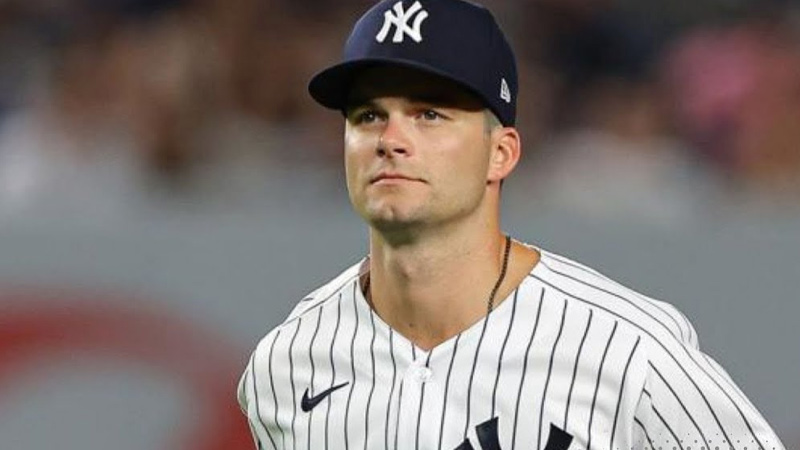
The trade that occurred on June 13, 2025, between the Chicago White Sox and the Milwaukee Brewers serves as a landmark case study in player development, organizational culture, and the necessity of veteran stability during a rebuild.
Why the White Sox moved a former No. 3 overall draft pick for an expiring pitching contract, one must look past the surface-level box scores and analyze the systemic pressures facing both franchises at that exact moment.
The Transaction: Breaking Down the June 13th Move
The mechanics of the deal were straightforward but surprising to the baseball community at large.
The Chicago White Sox sent first baseman Andrew Vaughn to the Milwaukee Brewers in exchange for right-handed pitcher Aaron Civale and cash considerations.
At the time, the deal appeared to be a “change of scenery” play for two athletes who had reached an impasse with their respective coaching staffs:
- Andrew Vaughn was struggling through the worst stretch of his professional career, characterized by a lack of power and a high frequency of double plays.
- Aaron Civale had recently been moved to the Milwaukee bullpen—a role he was reportedly unhappy with—and had requested a trade to return to a starting rotation.
The Statistical Paradox: Andrew Vaughn’s Dual 2025 Campaigns
The most jarring aspect of this trade is the near-instantaneous transformation of Andrew Vaughn once he crossed the state line into Wisconsin.
The discrepancy in his performance metrics between the two organizations is one of the most significant “reclamation” stories in recent MLB history.
Performance with the Chicago White Sox (Pre-Trade):
- wRC+: 43 (indicating he was 57% below league average offensively).
- fWAR: -1.3 (he was performing significantly below the level of a replacement player).
- Plate Discipline: Described by fans as a “guaranteed double play” even with the bases empty.
- Contractual Context: The Sox were paying the remainder of a $5.85 million contract while seeing zero return on their investment.
Performance with the Milwaukee Brewers (Post-Trade):
- wRC+: 142 (42% above league average).
- fWAR: 1.9.
- High-Leverage Success: Vaughn became “notoriously clutch,” hitting grand slams, game-tying doubles in the ninth inning, and critical home runs during the NLDS.
- The “King” Status: He earned the nickname “King Vaughn” among the Milwaukee faithful, effectively replacing the production they had hoped for from previous starters like Rhys Hoskins.
Why the White Sox Moved On: A Culture of “Poison”
From a Chicago perspective, the decision to trade Vaughn was rooted in a realization that his tenure in the South Side had become untenable.
Analysts and fans alike began to view the White Sox organization as a “poisonous” environment for young talent.
Key Factors in the Decision:
- Failed Rebuild Symbolism: As a top draft pick who failed to meet expectations, Vaughn became a lightning rod for criticism. He was frequently booed by the home crowd, creating a hostile environment that hindered his recovery.
- Work Ethic Questions: Rumors began to circulate within the Chicago media and fan base questioning Vaughn’s commitment to his craft, suggesting a disconnect between the player and the team’s development staff.
- The “Lake Michigan Jerryworld” Effect: There is a growing sentiment that players simply need to escape the specific organizational pressures of the White Sox to succeed, with Vaughn serving as the primary evidence for this theory.
The Logic of Aaron Civale: Protecting the “Next Wave”
While the loss of Vaughn’s potential became a painful reality for Chicago fans, the acquisition of Aaron Civale was a tactical move designed to protect the health of the team’s remaining assets.
The White Sox were facing a crisis with their young starting rotation. By mid-June, several of their primary starters were on track to blow past their career highs in innings pitched, risking long-term injury. The rotation included:
- Burke
- Smith
- Martin
- Cannon
Civale’s Role as a “Veteran Innings Eater”:
- Workload Management: Civale was brought in to provide a consistent five to six innings per start, effectively “lightening the load” for the younger arms and preventing the team from having to call up unprepared prospects from the minor leagues.
- Rotation Stability: Prior to his arrival, the team had lost Martin Perez to the IL early in the season, leaving a massive void in veteran leadership.
- ROI for Chicago: Despite the lopsided offensive results of the trade, Civale was described as providing a better return on investment for the Sox than he had for the Brewers, where he was relegated to the bullpen.
Missed Opportunities: The “Flip” That Never Happened
A significant point of contention for critics of the White Sox front office is what happened—or rather, what didn’t happen—after the trade.
It was widely expected that the Sox would use Civale to stabilize the rotation for a few months and then “flip” him to a contender at the trade deadline for prospect capital.
The failure to move Civale at the deadline is cited by many as a classic example of the management errors that keep the organization in the “basement” of the standings.
However, others argue that keeping Civale was necessary because his value as a clubhouse mentor and a buffer for young pitchers outweighed whatever low-level prospect they might have received in a trade.
The Financial and Contractual Fallout
The trade also had long-term financial implications for both clubs. By moving Vaughn, the White Sox avoided the possibility of a “non-tender” situation or continuing to pay for underperformance.
- Vaughn’s Arbitration: After his successful stint with Milwaukee, Vaughn agreed to a $7.65 million deal to avoid arbitration, a price the Brewers were happy to pay given his 142 wRC+.
- The Houser Domino Effect: Acquiring Civale gave Milwaukee the flexibility to trade Adrian Houser to another team for a prospect reclamation project, Curtis Mead, further deepening their roster.
- The Manzardo Connection: The trade also indirectly highlighted the success of other teams; for instance, Cleveland had previously traded Civale to Tampa Bay for Kyle Manzardo, who became a powerhouse for the Guardians. This reinforced the idea that Civale, while a useful “innings eater,” often functions as a piece that allows other teams to secure elite talent.
Final Analysis: A True “Win-Win”?
In the immediate aftermath, the trade looked like a disaster for Chicago. Seeing a former top prospect become one of the best bats in the MLB within weeks of leaving is a “damning” indictment of any player development system.
However, a more nuanced view suggests the trade fulfilled its primary objectives for both parties:
- Milwaukee secured a middle-of-the-order power hitter who anchored their first base position and contributed to a deep postseason run.
- Chicago successfully protected their four most important young starting pitchers from overwork and injury, potentially saving the future of their rotation.