In modern Major League Baseball, defensive flexibility has evolved from a secondary perk into an absolute necessity. Front offices and coaching staffs actively seek athletes who can adapt across multiple infield positions without compromising defensive reliability.
When evaluating tactical roster adjustments, one question frequently arises among fans and analysts: Can Nick Madrigal play third base?
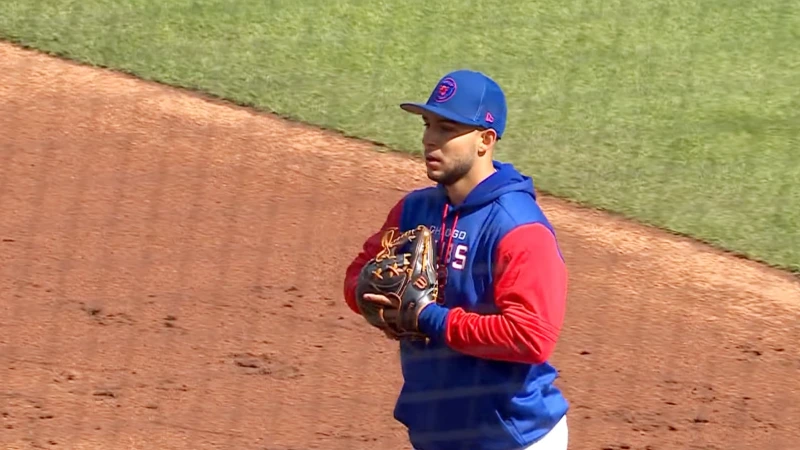
The short answer is yes. Nick Madrigal can play third base, having successfully transitioned to the position during his time with the Chicago Cubs.
Historically regarded as a pure second baseman throughout his amateur and early professional career, Madrigal’s move to the hot corner represents a compelling example of professional adaptability.
This detailed analysis examines how the transition occurred, evaluates the advanced defensive metrics behind his performance, breaks down the mechanical adjustments required, and assesses what his versatility means for modern roster construction.
The Tactical Catalyst — Why the Infield Move Happened
Understanding why a player changes positions requires examining organizational strategy and roster depth. Nick Madrigal was originally drafted and developed primarily as a second baseman. Recognized for his elite contact skills at the plate and reliable hands in the middle infield, second base was his natural position.
However, the roster dynamics of the Chicago Cubs shifted significantly before the 2023 season. The primary turning point occurred when the organization signed elite free-agent shortstop Dansby Swanson.
Swanson’s arrival solidified the shortstop role, which allowed the team to transition Gold Glove infielder Nico Hoerner over to second base.
With second base occupied by Hoerner and shortstop locked down by Swanson, Madrigal faced a potential loss of playing time. Rather than accepting a reduced role, he embraced a new defensive challenge.
During 2023 spring training, Madrigal worked intensively with the Cubs’ coaching staff to learn the fundamentals, footwork, and reaction demands of third base. This proactive preparation enabled him to turn an organizational roster logjam into a valuable opportunity.
Scouting the Mechanics — Second Base vs. The Hot Corner
Moving from second base to third base involves far more than simply shifting across the infield dirt. The physical and mental demands of the two positions differ substantially in several key areas:
Reaction Time vs. Lateral Range
At second base, an infielder sits farther back from home plate, granting an extra fraction of a second to read the ball off the bat. This extra time allows for broader lateral range and calculated angles.
Conversely, third base is known as the “hot corner” for a reason. Pulled ground balls and line drives off right-handed hitters frequently exceed 100 mph exit velocity, leaving zero room for hesitation or delayed reaction.
Throwing Distance and Power Requirements
The throw from second base to first base is shorter and emphasizes a rapid transfer and quick release over pure velocity. Throws from third base, however, require high arm strength and precise accuracy to cover the long distance across the diamond.
Madrigal had to adjust his throwing mechanics, focusing on resetting his feet efficiently and generating power through his lower body to deliver firm, accurate throws.
Positioning and Pre-Pitch Readiness
Third basemen must constantly balance protecting the foul line against hard-hit extra-base hits while remaining prepared to charge weak contact or bunts.
Madrigal concentrated on improving his initial step and glove positioning, ensuring he could charge slow rollers without getting caught out of position on hard pull hits.
By the Numbers — Evaluating Advanced Defensive Metrics
While positive scouting reports from spring training were encouraging, objective data from regular-season games provides the true measure of defensive performance.
Despite having no prior professional experience at third base, Madrigal posted solid defensive numbers.
Two primary advanced metrics highlight his impact at the hot corner:
- Defensive Runs Saved (DRS): Defensive Runs Saved calculates the total number of runs an infielder saves or costs his team compared to an average player at that position. Madrigal registered positive DRS values during his time at third base. This indicates that his positioning, fielding consistency, and ball security saved tangible runs for his pitching staff.
- Outs Above Average (OAA): Outs Above Average, tracked via Statcast data, measures an infielder’s range and success rate based on the difficulty and catch probability of individual plays. Madrigal achieved positive Outs Above Average at third base. This demonstrates that his success was rooted in consistent execution rather than favorable positioning alone.
By earning positive marks in both DRS and OAA, Madrigal proved that he is far more than an emergency option; he is a capable utility and corner-infielder option in Major League Baseball.
Roster Value and Tactical Flexibility
Having an infielder who can handle both middle and corner infield spots provides significant advantages for team management:
- Late-Inning Defensive Flexibility: A player capable of playing multiple positions allows managers to make tactical pinch-hitting or pinch-running substitutions late in games without sacrificing defensive quality.
- Pitching Matchup Optimization: Against specific hitting profiles or extreme pull-hitters, defensive positioning can be tailored with confidence when fielding instictively sound defenders.
- Player Load Management: Over the course of a long season, key starters require rest. Madrigal’s capability at third base allows managers to rest starters or rotate designated hitters without creating a defensive liability on the field.
Ongoing Technical Refinements
Although Madrigal’s transition has been successful, playing third base requires continuous adjustment. Key areas of ongoing focus include:
- Maximizing Throwing Velocity: Continuing to build throwing strength and maintaining efficient footwork to maximize velocity across the diamond.
- Protecting the Foul Line: Enhancing backhand range on hard-hit balls aimed directly down the left-field line.
- Charging Bunt Coverage: Refining quick-charge footwork and bare-hand mechanics on surprise bunts and weak contact.
Summary
Nick Madrigal’s transition to third base stands as a clear success story of athletic adaptation and coaching preparation. Prompted by major roster additions, he dedicated himself during 2023 spring training to mastering a demanding new position.
Supported by positive Outs Above Average and Defensive Runs Saved metrics, the data confirms that he can play third base effectively at the highest level. His newfound multi-position versatility ensures he remains a valuable defensive asset for modern infield strategy.