
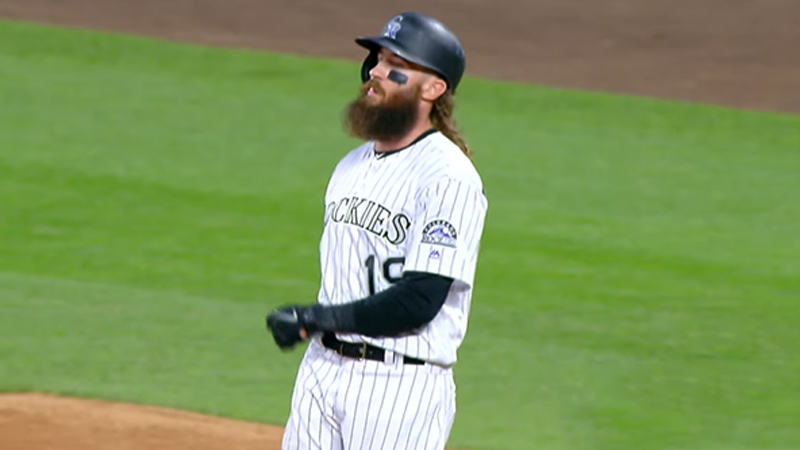
For more than a decade, Charlie Blackmon was the heartbeat of Colorado Rockies baseball. He was the leadoff hitter with the famous beard, the “Chuck Nazty” nickname, and a bat that could change a game before the opposing pitcher found his rhythm.
So when the Rockies moved him out of center field and into right field in 2019, fans took notice. Why would a team shift one of its biggest stars away from a premium defensive position? Was it a demotion, a sign of decline, or something smarter?
The real answer blends geography, physics, roster math, and long-term planning. Below, we break down exactly why Charlie Blackmon played right field, what the move meant for his body and his bat, and how it shaped the final chapter of a 14-year career spent entirely in Colorado.
Coors Field’s Center Field: The Toughest Beat in Baseball
To understand the move, you have to understand the ballpark. Coors Field sits roughly a mile above sea level in Denver. The thin air lets batted balls travel farther, so the fences were set deep when the park opened in 1995.
The result is widely considered the largest outfield in the majors, with center field stretching to 415 feet. More grass means wider gaps, more balls dropping in, and more ground to cover on every play. Fly balls also carry differently in the thin air, which makes reading them harder.
The center fielder carries most of that load. He is expected to range from gap to gap, back up both corner outfielders, and chase down balls that would be routine outs in smaller parks. Over a 162-game season, that adds up to thousands of sprints, sudden stops, and hard trips to the warning track.
For a young, fast player, that is a challenge. For a player in his 30s, it becomes a real health risk. Every extra sprint taxes hamstrings, calves, knees, and ankles. Center field at Coors does not just test a player’s skill; it tests his body every single night.
Protecting a Franchise Cornerstone
By 2019, Blackmon was no longer a young prospect. Born in July 1986, he turned 33 during that season. Speed and range usually fade in a player’s early 30s, and center field is where that decline shows up first.
The Rockies also had a major financial reason to plan carefully. In April 2018, they signed Blackmon to a six-year contract extension worth about $108 million. That deal tied him to Colorado well into his mid-30s, so keeping him healthy and productive meant protecting a significant investment.
There was an honest performance factor, too. By 2018, advanced defensive metrics rated Blackmon among the weaker center fielders in the league. His instincts and effort were never in doubt, but his range had narrowed. Right field asks for less ground coverage, letting him play steady defense without being exposed.
The move follows a pattern smart organizations use. Teams often shift aging stars to less demanding positions to extend their careers. A corner outfield spot keeps a player’s glove in the game while saving his legs for what matters most: hitting.
Keeping the Bat Fresh: What Happened at the Plate
Blackmon’s greatest value always came from his bat. In 2017, he won the National League batting title with a .331 average and set the major league record for RBIs by a leadoff hitter. The Rockies wanted that kind of production for years, not just one season.
After the move to right field, his numbers climbed:
| Stat | 2018 (mostly center field) | 2019 (mostly right field) |
|---|---|---|
| Batting average | .291 | .314 |
| Home runs | 29 | 32 |
| RBIs | 70 | 86 |
| Slugging percentage | .502 | .576 |
He also earned his fourth All-Star selection in 2019, a clear sign the switch had not dulled his edge.
A fair analysis needs context, though. 2019 was a record-setting home run year across Major League Baseball, so part of the jump reflects a league-wide surge. Better numbers after a position change do not prove the change caused them.
Still, the logic holds up. A player who is not sprinting gap to gap for nine innings has more left for each at-bat. Lighter defensive demands can mean fresher legs, better balance at the plate, and fewer nagging injuries across a long season.
The Roster Puzzle: Ian Desmond and an Open Right Field
The timing made sense from a roster standpoint, too. Carlos González, the Rockies’ longtime right fielder, left the club after the 2018 season. That created a natural landing spot for Blackmon.
At the same time, Colorado needed a plan for Ian Desmond. Signed before the 2017 season, Desmond had spent much of his Rockies tenure at first base. He had also played center field for the Texas Rangers in 2016, which made him a logical candidate to take over the position.
So the club rearranged the pieces heading into 2019: Blackmon to right, Desmond to center, and a more balanced outfield overall. Each player landed where his skills fit best at that stage of his career.
The shift also opened the door for younger outfielders in later years. Center field at Coors Field stayed a priority position, eventually handled by players like Brenton Doyle, who won a Gold Glove for his defense there in 2023.
Was It the Right Call?
Looking back, the move holds up well. Blackmon stayed in the Rockies’ lineup for six more seasons after the switch, an impressive run for a player who turned 33 the year it happened. That durability is the clearest sign the plan worked.
His role kept evolving, too. In his final seasons, he split time between right field and designated hitter, especially after the National League adopted the universal DH in 2022. That gave Colorado even more flexibility to rest his legs while keeping his bat in the order.
There were trade-offs. Right field at Coors Field is still a large territory, and Blackmon was never known as an elite defender there either. But the gap between him and an average right fielder was far smaller than it had been in center, where every lost step gets magnified.
For fans and analysts, the lesson is simple. Positions are not permanent labels. The best teams match a player’s skills to where he creates the most value at each stage of his career, and Blackmon’s move to right field is a textbook example.
The Final Chapter: Retirement and Beyond
Blackmon announced his retirement in September 2024 and played his final game at Coors Field on September 29, 2024. He finished a 14-year career spent entirely with the Rockies, a rare feat in an era of constant player movement.
His résumé speaks for itself: four All-Star selections, two Silver Slugger Awards, a batting title, and a place among the franchise’s career leaders in several offensive categories. He also became one of the most recognizable personalities in team history.
After hanging up his spikes, Blackmon moved into a front-office role as a special assistant to the general manager in 2025. That keeps his baseball knowledge, and his deep understanding of what it takes to succeed at Coors Field, inside the organization.
Conclusion
Charlie Blackmon played right field because the Rockies chose longevity over tradition. Coors Field’s enormous center field demands relentless running, and by 2019 Blackmon was in his 30s with a long-term contract and a bat the team couldn’t afford to lose.
Moving him to a corner protected his legs, kept him in the lineup, and opened center field for Ian Desmond.
The results backed up the strategy: a strong 2019 season, another All-Star nod, and six more years as a Rockies regular before his 2024 retirement. His story shows how a smart position change can extend a great career.
