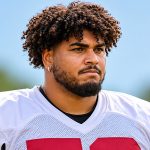
The mid-season trade of Harrison Bader from the Minnesota Twins to the Philadelphia Phillies stands as a textbook example of how Major League Baseball teams navigate the complex intersection of postseason aspirations, prospect capital, and the cold reality of expiring contracts.
When the news broke that the energetic center fielder was heading to the City of Brotherly Love, it sparked intense debate across both fan bases.
While some viewed it as a necessary business move for a Minnesota team looking toward the future, others felt the sting of losing a player who had quickly become a foundational piece of the clubhouse “vibes” and defensive identity.
This post dives deep into the strategic, emotional, and statistical reasons behind the Harrison Bader trade, exploring what both teams gained and what the Twins left behind.
The Strategic Catalyst: The “Rental” Reality
The primary driver behind Harrison Bader’s departure from Minnesota was his contract status. At the time of the trade, Bader was playing on an expiring contract, making him a “rental” player for any team looking to bolster their roster for a playoff push.
For the Twins’ front office, the decision was pragmatic. Despite Bader’s popularity, the likelihood of re-signing him in the upcoming off-season was viewed as low. In the high-stakes environment of the trade deadline, a player of Bader’s caliber—showing a multi-year high in offensive production and elite defensive metrics—held significant trade value.
By moving him, the Twins adhered to a common organizational philosophy: maximize the value of a departing asset rather than letting them walk for nothing in free agency.
The Phillies’ Perspective: Seeking a “Spark”
For the Philadelphia Phillies, the acquisition was about immediate impact. The team was looking for a specific type of player to stabilize their outfield and provide a “spark” for the pennant race. Bader fit the bill perfectly for several reasons:
- Defensive Excellence: Bader was widely regarded as one of the best defensive center fielders in the game, a trait that the Phillies’ front office prioritized to shore up their late-inning defense.
- Clubhouse Energy: Phillies fans and analysts noted that Bader’s high-motor play and intense “energy and hustle” were exactly what the team needed for a long October run.
- The “Philly Fit”: Beyond his play, there was a cultural synergy. Many fans joked that his flowing hair and aggressive style of play gave him “Philly energy” before he even stepped into the clubhouse.
Breaking Down the Return: Who Did the Twins Get?
A trade is only as good as the talent returning, and the Twins focused on a mix of “near-ready” talent and high-upside “lottery tickets.” The deal centered on two key prospects from the Phillies’ system:
Hendry Mendez (OF)
The centerpiece for Minnesota was Mendez, a 21-year-old outfielder who was the Phillies’ No. 12 prospect at the time.
Playing at the Double-A level in Reading, Mendez was posting an impressive slash line of .290/.374/.434. Analysts expected him to slot immediately into the 12–20 range of the Twins’ farm system rankings.
Geremy Villoria (RHP)
In contrast to Mendez’s proximity to the majors, Villoria was a long-term project. Described by some fans as a “literal child,” Villoria was a 16-year-old pitcher who had signed a $425,000 bonus only months prior in January.
This move signaled the Twins’ willingness to gamble on raw, international talent that could pay dividends years down the line.
The Void in Minnesota: Who Fills Center Field?
Losing Bader left a significant hole in the Twins’ defensive alignment, particularly with Byron Buxton’s health frequently being a point of concern. The trade forced the Twins to look internally at their rising stars:
- Austin Martin: Seen as a primary candidate to take over the outfield reps vacated by Bader.
- Luke Keaschall: Emerging as a fan favorite for a call-up, many felt Keaschall had “earned his spot” and would be the logical choice to fill the roster gap.
- The Emmanuel Rodriguez Factor: While Rodriguez was a top-tier prospect, his path to the majors was hampered by recurring injuries, making him an unreliable immediate replacement at the time of the trade.
The “Bader Effect”: Losing a Fan Favorite
Statistics only tell half the story. Harrison Bader’s tenure in Minnesota, though brief, left a lasting mark on the community. Fans lamented the loss of “Bader Tots,” a playful nickname for his followers, and noted the “dynamic duo” he formed with Buxton in the outfield.
One of the more unique stories to emerge from his time in Minnesota involved a fan using Bader to teach the Baader-Meinhof phenomenon (the frequency illusion) to their brother.
After explaining that Bader used a card in his pocket for defensive positioning, the brother began seeing all outfielders doing the same—a literal manifestation of the phenomenon named similarly to the player himself.
This level of fan engagement made the trade particularly difficult for the Minnesota faithful to swallow, even if they recognized it as a “fair return”.
The “Twins East” Narrative
The trade further solidified a growing trend in MLB: the Philadelphia Phillies becoming “Twins East”.
With several former Minnesota players finding their way to the Phillies roster over recent seasons, this trade was seen as another chapter in a familiar story of talent flowing from the Twin Cities to Philadelphia.
This familiarity may have helped the Phillies’ clubhouse morale, as Bader’s “vibes” were expected to mesh seamlessly with other former teammates.
The Long-Term Outcome: Where is Bader Now?
Looking back from the perspective of 2026, we see the full arc of this trade. Bader’s time in Philadelphia was impactful, but true to his “rental” status, he eventually moved on.
Following the 2025 season, Bader declined a $10 million mutual option with the Phillies and eventually signed a two-year, $20.5 million deal with the San Francisco Giants.
The Giants intended to utilize him primarily in center field, allowing them to shift other players like Jung Hoo Lee to the corners—a move that highlights how Bader’s elite defensive reputation continues to command high-value contracts even as he enters new phases of his career.
Final Verdict: A Win-Win for Different Timelines
Ultimately, Harrison Bader was traded because the Twins were at a crossroads. They chose to convert a short-term asset into long-term potential in Mendez and Villoria.
- The Twins prioritized the future of their farm system and cleared a path for younger players like Austin Martin to develop.
- The Phillies successfully acquired the veteran presence and defensive stability they needed for a championship run, even if it was for a limited window.
While the “Bader Tots” may have vanished from the Target Field stands, the trade remains a defining moment for both franchises, illustrating the cold, calculated, and yet deeply human nature of the MLB trade deadline.