When sports fans discuss the name Reggie Jackson, the conversation almost inevitably gravitates toward high-stakes scoring, legendary postseason heroics, and offensive dominance.
Whether you are analyzing the current NBA veteran point guard or reflecting on the storied career of the MLB Hall of Famer, both men carved out legacies defined by their ability to change a game with the ball—or bat—in their hands.
However, a persistent question lingers beneath the surface of their accolades: Is Reggie Jackson a good defender? To understand the answer, one must look past the highlight reels and examine a complex intersection of physical potential, advanced analytics, and inconsistent execution.
The Dual Identity of the Reggie Jackson Defensive Legacy
The name Reggie Jackson carries immense weight across two major American sports, yet in both instances, the defensive reputation of the athlete often pales in comparison to their offensive output.
For the NBA point guard, the narrative is one of untapped physical potential and occasional postseason brilliance. For the MLB legend, it is a story of a power hitter whose glove was frequently a secondary concern to his legendary swing.
While both reached the pinnacle of their respective sports, neither is celebrated as a defensive specialist, and in many circles, both have been labeled as defensive liabilities at various stages of their careers.
Evaluating the NBA Point Guard: Reggie Jackson’s Defensive Profile
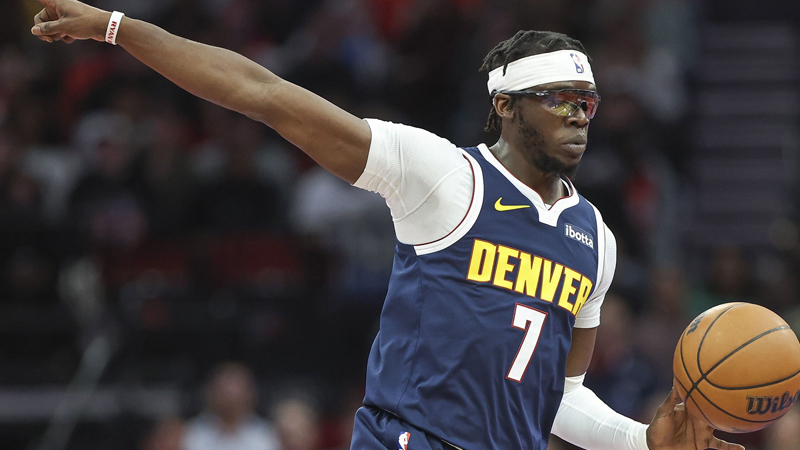
The basketball career of Reggie Jackson, spanning tenures with the Oklahoma City Thunder, Detroit Pistons, Los Angeles Clippers, Denver Nuggets, and Philadelphia 76ers, presents a fascinating case study in defensive inconsistency.
While he has the physical profile of an elite perimeter stopper, the data and historical scouting reports suggest a player who has struggled to maintain a positive impact on the defensive end over the long term.
The Physical Anomaly: Wingspan and Frame
Reggie Jackson possesses what many scouts consider a “prototypical” defensive frame for a modern NBA point guard.
- Height and Reach: Standing 6’3″, he is equipped with an extraordinary 7’0″ wingspan.
- The Advantage: This seven-foot reach allows him to disrupt passing lanes, contest shots from distance, and recover more effectively when beaten off the dribble.
- The Disconnect: Despite these “elite” physical tools, the transition from potential to consistent defensive production has been a significant hurdle throughout his career.
The Analytics: Career Defensive Ratings and Metrics
When stripping away the visual appeal of his long-limbed frame, the advanced metrics provide a more sobering perspective on Jackson’s defensive contributions.
| Metric Type | Value / Observation |
|---|---|
| Career Defensive Rating | 111.1 |
| Real Plus-Minus (RPM) | Flagged as some of the worst among starting PGs during peak years |
| Defensive Impact | Generally categorized as a “net-negative” overall |
During his primary years with the Detroit Pistons, Jackson was often the focal point of the offense, which may have contributed to his defensive lapses.
Analytics platforms consistently flagged him for poor defensive real plus-minus metrics, indicating that his presence on the floor often coincided with higher scoring efficiency for the opposing team.
Defensive Evolution: From Detroit to the Clippers
The perception of Jackson’s defense underwent a notable shift when he moved from a primary scoring role in Detroit to a more specialized role in Los Angeles.
In Detroit, some observers argued he was an “all-around solid defender” who simply lacked the offensive support needed to thrive, while others countered that he was “almost historically bad” on the defensive end.
However, his arrival at the Los Angeles Clippers changed the narrative for a subset of the fanbase. During the 2021 playoff run, Jackson demonstrated “occasional bursts” of high-effort defense and smart playmaking reads.
Fans noted that he was picking up opponents full-court and making others take “really tough shots,” which was viewed as being “way above expectations” for a player previously labeled as a defensive liability.
Why the Eye Test Often Conflicts with the Data
The debate surrounding Reggie Jackson’s defensive quality often stems from the gap between his “high-effort” moments and his “possession-to-possession” consistency.
For every highlight block or smart steal, there are often multiple possessions where structural weaknesses become apparent.
- Pick-and-Roll Struggles: Jackson has historically been a target in pick-and-roll schemes.
- Screen Navigation: He has faced criticism for a lack of consistency in fighting through screens, with some teammates or observers noting he treats screens like “bombs” to be avoided rather than obstacles to navigate.
- Off-Ball Rotations: A lack of discipline in executing off-ball rotations has frequently left his team vulnerable to open shooters.
- Physical Limitations: Recurring knee injuries over the years have likely sapped some of the lateral quickness required to maximize his impressive wingspan.
The MLB Perspective: Reggie Jackson’s Outfield Struggles
The defensive story of the MLB Hall of Famer Reggie Jackson is perhaps even more lopsided than that of his NBA counterpart. Known as “Mr. October” for his postseason hitting, his work in the outfield was often a source of frustration for coaches and a target for critics.
“Mr. October” and the Defensive WAR Deficit
While Jackson’s bat earned him a spot in Cooperstown, his defensive metrics are among the lowest for players of his stature.
Over a 21-season career, he finished with a -16.4 Defensive WAR (dWAR), a clear statistical indicator that his fielding significantly hindered his team’s defensive efficiency.
This negative impact was not a result of a lack of athleticism, but rather a lack of technical refinement in the outfield.
Skill Sets: Arm Strength vs. Accuracy
Reggie Jackson had the raw tools to be a competent outfielder, but they rarely coalesced into a cohesive defensive game.
- Natural Speed: In his younger years with the Oakland A’s, he possessed the speed to cover significant ground.
- Powerful Arm: He was known for having a “cannon” of a throwing arm that could challenge runners.
- Accuracy and Judgment: These tools were negated by 141 career errors and a frequent tendency to misjudge fly balls.
- The Shift to DH: As his career progressed with the New York Yankees and the California Angels, his defensive limitations became so pronounced that he was moved primarily into the Designated Hitter (DH) role.
The Role of Team Context in Defensive Reputation
One of the most critical factors in the “is he a good defender” debate is the environment in which the athlete plays.
For NBA Reggie Jackson, being surrounded by elite defenders like Patrick Beverley or Kawhi Leonard in Los Angeles allowed him to focus his energy and hide some of his lateral deficiencies.
When a player is “putting more effort than some other guys,” even a subpar defender can appear passable or even “above average” to a local fanbase.
In contrast, when a player is the primary star on a struggling team—as was often the case for Jackson in Detroit—their defensive flaws are magnified. Every missed rotation or blown screen is seen as a symptom of a lack of leadership or focus.
The “Clippers version” of Reggie Jackson proved that he could be a smart defender who makes great reads, but the “Detroit version” reminded the league that consistency is the true hallmark of a great defender.
Comparing the “Reggie Jackson” Defensive Paradox
Comparing the two athletes reveals a striking similarity: both utilized their physical gifts to excel offensively while allowing those same gifts to go underutilized on defense.
- NBA Reggie: Used his 7’0″ wingspan for scoring and occasional blocks but struggled with the fundamental “grind” of NBA defense.
- MLB Reggie: Used his speed and arm strength to be a threat on the bases and at the plate, but lacked the judgment and accuracy to be a gold-glove caliber outfielder.
Ultimately, defense requires a level of sustained intensity and technical discipline that often eludes players who are tasked with carrying heavy offensive loads. For both Jacksons, the “bad defender” label is a trade-off for the offensive brilliance that defined their careers.
Frequently Asked Questions
Is Reggie Jackson’s wingspan really 7 feet?
Yes, despite being 6’3″, NBA player Reggie Jackson has a verified 7’0″ wingspan, which is considered an “outrageous” physical advantage for a guard.
What is the defensive rating of NBA player Reggie Jackson?
His career defensive rating is approximately 111.1, which is generally considered below average for his position.
Did MLB’s Reggie Jackson ever win a Gold Glove?
No, Reggie Jackson was never known for his defense. His -16.4 career dWAR and 141 errors reflect a player who was significantly more valuable as a hitter and DH than as a fielder.
Was Reggie Jackson better at defense in the playoffs?
In the NBA, Jackson has shown the ability to “flip a switch” and provide high-effort defensive plays and smart reads during deep playoff runs, specifically during the 2021 season with the Clippers.
Why did MLB’s Reggie Jackson move to the DH role?
His defensive limitations, including misjudged fly balls and inconsistent throwing accuracy, combined with his immense value as a hitter, made him a natural fit for the Designated Hitter role as he aged.
Conclusion: A Legacy of Offensive Excellence
To answer the question “Is Reggie Jackson a good defender?” one must conclude that while neither athlete was “good” in a traditional, consistent sense, both were capable of making defensive plays when it mattered most.
The NBA’s Reggie Jackson has the wingspan to be a nightmare for opponents, and the MLB’s Reggie Jackson had the arm strength to be a threat in the outfield.
However, defense is defined by the absence of mistakes, and both athletes committed enough errors—statistically and structurally—to ensure their legacies remain tied to their scoring prowess.
While they may not be remembered for their gloves or their defensive stances, their ability to stay relevant and productive in high-pressure environments proves that in professional sports, elite offense can often mask a multitude of defensive sins.
Whether it is “Big Government” hitting a clutch shot or “Mr. October” hitting a home run, the defensive disparity of the Reggie Jacksons is simply a footnote in two remarkable careers.