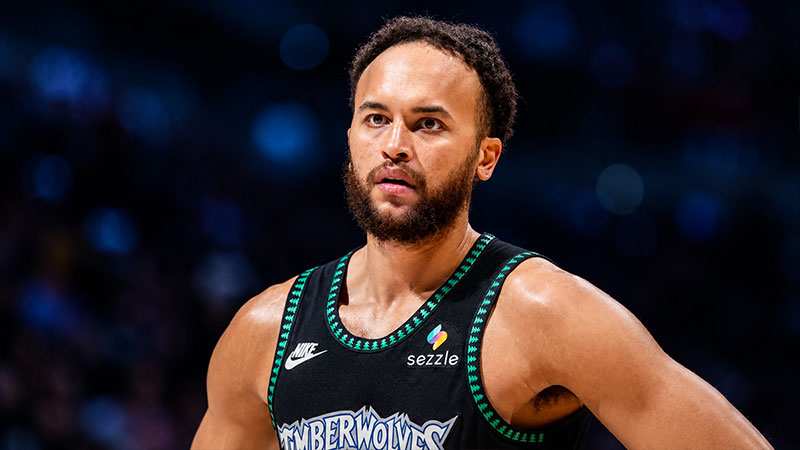
Kyle Anderson, known affectionately as “Slo Mo,” presents one of the most intriguing paradoxes in professional basketball.
In an era defined by explosive athleticism, vertical gravity, and lightning-fast transitions, Anderson has carved out a decade-long career by doing the exact opposite.
He is objectively slow, yet he remains remarkably effective. This isn’t an accident or a lack of effort; it is a calculated, tactical subversion of traditional basketball physics.
By understanding why he moves the way he does, we gain insight into a unique brand of “slow-motion” dominance that keeps the world’s best athletes perpetually off-balance.
The Physical Reality of Kyle Anderson’s Pace
The question of whether Anderson’s speed is a choice or a limitation is central to his identity as a player. While many NBA players can turn on a “second gear,” Anderson’s baseline is fundamentally different from his peers.
A Product of Natural Biomechanics
Kyle Anderson is slow primarily because of his natural athletic profile, which includes below-average foot speed and a low vertical leap.
Unlike many of his UCLA counterparts, such as the hyper-explosive Zach LaVine or Russell Westbrook, Anderson lacks the fast-twitch muscle fiber typically associated with elite wing players.
There are even legendary stories from his time with the San Antonio Spurs where he reportedly lost foot races to a thirty-something, overweight Boris Diaw.
These physical realities have been present since his high school and collegiate days, establishing a unique athletic archetype.
Redefining Acceleration in the NBA
While he lacks top-end speed, some observers note that his mastery of acceleration is his true secret. It is argued that going from “1 to 5” on a speed scale is the same degree of acceleration as going from “5 to 9”.
Because Anderson spends so much time at “1,” his sudden shifts to “5” create a change of pace that is just as disruptive as a traditional guard’s sprint.
He doesn’t need to be the fastest player on the court to create an advantage; he only needs to be faster than the defender expects him to be at that specific moment.
Weaponizing Slowness: The Tactical “Slo Mo” Advantage
Anderson has famously refused to fight his lack of traditional explosiveness. Instead, he has weaponized his pace to create a style of play that is almost impossible to prepare for in a standard practice setting.
The “Glitched” Defensive Contest
One of the most effective aspects of Anderson’s game is how his delayed movements warp the defense’s timing. NBA defenders are biologically wired and trained to react to hyper-athletic, fast-moving opponents.
When Anderson drives to the rim, he often triggers what is known as a “glitched” contest. Defenders, expecting a standard athletic finish, jump to block the shot far too early.
They often find themselves falling back to the floor while Anderson is still mid-motion, allowing him an easy, uncontested layup as they descend.
Unorthodox Footwork and Shot Mechanics
His effectiveness is bolstered by a toolkit of “delayed” skills that ignore the league’s standard internal clock. This includes:
- The Slow Euro-Step: A signature move that stretches the duration of the drive, forcing defenders to commit to a direction before he has even finished his first step.
- The Delayed Release: Everything about his game has a delay, including his shooting form. His slow release and deliberate pump fakes keep shot-blockers in a state of constant hesitation.
- Precision and Intent: Because he moves slowly, every movement appears highly intentional and calculated, leaving no room for wasted energy.
The Geometry of the “Slow Break”
The fast break is typically a sprint to the rim, but Anderson has pioneered the “slow break,” a transition style that prioritizes information over velocity.
Reading the Defense from Behind
In a typical fast break, players often speed up to make the defense irrelevant, but they often lose track of what is happening behind them. Anderson does the opposite; he moves just slow enough to figure out exactly what the defender behind him is doing.
This “slow-motion” navigation allows him to make a precise read on the trailing defender and finish with confidence, a skill that requires an incredibly tight handle to prevent the ball from being “picked”.
Maintaining Balance and Control
By operating at a lower speed, Anderson maintains a level of body control and balance that more explosive players often sacrifice for velocity. He can change direction more easily because he isn’t fighting his own momentum.
This makes him “hard to guard” because his movements are so unusual and difficult for defenders to anticipate, often making it look like he is playing in a “different plane of space-time”.
Physical Framing and the 7’3” Wingspan
While his feet are slow, his frame is massive. Anderson utilizes his physical dimensions to negate the speed advantages of his opponents.
Length as a Tactical Shield
Standing at 6-foot-9 with a 7-foot-3 wingspan, Anderson uses his body as a physical barrier. On drives and slow breakaways, he focuses on “sealing” the defender on his hip or back.
By keeping his body between the defender and the ball, he ensures that even if a faster opponent catches up to him, they cannot reach the ball without committing a foul. This technique, also used by players like Luka Dončić, allows him to dictate the terms of physical contact.
| Physical Attribute | Tactical Benefit |
|---|---|
| 6’9″ Height | Provides clear sightlines for passing over defenders. |
| 7’3″ Wingspan | Acts as a shield during drives to prevent blocked shots. |
| Physical Girth | Allows him to “push back” with his hips to create space. |
| Tight Handle | Prevents “pocket picking” despite the slower dribble pace. |
The Cerebral Point-Forward: IQ Over Athletics
Anderson’s background as a point guard before a major growth spurt has given him the “brain” of a floor general in the body of a forward.
Finding Exacting Angles
Because he cannot rely on a quick first step to blow past defenders, Anderson navigates the court using precise geometric angles. He relies heavily on his basketball IQ to find open spaces and passing lanes that aren’t yet visible to others.
His former teammate Rudy Gobert has highlighted this passing ability as one of his most missed qualities on the court, noting that Anderson is always looking to facilitate for his teammates.
Extreme Patience in the Lane
Anderson’s pace is perhaps most evident in his patience. He will often drive down the lane at a “jogging pace,” deliberately slowing the game down to wait for his teammates’ cutting patterns to fully develop.
This forced deceleration of the game allows him to manipulate the defense, forcing them out of position simply by refusing to move at the speed they expect.
Defensive Utility: Why Slowness Isn’t a Liability
It is a common misconception that being slow makes a player a defensive liability. In Anderson’s case, his defensive impact is widely regarded as high-level.
Spatial Awareness and Reach
Defensively, Anderson uses his intelligence and length to disrupt plays before they happen. While he might not win a 40-yard dash, his ability to read an opponent’s intent allows him to be in the right position at the right time.
His “pick-pocket” abilities on elite players like James Harden demonstrate that his hands are much faster than his feet.
The Defensive “Time Lord”
Just as he controls the clock on offense, he forces opponents to play at his rhythm on defense. His nickname “Time Lord” (which some argue fits him better than other players) reflects his ability to freeze the game around him.
By occupying space and using his wingspan to clog passing lanes, he forces the opposition to slow down and think, which often takes them out of their natural aggressive flow.
The Cultural Legacy of “Slo Mo”
Beyond the tactical benefits, Kyle Anderson’s unique style has earned him a devoted following and a place in basketball lore.
The NBA’s “Stanley from the Office”
Anderson has been humorously compared to the character Stanley from The Office due to his seemingly relaxed, unbothered demeanor on the court.
Fans appreciate the “old man at the gym” vibe he brings to the highest level of professional sports, where he manages to “own everyone” despite moving in slow motion.
This relatable, crafty style has earned him several nicknames across the globe, including the “Human Highlight Wriggle” in China.
Redefining Athleticism for the Next Generation
Anderson serves as a living proof that elite athleticism is not solely about vertical leap or sprinting speed. It is also about the “speed of the mind” and the ability to control the temporal rhythm of a game.
By mastering the art of being “elite at being slow,” Anderson has created a blueprint for players who may not possess traditional physical gifts but have the IQ and craftiness to outmaneuver the world’s fastest athletes.
Frequently Asked Questions
Is Kyle Anderson’s slowness a medical condition?
No, it is simply his natural athletic build. He has always played with a methodical pace, characterized by below-average foot speed and a low vertical leap, which he has successfully adapted to the NBA level.
Can he actually run fast if he wanted to?
While he could likely run faster than his usual “jogging” pace, observers note that he performs better on “slow breaks” because it allows him to maintain superior balance and make better reads on the defense.
How does he avoid getting the ball stolen?
Anderson maintains an incredibly tight handle for a player of his size. He also uses his 6-foot-9 frame and 7-foot-3 wingspan to “shield” the ball from defenders, making it difficult for them to reach around him without fouling.
Why is he called “Slo Mo”?
The nickname was given to him because his movements—from his drives to his shooting release—appear to be happening in slow motion compared to the rest of the players on the court.
Conclusion: The Power of Deliberate Control
Kyle Anderson’s career is a testament to the idea that in a world of sprinters, there is a distinct competitive advantage in being a master of the slow-burn.
By leaning into his physical limitations rather than fighting them, he has developed a “glitched” style of play that warps defensive rhythms and dictates the geometry of the court.
Whether he is sealing a defender with his massive wingspan or forcing an entire fast break to move at his speed, “Slo Mo” reminds us that the most dangerous player is often the one who refuses to be rushed.
In the end, Kyle Anderson isn’t just slow—he is elite at being slow, and that makes all the difference.