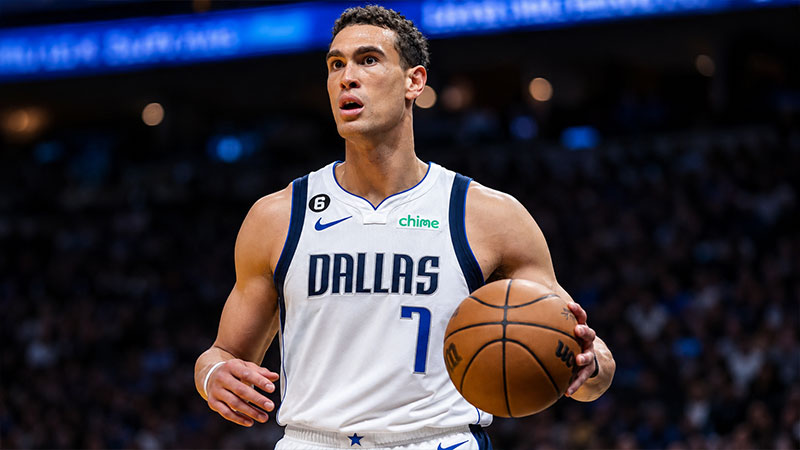
The evaluation of Dwight Powell’s defensive utility remains one of the most polarizing topics within modern basketball analytics.
While traditional box scores often paint a picture of a limited rim protector, coaching staffs consistently find value in his high-motor, system-oriented approach.
To understand if Powell is a “good” defender, we must look beyond simple blocks and rebounds to analyze how his lateral mobility and basketball intelligence fit into aggressive defensive schemes.
This deep dive examines whether his discipline and communication outweigh his physical limitations in the paint, providing a comprehensive look at a center who defies traditional positional archetypes.
The Dwight Powell Paradox: Analyzing Defensive Metrics
When evaluating a center’s defensive impact, the casual observer typically looks for high rebounding totals and shot-blocking prowess.
By these traditional standards, Dwight Powell’s profile appears underwhelming, often leading to intense debate regarding his role as a primary frontcourt option. To truly understand his value, we must break down the statistical discrepancies that define his career.
The following table compares Powell’s primary defensive and offensive output against teammate Christian Wood during a key period of evaluation, highlighting the disconnect between individual production and system utility.
| Metric (Per Game) | Dwight Powell | Christian Wood |
|---|---|---|
| Blocks | 0.3 | 1.1 |
| Rebounds | 4.0 | 7.0 |
| Fouls | 2.8 | 2.3 |
| Offensive Role | Rim Runner/Screener | Floor Spreader/Scorer |
| Defensive Scheme | Switch/Hedge | Drop Coverage |
The Box Score Disconnect
Statistically, Powell provides very little in terms of rim deterrence. During his tenure, he has never averaged even 1.0 block per game in a single season, with recent numbers dipping as low as 0.33 blocks per game.
This lack of verticality often leads to the “eye test” perception that opponents enjoy “layup lines” when he is the primary defender in the paint.
However, advanced metrics often favor Powell due to his offensive efficiency and high win shares, suggesting his impact is felt in areas that traditional box scores fail to capture.
The Foul Trouble Factor
A significant hurdle for Powell is his high foul rate relative to his playing time. Averaging 2.8 fouls in just 19 minutes of action, he often finds himself in foul trouble more quickly than players with higher defensive usage.
Because he lacks the vertical size to legally contest shots without making contact, he relies heavily on his body, leading to frequent “And-One” opportunities for opponents.
This physical limitation necessitates a disciplined approach, yet his aggression often results in him being “too small” to stop elite interior scorers without whistling from the refs.
Mobility as a Modern Defensive Asset
In the modern NBA, the “drop coverage” center—a big man who stays near the rim to contest shots—is increasingly vulnerable to elite perimeter shooting.
Dwight Powell offers a different solution through his lateral quickness and perimeter switchability. While he may not swat shots into the third row, his ability to move his feet on the perimeter allows his team to employ more aggressive defensive strategies.
Staying in Front of Smaller Guards
Unlike rigid, traditional centers who struggle when pulled away from the hoop, Powell possesses excellent lateral quickness for a player of his size.
This makes him a highly effective switch defender on the perimeter, where he can stay in front of smaller, faster guards and recover effectively out of pick-and-roll coverages.
This mobility is a prerequisite for teams that prefer to “switch everything,” as it prevents the defense from being compromised by a single mismatch.
Hedging and Trapping Schemes
Powell’s defensive value is most evident in schemes that require the big man to “show” or “hedge” high on a ball-handler.
His speed allows him to disrupt the play and then sprint back to his original assignment, a feat that slower centers like JaVale McGee have struggled to replicate in the same system.
This “energy burst” style of play is ideal for short stints where Powell can use his mobility to force turnovers or disrupt the offensive rhythm of the opposing team.
The Physical Ceiling: Why He Struggles at the Rim
Despite his mobility, there is no denying that Powell faces significant physical disadvantages when tasked with traditional “big man” duties.
At 6’10” or 6’11” with an average wingspan, he lacks the length required to be a true defensive anchor in the paint. This physical ceiling creates a “gap” in his defensive profile that opponents frequently exploit.
To visualize these limitations, consider the following physical and technical traits that impact his performance:
- Undersized Length: His short arms prevent him from altering shots even when he is in the correct defensive position.
- High Center of Gravity: This makes it difficult for him to hold his ground against “muscle” centers like Joel Embiid or Nikola Jokic.
- Rebounding Deficiencies: Powell often struggles to box out dominant centers, leading to his team surrendering crucial second-chance points.
- Lack of Verticality: He is often described as an “athletic big” who can jump, yet he rarely uses that athleticism to block shots, functioning more as a “rim runner” than a “rim protector”.
The Position vs. Disruption Dilemma
Reviewers often note that Powell is “always in the right place” on defense. He understands the rotations and executes the coach’s game plan with high discipline.
However, being in the right position is only half the battle; if a defender lacks the wingspan to bother the shooter, the offensive player will likely convert the attempt anyway.
This leads to the frustrating visual of Powell playing “perfect” positional defense but still allowing a high percentage of makes at the rim.
Defensive Rebounding as a Systemic Weakness
One of the most persistent criticisms of Powell is his inability to secure the defensive glass at a high rate. For a frontcourt player, his defensive rebounding numbers have hovered at a low level throughout his career.
This forces his teammates—particularly the wings—to crash the boards more aggressively, potentially leaving the team vulnerable to fast breaks.
Without a “muscle” big to clear the paint, the defensive possession isn’t truly over until the ball is secured, a phase where Powell often falls short.
High Basketball IQ and Team Communication
Where Powell lacks in physical tools, he compensates with elite communication and a deep understanding of defensive systems. In a complex NBA defense, the center acts as the “quarterback,” calling out screens and directing rotations.
This “invisible” defense is often why coaches continue to trust him over more statistically gifted players.
The Coach’s Perspective on System Fit
Coaches like Jason Kidd have historically prioritized “system fit” over individual box score production. Powell’s value lies in his seamless execution of team rotations; he rarely misses a defensive assignment and is consistently praised for his high basketball IQ.
This reliability is a major reason why he has outlasted other centers who may have had more blocks or rebounds but lacked the discipline to stay within the defensive framework.
Leadership and Communication on the Floor
A center who communicates effectively can elevate the performance of the four other players on the court. Powell is noted for being a primary communicator, a skill the Mavericks’ system relies on heavily.
By calling out incoming screens and guiding younger players like Dereck Lively II through their rotations, Powell provides a “veteran presence” that stabilizes the defense even when he isn’t the one making the highlight-reel play.
Dwight Powell vs. Christian Wood: A Case Study in Defensive Systems
The debate over Powell’s defensive value reached its peak when contrasted with Christian Wood. On paper, Wood was the superior defender, averaging significantly more blocks and rebounds while providing high-level offensive production.
However, the “eye test” and advanced lineup data suggested a more nuanced reality regarding “winning basketball”.
Net Rating and Team Success
While Wood’s box score always looked impressive, critics argued he was not a “winning player” due to his frequent lapses in defensive positioning and poor communication.
In contrast, Powell’s disciplined screen-setting and effort-based defense often led to better net ratings for the team.
Powell’s willingness to perform the “dirty work”—such as setting solid Gortat screens and rolling hard to open up lanes for guards—created a synergistic effect that Wood’s individual scoring could not replicate.
The Effort Gap
Effort is a non-negotiable trait in high-level defense, and Powell is widely recognized as a “hustle” player who leaves everything on the floor.
Conversely, teammates and fans alike noted that Wood’s effort in setting screens and rotating defensively was often “abysmal”.
This disparity in work ethic is a primary reason why Powell remained a fixture in the rotation while other, more talented players were sidelined or allowed to leave in free agency.
Defining the Ideal Role for a Mobility-First Center
As his career progresses, it has become clear that Dwight Powell is most effective when utilized in a specific, limited role.
He is not a 30-minute-per-night defensive anchor, but rather a “utility big” who can change the pace of a game through sheer energy and mobility.
Energy Bursts and Bench Utility
The consensus among analysts is that Powell is “perfect for a 5-12 minute burst of energy off the bench”. In these short stretches, his lack of size is less likely to be exploited, while his high-motor play can wear down opposing centers.
He functions best as an “insurance” big man—someone who can step in and provide reliable, mistake-free minutes when the primary options are in foul trouble or need a rest.
Complementary Frontcourt Pairings
To maximize Powell’s defensive mobility, he should ideally be paired with a “muscle” power forward or a secondary rim protector.
This allows Powell to use his lateral quickness on the perimeter while having a teammate behind him to contest shots at the rim and secure rebounds.
When the Mavericks lacked this secondary rim protection (such as during absences of players like Maxi Kleber), Powell’s defensive limitations became much more glaring.
Frequently Asked Questions
Is Dwight Powell a good rim protector?
No. Statistically and physically, Powell is a below-average rim protector. He averages fewer than 0.5 blocks per game and lacks the wingspan to effectively deter shots in the paint.
What is Dwight Powell’s biggest defensive strength?
His primary strength is his lateral mobility and perimeter switchability. He is much better than the average center at staying in front of guards and executing aggressive hedging or trapping schemes.
Why do coaches keep playing him if his stats are low?
Coaches value his high basketball IQ, discipline in rotations, and elite communication. He is a “system player” who helps the team function correctly, even if his individual box score doesn’t reflect it.
How does his defense compare to Christian Wood?
While Wood had better individual stats (blocks and rebounds), Powell was often considered the more reliable team defender due to his effort, screen-setting, and adherence to defensive schemes.
Conclusion: The Professional Utility of Dwight Powell
In conclusion, Dwight Powell is a specialized defensive tool rather than a traditional powerhouse. He is a “good” defender in the sense that he is disciplined, mobile, and an excellent communicator who understands how to operate within a complex system.
However, he is a “poor” defender if the criteria are limited to rim protection, shot-blocking, and rebounding.
For a team that values versatility and effort over raw physical size, Powell remains a valuable asset, provided he is cast in a role that highlights his mobility while shielding his lack of muscle at the rim.