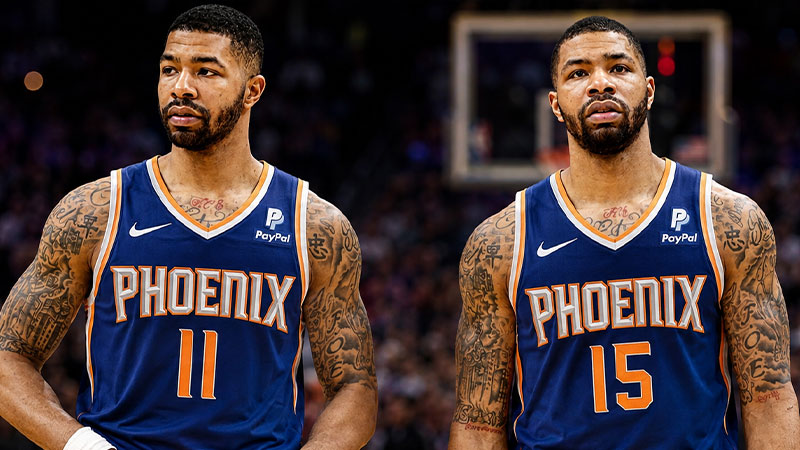
The NBA has seen its fair share of siblings, but few have captured the public imagination quite like Markieff and Marcus Morris.
These two power forwards have built formidable careers defined by toughness, versatility, and an uncanny physical resemblance that has frequently baffled fans and commentators alike.
Beyond their shared appearance, the question of whether they are truly identical has sparked intense debate, even leading to wild conspiracy theories during high-stakes playoff games.
Understanding their connection requires looking past the jersey numbers to explore the biological and professional nuances that define one of basketball’s most intriguing sibling bonds.
The Biological Reality of the Morris Twins
The short answer to the most common question is yes: Markieff and Marcus Morris are identical twins. Biologically, they are monozygotic, meaning they developed from a single fertilized egg that split into two separate embryos shortly after conception.
This genetic foundation is the reason for their nearly indistinguishable features, which they have famously accentuated throughout their lives by maintaining similar hairstyles, beard trims, and an extensive collection of matching tattoos.
Their journey from North Philadelphia to the global stage of the NBA has been a shared experience, reinforced by their close-knit relationship and parallel career paths.
From North Philadelphia to the University of Kansas
The twins’ development as elite athletes began long before they reached the professional level. Growing up in a competitive environment, they honed a style of play rooted in physical presence and defensive intensity.
Their recruitment to the University of Kansas was a pivotal moment, as it allowed them to showcase their skills within one of the most prestigious college basketball programs in the United States.
During their tenure with the Jayhawks, they were often viewed as a singular force, a dual threat that made game-planning difficult for opposing coaches who struggled to differentiate between the two versatile forwards on the court.
The Historic 2011 NBA Draft Performance
The 2011 NBA Draft served as a formal validation of their shared talent. In a rare display of back-to-back selection, Markieff Morris was drafted 13th overall by the Phoenix Suns, followed immediately by Marcus Morris at 14th overall by the Houston Rockets.
This “back-to-back” draft status is a testament to how closely scouts and executives valued their respective skill sets at the time.
While they began their professional careers on different teams, the pull of their shared identity eventually brought them together again when Marcus was traded to the Phoenix Suns in 2013, allowing them to play as teammates for two seasons.
Analyzing the Subtle Physical Differences
While the brothers are identical twins, they are not exact carbon copies. To the casual viewer watching a high-speed NBA game, they may appear identical, but several technical and physical markers distinguish Markieff from Marcus.
Identifying these differences is essential for scouts, officials, and fans who want to look beyond the surface.
These nuances range from height measurements to specific artistic choices in their tattoos, providing a roadmap for telling the two apart when they are not wearing their respective team uniforms.
The Height Variance: 6’10” vs 6’9″
One of the most concrete physical differences between the brothers is their height. Although many general profiles list them at a similar stature, official measurements reveal a slight discrepancy.
Markieff is recorded at 6’10” (approximately 2.08m), making him exactly one inch taller than Marcus, who stands at 6’9″ (approximately 2.06m).
While a single inch is difficult to discern during the “blur of an NBA semi-final,” it is a consistent biological marker that distinguishes the two.
This slight height advantage often influences their defensive assignments and their positioning within the paint during rebounding battles.
Decoding the Matching Tattoos
The Morris twins are famous for their “identical to the extreme” approach to body art. Both brothers are covered in extensive tattoos that appear identical to the “untrained eye”. However, the ink is not perfectly mirrored.
Subtle differences exist in the tattoos on their chests, which can sometimes be seen peaking out from the top of their basketball jerseys.
While they share many of the same motifs and designs—symbolizing their shared history and family values—the placement and specific detailing of certain pieces serve as a permanent, if subtle, differentiator for those who are close enough to spot them.
The Infamous “Twin Swap” Conspiracy Theory
The fascination with the twins’ identical nature reached a fever pitch in May 2017 during the NBA playoffs. A theory began circulating on social media that the brothers had actually swapped places during a critical game.
While the idea was largely fueled by the twins’ penchant for being inseparable and their matching appearances, it highlighted the unique cultural position they hold within the league.
The “twin swap” remains one of the most discussed urban legends in recent NBA history, reflecting just how much their shared identity has permeated the sports world.
The 2017 Wizards vs. Celtics Playoff Controversy
The conspiracy originated during a semi-final matchup between the Washington Wizards and the Boston Celtics. Markieff Morris, then playing for the Wizards, had suffered a significant sprained ankle in the previous game.
Given the severity of the injury, many viewers were shocked to see him performing at a high level so quickly.
This led to a wave of speculation on platforms like Twitter, where fans and media figures—including TV host Madelyn Burke and sports columnist Bill Simmons—joked or theorized that Marcus Morris had suited up in his brother’s place.
At the time, Marcus’s team, the Detroit Pistons, had already been eliminated from the playoffs, leaving him free to attend his brother’s games.
Why the Substitution Theory Is Highly Unlikely
Despite the viral nature of the theory, experts and league officials noted that such a swap would be nearly impossible to execute. Beyond the legal and disciplinary repercussions, the logistical hurdles are immense.
Each player is subject to rigorous check-ins, and the physical differences mentioned earlier—such as the one-inch height gap and the subtle tattoo variations—would likely be noticed by trainers, teammates, or officials.
Furthermore, as the BBC reported, the theory was “speculative and highly unlikely,” even though the brothers take their identical branding to the extreme.
The rumor ultimately served more as a testament to their sibling bond than as a credible allegation of fraud.
Scouting Report: Contrasting Their Styles of Play
To a professional basketball analyst, the best way to tell Markieff and Marcus apart is not by their looks, but by their playstyle.
Over their decade-plus in the league, each brother has carved out a distinct niche that aligns with his physical strengths and shooting preferences.
While they both possess the “Morris toughness” and a high basketball IQ, their offensive tendencies offer a clear tell for anyone watching the game closely.
These differences in “how they play their game” are often the most reliable indicators of which twin is on the court.
Markieff’s Interior Presence and Post Play
Markieff Morris has traditionally been known for his efficiency closer to the basket. He excels in the mid-range and the post, utilizing his 6’10” frame to finish through contact and secure rebounds.
Throughout his career with teams like the Suns, Wizards, and Lakers, Markieff has been valued as a versatile “big” who can defend multiple positions while providing a steady scoring option in the paint.
His game is defined by a traditional power forward’s physicality, often operating as a primary interior defender and a secondary rim protector depending on the lineup.
Marcus’s Perimeter Accuracy and Three-Point Threat
In contrast, Marcus Morris has developed a reputation as a more prolific perimeter threat. He is widely known for taking shots from “further away from the hoop” than his brother, frequently operating from the three-point line.
This floor-spacing ability has made Marcus a highly sought-after wing/forward in the modern NBA, which prioritizes shooting and “3-and-D” capabilities.
While he is also a rugged defender, his primary value often lies in his ability to stretch the defense and knock down high-pressure shots from deep.
| Feature | Markieff Morris | Marcus Morris |
|---|---|---|
| Height | 6’10” | 6’9″ |
| Primary Scoring Area | Close to the hoop / Mid-range | Perimeter / Three-point line |
| Draft Position | 13th Overall (2011) | 14th Overall (2011) |
| Chest Tattoos | Specific subtle variations | Specific subtle variations |
Career Milestones and Shared History
The narrative of the Morris twins is not just one of individual success, but of a shared legacy that has influenced the league’s perception of family dynamics in professional sports.
From their time as teammates to their separate journeys as veteran leaders on championship-contending teams, they have maintained a level of mutual support that is rare in the highly competitive world of the NBA.
Their careers provide a case study on how shared identity can be both a marketing tool and a source of personal strength.
The Phoenix Suns Era (2013–2015)
The peak of their “shared identity” occurred between 2013 and 2015 when both brothers played for the Phoenix Suns. This era was a fan-favorite period, as it allowed the “Twin Suns” to showcase their chemistry on a nightly basis.
During this time, their identical nature was used strategically by the team and became a focal point of NBA broadcasts.
Playing together allowed them to synchronize their skills in a way few siblings ever have at the professional level, though it also made the job of the referees and opposing players significantly more difficult.
Impact on the Modern NBA Landscape
As they moved into the later stages of their careers, both Markieff and Marcus transitioned into veteran roles, often serving as the “toughness” and leadership core for various franchises.
Markieff famously won an NBA Championship with the Los Angeles Lakers in 2020, while Marcus has been a key contributor for teams like the Boston Celtics, New York Knicks, and LA Clippers.
Their ability to remain relevant in a rapidly evolving league—shifting from traditional power forwards to versatile, modern role players—speaks to their adaptability and high basketball IQ.
Frequently Asked Questions
Are Markieff and Marcus Morris identical twins?
Yes, they are monozygotic (identical) twins who share the same DNA and developed from a single fertilized egg.
Who is taller, Markieff or Marcus?
Markieff is the taller of the two, standing at 6’10”, while Marcus is 6’9″.
Can you tell them apart by their tattoos?
While their tattoos are nearly identical, there are subtle differences in the ink on their chests that can be seen upon close inspection.
Did Marcus Morris really play for Markieff in a playoff game?
No. While social media was flooded with theories during the 2017 playoffs, experts agree that a “twin swap” is highly unlikely due to the physical differences and league protocols.
Do they have the same playing style?
No. Markieff typically plays closer to the hoop, while Marcus is more of a perimeter shooter and three-point specialist.
Conclusion: A Legacy of Identity and Excellence
The Morris twins represent a unique chapter in NBA history. While their identical looks and matching tattoos initially drew fans in, their longevity and skill have kept them in the spotlight for over a decade.
They have successfully navigated the challenges of being “the twins” while establishing themselves as distinct, valuable assets to their respective teams.
Whether they are playing together or competing on opposite ends of the floor, Markieff and Marcus Morris continue to prove that while they may share a blueprint, their individual contributions to the game are entirely their own.
For fans, the joy remains in spotting those subtle differences that make each brother a unique force in the league.