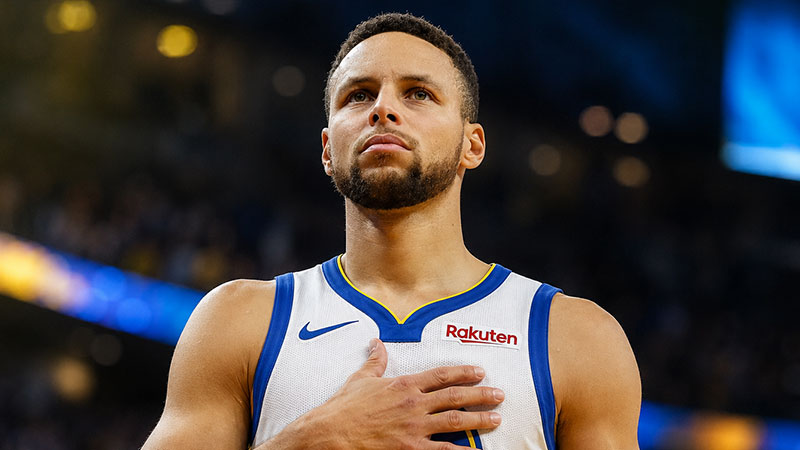
The Golden State Warriors are synonymous with the excellence of Stephen Curry. When the lights illuminate the hardwood at the Chase Center, the global expectation is to see Number 30 at center court for the opening tip-off.
However, a fascinating tactical shift has emerged multiple times in the franchise’s championship era: the two-time MVP entering the game as the world’s most dangerous sixth man.
This strategic decision is rarely about a decline in performance; rather, it represents a sophisticated masterclass in sports medicine and rotation management.
By analyzing his 2022 playoff return and his 2026 injury recovery, we can uncover the calculated logic behind this unconventional bench role.
The Medical Blueprint: Prioritizing Long-Term Health
The primary driver behind seeing Stephen Curry on the bench at the start of a game is almost always rooted in medical necessity and the prevention of re-injury.
Modern NBA training staffs utilize high-resolution data to monitor load management, especially when a player is returning from a significant lower-extremity injury.
Navigating the 2022 Foot Injury Recovery
During the 2022 opening-round playoff series against the Denver Nuggets, Curry found himself in a unique position as a reserve.
This was not a coaching whim but a response to a bone bruise and a sprained ligament in his left foot that had forced him to miss the final 12 games of the regular season.
The Warriors organization exercised “extreme caution” to ensure that their franchise cornerstone did not aggravate the injury during the high-intensity environment of the postseason.
By bringing him off the bench, the staff could precisely control his exposure to game-speed contact.
Addressing Patellofemoral Pain Syndrome in 2026
A similar, highly disciplined approach was adopted in April 2026 when Curry returned from a right knee injury. After being sidelined for 27 consecutive games—more than two months of the season—Curry was diagnosed with patellofemoral pain syndrome.
This specific condition requires a delicate balance of rest and incremental load. The medical staff and head coach Steve Kerr decided to ease him back into live game speeds using restricted minutes to avoid overextending his endurance right away.
Tactical Genius: The Quarter-Closing Strategy
Beyond the medical charts, there is a profound tactical advantage to bringing a high-volume shooter like Curry off the bench during a minutes-restricted return.
NBA coaching is often a game of “bridge minutes”—the periods when starters rest and the second unit must maintain or extend a lead.
Maintaining Temperature and Rhythm
One of the most significant challenges for a player on a minutes restriction is the “start-stop” nature of the game.
If Curry were to start a game, play for six minutes, and then sit for the remainder of the first quarter and half of the second, his body would physically “get cold”. This cooling-off period increases the risk of muscle stiffness and re-injury.
By bringing him off the bench, the Warriors ensured he could play the closing six minutes of each quarter. This allowed him to remain warm and rhythmically engaged through the most critical phases of the game.
The Philosophy of “Short Bursts”
The Warriors’ coaching staff prefers to deploy Curry in “short bursts” during his recovery phases. This strategy allows him to play at 100% intensity without the cardiovascular fatigue that comes from long, continuous stretches on the hardwood.
This was evidenced in his 2026 return against the Houston Rockets, where he erupted for 29 points and five three-pointers in just 26 minutes of action.
Entering the game against a second unit that has already been running for several minutes gives Curry a massive psychological and physical advantage.
| Game Phase | Starting Role Impact | Bench Role (Restricted) Impact |
|---|---|---|
| First 6 Minutes | High intensity, requires long warmup. | Allows body to acclimate while watching game flow. |
| Quarter Closers | May be fatigued if playing full quarter. | Fresh legs to close out frames with high efficiency. |
| Sit Duration | Long stretches on the bench can lead to “getting cold.” | Condensed sit times to maintain muscle warmth. |
| Opponent Focus | Faces fresh starters immediately. | Often enters against tired second-unit defenders. |
The Roster Ripple Effect: Managing the Poole Factor
A superstar coming off the bench creates a vacuum in the starting lineup that must be filled. In 2022, this led to the “Jordan Poole Dilemma.”
Poole had been playing at an elite level during Curry’s absence, finding an “insane rhythm” that many analysts believed was the key to the Warriors’ title hopes.
Balancing Team Chemistry
The internal debate within the Warriors’ community often centered on whether moving a productive young player like Poole back to the bench would “drop his production” or disrupt the team’s winning flow.
Starting Curry off the bench allowed the Warriors to maintain their current starting chemistry while slowly integrating Curry back into the mix. This prevented a sudden shock to the rotation that could have led to losing games or even a playoff series.
The “Three-Guard” Lineup Evolution
Curry’s bench role in 2022 eventually paved the way for the devastating “three-guard” lineup featuring Curry, Poole, and Klay Thompson.
By starting Poole and Thompson, Steve Kerr could bring Curry in to join them later in the quarter, creating a defensive nightmare for the Denver Nuggets.
This alignment allowed the Warriors to maximize their shooting gravity without forcing an immediate decision on who should officially be a “starter” or “reserve.”
Data-Driven Performance: Analyzing the Results
The effectiveness of this strategy is best measured by the box score and the win-loss column. Despite the limited minutes, Curry’s impact from the bench has been nothing short of historic.
In many ways, Curry becoming the top scorer while coming off the bench is described by fans and analysts as the “literally best case scenario” for the team.
Statistical Efficiency from the Bench
In the 2022 series against Denver, Curry’s minutes were meticulously ramped up:
- Game 1: 22 minutes.
- Game 2: 23 minutes.
- Game 3: 31 minutes.
- Game 4: 37 minutes.
By Game 5, the restriction was fully lifted, and the expectation was a return to the starting lineup. This gradual progression allowed him to find his shooting touch—which is notoriously rhythm-based—without the pressure of carrying the team for 40+ minutes on a compromised foot or knee.
Avoiding the Play-in Tournament Fatigue
In 2026, the strategy was even more critical due to a dense schedule of five games in eight days. With the play-in tournament looming, the Warriors could not afford a setback.
The bench role acted as a “controlled environment” for Curry to test his knee under live conditions without the heavy burden of a starting workload.
The Psychology of a Superstar’s Selflessness
One of the most overlooked aspects of why Stephen Curry comes off the bench is his willingness to do so. In an era of professional sports where “stardom” is often tied to “starting,” Curry’s ego-free approach is a rarity.
Leadership Through Sacrifice
Curry has stated that while the reality of the situation is “difficult for everybody,” he remains confident in the team’s ability to win regardless of his entry point into the game. His mentality is centered on the final result rather than the opening ceremonies.
This buy-in from the team’s leader prevents locker room friction and allows the coaching staff to make the best medical and tactical decisions for the group.
Future Implications of the Bench Role
Interestingly, Curry has even hinted at being open to a future role off the bench later in his career, though he is currently far from retirement.
He maintains that he still “gets lost in the fun” of the game and views the court as his “happy place,” whether he is there for the jump ball or entering at the six-minute mark of the first quarter.
Enhanced FAQ: Understanding the Bench Strategy
Is Steph Curry’s bench role permanent?
No. In both major instances (2022 and 2026), the move was a temporary measure designed to transition him from injury recovery back to a full-time starting role.
Once the medical staff confirms there is no longer a minutes restriction, he typically returns to the starting five.
Why doesn’t he just play fewer minutes as a starter?
Starting a game involves a specific pre-game routine and immediate high-intensity play. If a player starts and then has to sit for long periods to stay under a minute cap, their body can stiffen up.
Coming off the bench allows for more condensed, continuous play, which is safer for recovering joints and ligaments.
How does this affect his stats?
Remarkably, his efficiency often spikes. Because he is playing in shorter bursts, he can maintain a higher level of aggression. For example, scoring 29 points in 26 minutes during his 2026 return highlights how a bench role doesn’t necessarily mean lower production.
What is the “Quarter-Closing Strategy”?
This is the preference for Curry to be on the floor during the final six minutes of each quarter. These are high-leverage minutes where his “gravity” as a shooter can demoralize opponents and close out frames on a scoring run.
Strategic Conclusion: The Path Forward
The decision to bring Stephen Curry off the bench is a testament to the Golden State Warriors’ commitment to data-driven health management and tactical flexibility.
Whether it was the bone bruise of 2022 or the patellofemoral pain syndrome of 2026, the organization has consistently prioritized his longevity over the optics of a starting lineup.
This strategy has proven to be a resounding success. It protects the franchise’s most valuable asset, maintains the rhythm of emerging stars like Jordan Poole, and ensures that when the game is on the line in the fourth quarter, Curry is warm, energetic, and ready to deliver.
While fans may initially be surprised to see an MVP on the sidelines at tip-off, the results—championship contention and historic scoring efficiency—speak for themselves.
As Curry continues to evolve his game, his willingness to adapt his role for the greater good of the team remains his most potent “superpower.”