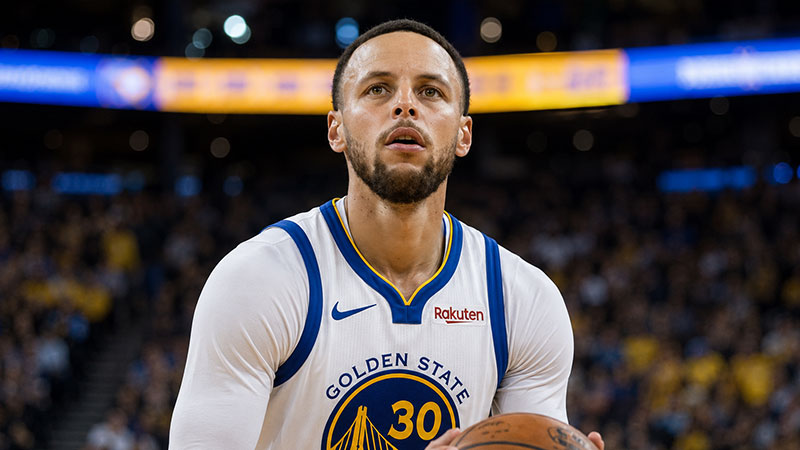
Stephen Curry remains the most disruptive offensive force in modern basketball history. His ability to shoot from the logo and move relentlessly off-ball creates a phenomenon known as “gravity,” pulling defenders out of position and collapsing traditional schemes.
For coaches and analysts, the question remains: how can Stephen Curry be stopped? The reality is that no individual defender, regardless of their accolades, can neutralize him alone.
Success requires a sophisticated, highly coordinated five-man defensive architecture that prioritizes discipline, physical endurance, and calculated risk-taking to limit the greatest shooter of all time.
The Philosophy of the Five-Man Shell
Neutralizing a player of Curry’s caliber requires a shift from individual pride to systemic execution. Traditional defensive logic often suggests putting your “best” defender on the opponent’s “best” scorer, but Curry’s movement renders this approach obsolete.
A Coordinated Defensive Architecture
NBA coaches and elite defenders widely agree that no single player can stop Curry; instead, it requires a disciplined, highly coordinated five-man defensive scheme.
This “shell” defense ensures that even if one defender is screened or out-positioned, the next four are ready to rotate and fill the gaps.
The goal is not just to block shots but to eliminate the comfort and rhythm that Curry relies on to ignite his scoring streaks.
The Mental Burden of Defensive Discipline
Defending the “Chef” is as much a mental challenge as a physical one. Each player on the floor must remain hyper-aware of Curry’s location, even when he doesn’t have the ball.
A single second of ball-watching can result in a relocated three-pointer. This level of focus is exhausting over a 48-minute game, which is why defensive depth and communication are the primary pillars of any blueprint designed to slow him down.
Blitzing and Trapping the Pick-and-Roll
The most common way teams attempt to stop Curry is by attacking the point of attack during the pick-and-roll. This is the moment where Curry is most likely to find a split-second window to launch his signature pull-up.
To effectively stop this, defense teams must deploy a physical blitzing trap that forces the ball out of his hands. This strategy removes the immediate threat of a three-pointer but requires precision from the rest of the defensive unit.
Execution of the Hard Trap
In a blitzing scenario, defenders must jump out aggressively over the screen. The secondary defender—usually a big man—cannot “drop” or play “ice” coverage, as giving Curry even two feet of space allows him to launch a high-percentage shot.
By jumping out, the defense forces Curry to pass the ball early to the rolling big man rather than pulling up for his lethal signature three-pointer.
Calculating the Strategic Risks
While the blitz is effective at taking the ball away from Curry, it is not without significant danger to the overall defensive structure.
| Defensive Strategy | Primary Objective | Risk Factor |
|---|---|---|
| The Blitz / Hard Trap | Forces the ball out of Curry’s hands completely. | Leaves the back-side defense vulnerable to a 4-on-3 advantage. |
| Switch Everything | Smothers his airspace and eliminates open pull-up threes. | Requires five highly versatile defenders; prone to mismatch exploitation. |
| Physical Denial | Prevents him from getting the ball back off the ball. | Susceptible to back-door cuts and layups. |
The Art of Physical Off-Ball Denial
Curry is most dangerous when moving without the ball, a trait that sets him apart from other high-volume scorers.
His “marathon” style of play involves sprinting through a maze of screens, often using his own gravity to create open looks for teammates or a “relocation” three for himself.
To mitigate this, elite perimeter defenders must physically bump, redirect, and trail him tightly through screens. This is not a passive activity; it is a physical battle designed to disrupt his timing.
Top-Locking and the Denial Blueprint
One of the more advanced tactics used is “top-locking.” This involves the defender positioning themselves between Curry and the perimeter, effectively denying him the ability to “pop out” for a catch-and-shoot opportunity.
By denying him any clean catch-and-shoot windows, the defense forces Curry to move toward the basket rather than the three-point line.
Navigating the Maze of Screens
Curry’s teammates are masters at setting “illegal-adjacent” screens to free him up. Defenders must be willing to fight through these obstacles without switching prematurely.
If a defender trails Curry through a screen, they must stay on his “hip” to prevent him from stopping on a dime and launching. This requires elite lateral quickness and a high motor to match Curry’s own conditioning.
Utilizing Length and the Switch Everything Scheme
In the modern NBA, versatility is the ultimate defensive weapon. Teams that have found the most success in limiting Curry often possess a roster full of long, agile wings who can guard multiple positions.
Teams utilizing a “switch everything” scheme need long, agile defenders to challenge Curry’s high-arcing shot release. This strategy aims to keep a hand in his face at all times, regardless of the screening action.
Smothering the Airspace
The “switch everything” approach allows defenders to challenge his shot release without dropping back and giving him open space.
When a screen is set, the defenders simply swap assignments, ensuring that Curry never sees a “drop” defender or an open lane. This eliminates the split-second hesitation that Curry usually exploits to find his rhythm.
Requirements for Switching Success
This scheme is not for every team. It requires five highly versatile defenders who are comfortable guarding both the perimeter and the post.
If a team has a “weak link” on defense—such as a slow-footed center—Curry will repeatedly target that player via switches, effectively neutralizing the entire scheme.
Length is the key variable here; defenders like Kawhi Leonard use their massive wingspan to contest his high-arcing shots even when beaten by his first step.
Turning the Tables: Targeting Curry on Defense
A crucial, often overlooked part of the blueprint to stop Stephen Curry is what happens when he is on the defensive end. Defense is not just about stopping shots; it is about managing the energy levels of the opponent’s star player.
Opposing offenses must hunt Curry on the other end of the floor to reduce his offensive output. By forcing him to work on defense, you directly impact his ability to perform on offense.
Draining the Stamina Reservoir
Forcing Curry to fight through screens and guard heavy isolation plays drains his stamina. When a player is forced to engage in high-intensity defensive rotations, their shooting legs are often the first thing to go.
In the fourth quarter of a close game, the cumulative effect of being “hunted” on defense can lead to short-rimmed jumpers and uncharacteristic turnovers.
Psychological and Physical Fatigue
By targeting Curry, an offense forces the Golden State Warriors to decide between keeping their best player on the floor or hiding him defensively. This creates a dilemma for the coaching staff.
If Curry is constantly involved in high-intensity defensive actions, his efficiency on offense naturally drops. This holistic approach ensures that the defense is attacking Curry even when they are technically on the offensive side of the ball.
The Personnel Profile: Who Can Guard Curry?
While the system is paramount, certain physical archetypes have historically proven more effective at executing this blueprint. Not every defender is built to chase the greatest shooter in history for 40 minutes.
While completely stopping him is nearly impossible, a few specific player profiles have historically given him trouble due to their unique physical gifts.
The Physical, Long Guard
Players like Marcus Smart and Jrue Holiday are the gold standard for this role. These defenders use their strength to disrupt his rhythm before he gets into his shooting motion.
They are low-center-of-gravity athletes who can bump Curry off his path without fouling, making every dribble a chore. Their ability to stay “attached” to his shooting pocket is a critical deterrent.
The Agile, Lengthy Wing
The second archetype is the long-limbed wing defender. Defenders like Kawhi Leonard and Jarred Vanderbilt use their massive wingspan to contest his high-arcing shots even when beaten by his first step.
Their length allows them to recover from a disadvantageous position. If Curry manages to blow past them, their reach allows them to “block from behind” or bother the release point of his layup or floater, areas where Curry is statistically elite.
Enhanced FAQ: Strategy and Implementation
Is it better to double-team Curry or play him straight up?
Doubling Curry via a blitz or trap is the most effective way to force the ball out of his hands. However, this leaves the rest of the defense in a 4-on-3 disadvantage.
Most elite teams choose to blitz selectively to keep him out of a rhythm rather than doing it on every possession.
Why is off-ball movement so hard to defend?
Curry’s movement is unpredictable and constant. Unlike other stars who stand still once they pass the ball, Curry becomes more dangerous. Denying him the ball off-ball requires a “top-locking” technique and physical bumps to disrupt his timing.
Can a team stop Curry without elite length?
It is extremely difficult. Length allows defenders to challenge his high-arcing shot release even if they aren’t perfectly positioned. Without length, a defender must be perfectly synchronized with Curry’s shooting motion, which is nearly impossible given his quick release.
How does targeting Curry on defense help?
It acts as a war of attrition. By forcing him to fight through screens and guard isolation plays, you drain his stamina, which directly reduces his efficiency on the offensive end.
Conclusion: The Cost of Neutralization
Neutralizing Stephen Curry is perhaps the most difficult tactical puzzle in professional sports.
As we have explored, there is no magic bullet or single player capable of the task. Instead, it requires a “blueprint” built on five-man coordination, aggressive blitzing, and physical off-ball denial.
Teams must be willing to live with the risks—such as giving up 4-on-3 advantages or back-door layups—in exchange for taking away the demoralizing three-pointers that define Curry’s game.
Ultimately, the goal is not to stop him entirely, but to make every point he scores as difficult and physically taxing as possible. By utilizing length, switching schemes, and offensive targeting, a disciplined team can mitigate his impact and tip the scales in their favor.