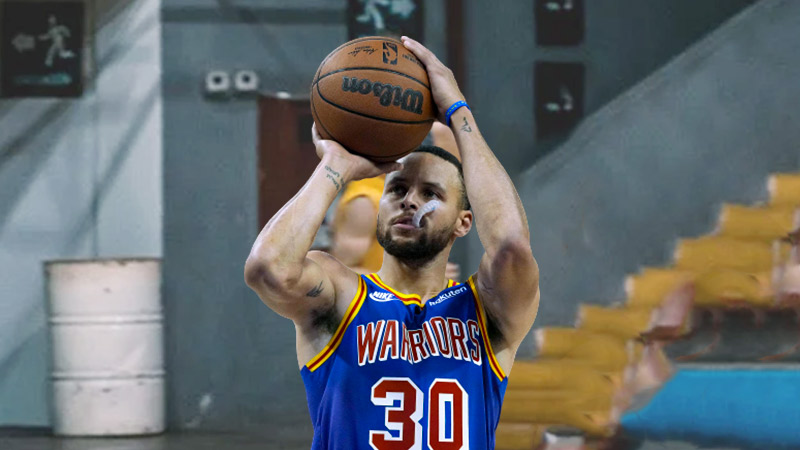
Stephen Curry is the greatest shooter in NBA history, but his most recognizable trait isn’t just his lightning-fast three-pointer—it’s the way he relentlessly chews his mouthguard.
While it looks like a simple nervous tic to the casual observer, this behavior is actually a deeply ingrained psychological ritual. It began during his college years as a safety necessity but quickly evolved into a performance-enhancing tool.
For millions of fans, the sight of the translucent plastic dangling from his lips signals a focused “Chef” Curry. In this deep dive, we explore the origins, the science-backed shooting percentages, and the health implications of this habit.
The Origin Story: Why Does Steph Curry Chew on His Mouthguard?
Understanding the “why” behind this habit requires looking back at Curry’s collegiate career, long before he was a multi-time NBA champion. The transition from a standard protective piece to a signature accessory was born out of a physical confrontation on the court.
The 2007 Incident at Davidson College
Curry did not always rely on a mouthpiece for comfort or style. During his junior year at Davidson College in 2007, he was involved in a physical matchup against The Citadel.
During the game, an opposing defender caught Curry with an elbow to the face, resulting in a severely busted lip that required seven stitches at halftime.
From that game forward, he began wearing a mouthguard for mandatory protection, though the way he wore it began to change almost immediately.
From Dental Protection to a “Farther Away” Habit
Over the nearly two decades since that injury, the mouthguard has undergone a physical migration. Curry himself has noted that each year the plastic seems to move “farther and farther away” from his teeth.
What started as a piece of safety equipment tucked firmly against his gums has transformed into a sensory object that spends more time between his lips or dangling out the side of his mouth than it does protecting his dental work.
The Psychological Edge: More Than Just a Habit
To a world-class athlete, the difference between a made shot and a miss is often found in the mental state of the player.
For Curry, the mouthguard serves as a psychological anchor, providing a level of sensory feedback that helps him manage the intense pressure of professional basketball.
Stress Relief and In-Game Calm
The act of chewing is a common physical outlet for anxiety and stress in high-stakes environments. Curry has openly admitted in interviews, including appearances on Jimmy Kimmel Live, that the “crazy” chewing motion helps soothe his nerves.
By engaging in a repetitive, rhythmic physical action, he is able to channel game-day adrenaline into a controlled outlet, allowing him to maintain a cool demeanor even in the closing seconds of a tight game.
Creating a Performance Rhythm
Ritual is a cornerstone of athletic excellence, and Curry’s mouthguard use is peak ritualization.
He relies heavily on the habit when standing at the free-throw line, letting the guard dangle to one side to help him settle into a familiar rhythm before his shooting motion.
He has described the feeling of shooting a free throw with the mouthguard properly in place as “weird,” suggesting that his brain has hard-wired the “out-of-mouth” position as the correct state for peak performance.
Statistical Performance: The Data Behind the Chew
One might assume that a dangling piece of plastic would be a distraction, but statistical evidence suggests the opposite. There is a measurable correlation between Curry’s chewing habit and his legendary accuracy from the charity stripe.
The Wall Street Journal Analysis
Data scientists and fans alike have been fascinated by this phenomenon, leading to a famous study highlighted by The Wall Street Journal. The research analyzed Curry’s free-throw percentages based on the position of his mouthguard.
The findings were startling: Curry’s accuracy fluctuates based on whether the guard is in his mouth or being chewed on.
| Shooting Condition | Free Throw Percentage |
|---|---|
| Mouthguard In (Proper Position) | Approximately 89% |
| Mouthguard Out (Chewing) | Approximately 92% |
| Statistical Advantage | +3% Improvement |
Curry’s Reaction to the Data
When presented with the statistics showing he shoots 2% to 3% better while chewing his mouthguard, Curry wasn’t surprised. He confirmed that the data matched his internal “feel” for the game.
To Curry, the mouthguard being “where it’s supposed to be” (inside the mouth) feels out of place during the focused silence of a free throw.
This suggests the habit has moved beyond a simple preference and into the realm of a “lucky” or “necessary” performance trigger.
The Hidden Risks: Hygiene and Dental Safety
While the performance benefits are clear, there is a significant downside to this signature move. Both dental professionals and health experts have raised concerns regarding the hygiene and structural integrity of Curry’s mouthguards.
Bacterial Exposure on the Court
One of the most criticized aspects of the habit is the “disgusting” factor of handling the mouthguard during a game. Curry frequently uses his sweaty hands—which have been in contact with the floor, the ball, and other players—to move or adjust the plastic.
This process introduces millions of bacteria directly into his mouth. Despite the high health risks, the habit is so ingrained in his “Chef” persona that he continues the practice regardless of the microbial cost.
Structural Integrity and Replacement Cycles
A mouthguard is designed to absorb impact and protect the teeth and jaw. However, constant gnawing and biting destroy the structural integrity of the medical-grade plastic.
Because Curry “chews it like crazy,” he renders the guards useless for their original protective purpose very quickly.
To compensate for this destruction, Curry goes through approximately 12 mouthguards per season, swapping them out every few games to ensure he at least has a fresh piece of plastic to destroy.
Beyond the Mouthguard: Curry’s Personal Symbols
While the mouthguard is his most visible ritual, Curry’s on-court persona is also defined by several deeply personal symbols, including a series of tattoos that represent his faith and family.
Faith and Commitment Tattoos
Curry’s ink tells a story of his values outside of basketball. On his wrists, he carries messages of faith and partnership.
- Hebrew Passage: On his right wrist, he has a passage from 1 Corinthians 13:8 which translates to “love never fails.” This is a matching tattoo with his wife, Ayesha Curry.
- TCC: This acronym stands for “Trust, Commitment, and Care,” a personal and professional mantra he has carried throughout his career.
- WOE: Found on his right bicep, this is another matching tattoo with his wife.
Family Tributes
Curry also uses his body as a canvas to honor his children. On his right leg, he has three geometric animal tattoos, each representing one of his kids:
- The Wolf: Representing his son, Canon.
- The Butterfly: Representing his daughter, Ryan.
- The Horse: Representing his daughter, Riley.
The Branding Potential of a Bad Habit
From a marketing perspective, the mouthguard is a goldmine of untapped potential. Analysts have noted that the piece of plastic receives an incredible amount of “high-quality impressions” during every game broadcast.
A Unique Marketing Opportunity
Because the cameras frequently zoom in on Curry’s face during dead-ball situations and free throws, the mouthguard is often front and center.
Some branding experts have suggested that the mouthguard could be more valuable for advertisements than even the players’ shoes.
While Curry has yet to fully exploit this for commercial gain, the mouthguard has become an inseparable part of his brand, much like Michael Jordan’s tongue-out dunks or LeBron James’s chalk toss.
The “Mrs. Curry” Factor
Despite its fame and statistical success, there is one person who remains a staunch critic of the habit: Steph’s mother. Like many fans on social media, she reportedly finds the habit unappealing and has voiced her desire for him to keep the guard in his mouth.
However, given that his shooting percentage drops when he follows his mother’s advice, the “chew” is likely to remain a permanent fixture of his game.
Frequently Asked Questions
Why does Steph Curry chew his mouthguard at the free-throw line?
He chews it to calm his nerves and establish a rhythm. Data shows he shoots about 92% from the line when chewing it, compared to 89% when it is in his mouth.
When did Steph Curry start wearing a mouthguard?
He began wearing one in 2007 during his junior year at Davidson College after an elbow to the face required seven stitches.
How many mouthguards does Steph Curry use in a season?
Because he chews through the plastic and destroys its structure, he goes through roughly 12 mouthguards every NBA season.
Is it hygienic to chew on a mouthguard during a game?
No. Moving the mouthguard with sweaty, bacteria-laden hands introduces millions of germs into the mouth. However, Curry prioritizes the psychological and performance benefits over the hygiene concerns.
Conclusion: The Rhythm of Greatness
For Stephen Curry, the mouthguard is not just a piece of safety equipment; it is a vital component of his “rhythm and flow.”
What began as a response to a painful injury in college has evolved into a statistically significant performance ritual that helps him maintain his status as the greatest shooter in the world.
Whether it’s the 3% shooting boost or the simple comfort of a familiar sensory habit, the dangling mouthguard is a testament to the strange, wonderful, and highly personal rituals that define elite athletes.
If you are looking to elevate your own performance—be it on the court or in the office—consider finding your own “mouthguard.”
While we don’t recommend chewing on plastic and risking bacterial infection, finding a repetitive ritual that anchors your focus could be the key to unlocking your own 92% success rate.
Join our community for more deep dives into the psychology of elite performance and the habits of the world’s most successful individuals.