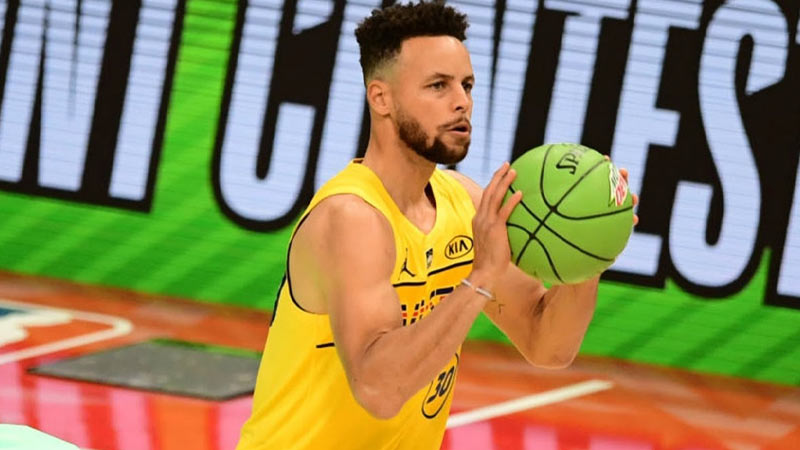
Stephen Curry didn’t just enter the NBA; he fundamentally re-engineered its geometry. While traditional logic favored mid-range dominance, Curry proved that efficiency lives thirty feet from the rim.
His success isn’t a fluke of nature but a masterclass in kinetic sequencing and neurocognitive discipline. By blending a lightning-fast one-motion release with elite cardiovascular recovery, he has forced every defensive coordinator to rewrite their playbook.
This deep dive explores the biomechanics, grueling training routines, and psychological resilience that define his greatness. Understanding how he shoots so well requires looking past the highlights into the rigorous science of his daily craft today.
The Foundation of a Shooting Dynasty
The journey of the greatest shooter in history began long before he stepped onto an NBA hardwood.
It was rooted in a combination of elite genetics and a highly structured, almost scientific, upbringing under the tutelage of his father, Dell Curry, a former NBA sharpshooter himself.
Dell provided a floor for Stephen to build upon, ensuring that the fundamentals were not just learned but mastered to a degree that eliminated mechanical variables from a young age.
The Strict “10-Year-Old Rule” and Form Discipline
Dell Curry implemented a unique restriction during Stephen’s formative years: he was not allowed to shoot three-pointers until he was 10 years old.
The logic was purely mechanical; shooting from long range requires significant physical strength that children under ten typically lack. To compensate for the distance, young players often use their shoulders and a “heaving” motion that ruins shooting form.
By forcing Stephen to stay within the arc, Dell ensured his son kept his elbows tucked and used proper upper-body alignment, which became the bedrock of his future accuracy.
Competitive Conditioning with Seth Curry
The rivalry between Stephen and his brother Seth acted as a secondary training ground. Dell would put both brothers through identical, high-intensity workouts, fostering a competitive environment where losing was not an option.
This sibling competition pushed both players to move beyond their father’s expectations, taking their skills to a professional level before they even finished high school.
The Grandpa’s Hoop Mentality
A crucial part of Stephen’s “touch” came from practicing on his grandfather’s hoop, which was situated on a patchy, uneven gravel driveway.
On such a surface, a missed shot would cause the ball to spray in unpredictable directions, forcing Stephen to chase it across the yard.
To avoid the extra cardio, he learned to “swish” every shot, a habit that eventually evolved into his modern training requirement where only shots that do not touch the rim are counted as “makes”.
The Biomechanics of the One-Motion Shot
To understand how he shoots so well, one must examine the departure from traditional shooting mechanics. For decades, players were taught the “two-motion” shot, where the player jumps, reaches the apex of their leap, and then releases the ball.
Curry discarded this model in favor of a “one-motion” system that emphasizes energy transfer and speed.
| Shooting Phase | Traditional (Two-Motion) | Stephen Curry (One-Motion) |
|---|---|---|
| Release Timing | At the peak of the jump | On the way up (mid-jump) |
| Release Speed | 0.5 – 0.6 seconds | 0.3 seconds |
| Power Source | Upper body and wrist | Leg drive and upward momentum |
| Foot Alignment | 100% Square to the rim | 10-degree lateral tilt |
The 0.3 Second Release and Set Point
Curry’s release is the fastest ever recorded in the NBA, clocked at approximately 0.3 seconds. This speed is achieved because his “set point”—the position where he prepares to launch—is slightly lower than traditional shooters, sitting just above his right eye.
By releasing the ball while still rising in his jump, he utilizes the kinetic energy from his legs to propel the ball, rather than relying solely on arm strength. This allows him to maintain a consistent form even from 35 feet away.
The 10-Degree Lateral Tilt
A significant “secret” to Curry’s accuracy is his foot alignment. While most coaches preach being “square to the basket,” Curry tilts his feet approximately 10 degrees to the left (as a right-handed shooter).
This unorthodox adjustment aligns his right hip, shoulder, and elbow perfectly with the rim. By doing this, he eliminates mechanical tension in his shoulder, allowing for a more natural and repeatable shooting path.
The Physics of Arc and Entry Angles
The difference between a “good” shooter and Stephen Curry often comes down to simple geometry. Curry has mastered the art of maximizing the rim’s “virtual” surface area through an exaggerated shot arc.
While the average NBA three-pointer has a relatively flat trajectory, Curry’s shots reach much higher peaks, creating a more favorable entry angle.
Launch Angles and the “Virtual Rim”
A standard basketball hoop is 18 inches in diameter. When a ball enters at a shallow 45-degree angle, the available space for the ball to fall through is narrowed to about 12.7 inches.
Curry, however, utilizes a launch angle between 50 and 55 degrees, which causes the ball to peak at roughly 16.2 feet in the air. This steep descent makes the 18-inch rim “appear” wider to the ball, significantly increasing his margin for error.
Backspin and the “Shooter’s Touch”
The rotation of the ball is just as critical as the arc. Curry averages 2.5 to 3 full revolutions of backspin per second. This high rate of spin serves a specific purpose: it creates a “soft” touch.
If the ball hits the back of the rim with that much backspin, the friction causes it to lose momentum and “crawl” into the basket rather than bouncing out. This is why so many of his “off” shots still seem to find their way into the net.
Neurocognitive Training and Conditioning
Physical talent is only half the equation. Curry’s ability to maintain his shooting percentage in the fourth quarter, while exhausted, is a result of elite cardiovascular conditioning and sensory training.
He doesn’t just train to make shots; he trains to make shots when his brain and body are under maximum stress.
Strobe Glasses and Spatial Awareness
Curry incorporates neurocognitive drills into his daily routine, often using strobe-light glasses while dribbling and shooting. These glasses flash to disrupt his vision, forcing his brain to process visual information faster and enhancing his peripheral vision.
This training allows him to track the rim and the position of defenders even when his view is partially obstructed or when he is moving at high speeds.
Cardiovascular Recovery Mastery
The “Curry Effect” on defense is legendary; he runs over 2.5 miles per game, constantly weaving through screens to tire out opponents. To sustain this, he has trained his body to drop his heart rate to a resting state in under 90 seconds during timeouts.
This rapid recovery ensures that when he takes a crucial shot in “crunch time,” his hands are steady and his legs are stable, regardless of how much he has run.
The “Swish-Only” Training Standard
Modern training sessions for Curry are notoriously difficult. His trainers often count a shot as a “make” only if it is a clean swish that doesn’t touch the rim. If the ball rattles in, it is recorded as a miss.
This level of precision demands absolute focus and ensures that his “standard” for a good shot is significantly higher than that of any other player in the league.
The League-Wide Impact of the “Curry Effect”
Since Stephen Curry entered the league in 2009, the way basketball is played has changed forever. His ability to shoot accurately from half-court has forced a total defensive redesign across all 30 NBA teams.
Before Curry, defenders could afford to wait at the three-point line; now, they must engage him the moment he crosses the mid-court logo.
- Doubling the Volume: In the fifteen years since Curry’s debut, the average number of three-point attempts per team has nearly doubled, rising from 18.1 to over 35 per game.
- The Mid-Range Death: The “Michael Jordan era” of mid-range pull-up jumpers has been largely replaced by the “Curry era” of long-range efficiency.
- Defensive Exhaustion: Elite defenders like Matthew Dellavadova and De’Aaron Fox have famously struggled to maintain their own offensive production because they spent all their energy chasing Curry through endless screens.
Professional Discipline: The Daily Schedule
Success at this level is the product of a rigorous, unwavering daily routine. Curry’s off-day schedule highlights a balance between intense physical work, cognitive recovery, and family time.
| Time | Activity |
|---|---|
| 8:00 AM | Wake-Up |
| 9:30 AM | Basketball training & high-intensity practice |
| 12:00 PM | Neurocognitive training (strobe glasses, etc.) |
| 2:00 PM | Lunch and nutritional refueling |
| 3:00 PM | Recovery Work (physiotherapy) |
| 9:30 PM | Movies and winding down |
| 10:30 PM | “No screen time” to ensure sleep quality |
| 11:00 PM | Bed |
Frequently Asked Questions
How fast is Steph Curry’s shooting release?
Stephen Curry has the fastest release in NBA history, taking only 0.3 seconds to get the ball from his set point to the air.
Why does he tilt his feet when he shoots?
Curry tilts his feet about 10 degrees to the left to align his shooting shoulder and elbow with the basket, which reduces tension and improves accuracy.
What is the “One-Motion” shot?
A one-motion shot means the player releases the ball while they are still jumping upward, transferring the power from the legs directly into the shot for more range and speed.
Does he use special equipment to train?
Yes, Curry uses strobe-light glasses and reaction boards to improve his hand-eye coordination and spatial awareness.
Conclusion: A Legacy of Precision
Stephen Curry’s dominance is not merely the result of “natural touch” or “good genes.” It is the culmination of a scientific approach to basketball that spans three decades.
From the restrictive training rules imposed by his father to the 0.3-second one-motion release and the use of strobe-light neurocognitive drills, every aspect of his game is optimized for maximum efficiency.
He has effectively doubled the league’s three-point volume and redefined what it means to be “open” on a basketball court.
Ultimately, how he shoots so well is a testament to the fact that greatness is a repeatable sequence of disciplined habits, biomechanical precision, and a relentless pursuit of the perfect swish.