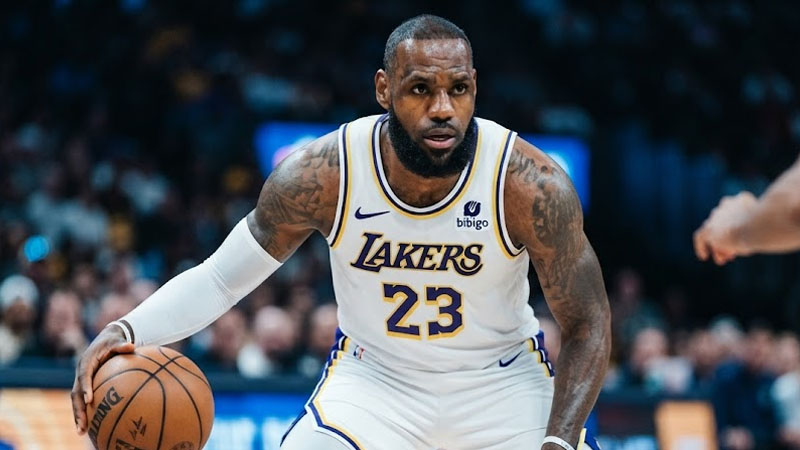
LeBron James does not have any full biological siblings and was legally raised as an only child by his single mother, Gloria James.
While the superstar lacks a traditional nuclear family structure, he does share a biological father with a paternal half-brother, Aaron McClelland Gamble. Despite this genetic connection, LeBron has never publicly established a relationship with Aaron.
Instead, James has redefined brotherhood by elevating a tight-knit circle of childhood friends and business associates to the status of family. This chosen brotherhood has been the bedrock of his unprecedented professional and personal success.
Does LeBron James Have a Biological Brother?
While the legal record identifies LeBron as an only child, his biological lineage includes a paternal half-brother who lives away from the spotlight. This relationship is complicated by a shared history of paternal absence that has shaped both men’s lives in different ways.
The Story of Aaron McClelland Gamble
The closest biological relative LeBron has to a sibling is Aaron McClelland Gamble, who was born in Akron, Ohio, approximately three years after the NBA star.
Both men share the same biological father, Anthony McClelland, though they were raised in entirely separate households.
Aaron, currently in his late 30s, is known to be an athletic individual who shares a striking physical resemblance to LeBron, particularly in terms of his height and build.
Despite these shared genetics, Aaron has spent his life as a private citizen in Ohio, working locally and pursuing hobbies like bodybuilding.
A Relationship Defined by Silence
There is no public evidence to suggest that LeBron James and Aaron McClelland Gamble have ever established a relationship.
This lack of connection stems primarily from their shared biological father’s absence; Anthony McClelland abandoned both mothers and played no role in either of his sons’ upbringings.
LeBron has famously avoided acknowledging his father’s side of the family, focusing his public gratitude and loyalty entirely on his mother, Gloria.
Because LeBron has zero relationship with his biological father, Aaron remains an unacknowledged figure in the athlete’s professional and personal narrative.
The Impact of Growing Up as an Only Child
The experience of being an only child in a single-parent household deeply influenced LeBron’s psychological development and his approach to leadership.
Without biological brothers or sisters to lean on during a tumultuous childhood in Akron, he looked elsewhere to understand the dynamics of a stable family unit.
Modeling Brotherhood through Sitcoms
Growing up in a home without siblings or a father figure, LeBron has admitted to using television as a blueprint for family life.
He reportedly obsessed over 1980s and 1990s sitcoms, such as The Fresh Prince of Bel-Air and Family Matters, to visualize what it would feel like to have a house full of siblings.
These programs provided a window into a world of “chosen” and biological kinship that he did not possess at the time. This early exposure to the concept of a supportive family unit likely fueled his lifelong desire to build a “village” around himself as an adult.
Finding Stability with the Walker Family
A pivotal moment in LeBron’s childhood occurred in the fourth grade when housing instability forced him to find a more structured environment. He moved in with his youth football coach, Frank Walker Sr., for over a year.
During this period, he shared a bedroom and a deep bond with Frankie Walker Jr., whom he has frequently referred to as his brother.
The Walkers provided LeBron with his first real experience of a stable household and introduced him to the world of organized basketball, a gift that forever changed the trajectory of his life.
The “Four Horsemen” and the Power of Chosen Kin
LeBron’s business success is not merely the result of his on-court talent; it is the product of a collaborative effort with a group of men he considers his true brothers.
This corporate inner circle, known as the “Four Horsemen,” demonstrates how he transformed childhood friendships into a professional powerhouse.
| Individual | Role in LeBron’s Life | Key Contribution |
|---|---|---|
| Maverick Carter | Childhood Friend / Business Partner | CEO of SpringHill Company; architect of LeBron’s marketing deals. |
| Rich Paul | Close Friend / Sports Agent | Founder of Klutch Sports Group; manages LeBron’s NBA contracts. |
| Randy Mims | Longtime Associate / Friend | Executive Administrator; manages LeBron’s day-to-day logistics. |
| Frankie Walker Jr. | “Foster” Brother | Early childhood roommate who provided stability and early mentorship. |
How “The Fab Five” Redefined LeBron’s Support System
Long before he was a global icon, LeBron found his brotherhood on the hardwood at St. Vincent–St. Mary High School. This group, known as the “Fab Five,” remained his primary social and emotional support system during his rise to fame.
- Dru Joyce III: A talented point guard and the son of LeBron’s high school coach, Dru has remained one of LeBron’s closest confidants.
- Sian Cotton: A powerful force on the court and in the community, Cotton was a key member of the tight-knit group that moved from middle school to high school together.
- Willie McGee: Known for his defensive tenacity and loyalty, McGee played a critical role in the team’s chemistry and LeBron’s early development.
- Romeo Travis: Although he joined the group later, Travis became an essential part of the brotherhood that was famously documented in the film More Than a Game.
- LeBron James: As the centerpiece of the group, he prioritized the success of his “brothers” as much as his own, a trait that would define his entire career.
Is Lebron James Close to His Father, Anthony McClelland?
The question of LeBron’s siblings often leads back to the mystery of his father. Understanding the athlete’s complete lack of a relationship with Anthony McClelland explains why he has sought out brotherhood through friendship rather than blood.
The Legacy of an Absent Father
Anthony McClelland is a figure defined by his absence and his troubled past. Reports indicate he has an extensive criminal history and failed to provide any emotional or financial support to Gloria James during LeBron’s upbringing.
He even refused to pay child support, leaving Gloria to raise LeBron alone under difficult circumstances. This abandonment created a void that LeBron had to fill with the help of the Akron community and his group of friends.
Because of this history, LeBron has expressed that he has no interest in reconciling or establishing a connection with his biological father.
Building a New Family Legacy
Rather than dwelling on the father he never had, LeBron has focused on being the father he wished he possessed.
He is deeply involved in the lives of his biological children—Bronny, Bryce, and Zhuri—ensuring they grow up with the sibling bonds and paternal presence he was denied.
His commitment to his own children is a direct response to the “heart-wrenching” realization of what he missed as an only child without a father.
By fostering a strong household, he is effectively breaking the cycle of abandonment that characterized his own biological lineage.
FAQ: Direct Answers Regarding LeBron James’ Siblings
Does LeBron James have any biological siblings?
He has no full biological siblings and was raised as an only child by his mother.
Who is Aaron McClelland Gamble?
He is LeBron’s paternal half-brother through their shared father, Anthony McClelland.
Does LeBron have a relationship with his half-brother?
No, LeBron has never publicly acknowledged or met Aaron McClelland Gamble.
Who does LeBron consider his brothers?
He considers his “Four Horsemen” business partners and his high school “Fab Five” teammates to be his brothers.
What was the role of the Walker family?
They provided LeBron with a stable home in the 4th grade, and Frankie Walker Jr. became a lifelong “brother” to him.
The Philosophy of the Self-Made Village
The narrative of LeBron James is often told through the lens of individual greatness, but a deeper analysis of his family structure reveals a man who values collective strength above all else.
Because he lacked the traditional safety net of biological siblings, he was forced to become a master at identifying and nurturing talent in others. This skill allowed him to build a “village” of loyal associates who have helped him manage a billion-dollar empire.
His perspective on brotherhood is best summarized by his own words regarding fellow players or friends: he views loyalty as a sacred bond that transcends legal definitions.
Whether it is helping his childhood friends become powerful executives or serving as a mentor to younger players in the league, LeBron acts as the “big brother” he never had.
This transformation from a lonely only child into the patriarch of a vast, successful community is perhaps the most impressive feat of his career. He has proven that while you cannot choose your biological origins, you can absolutely choose the people you call your family.