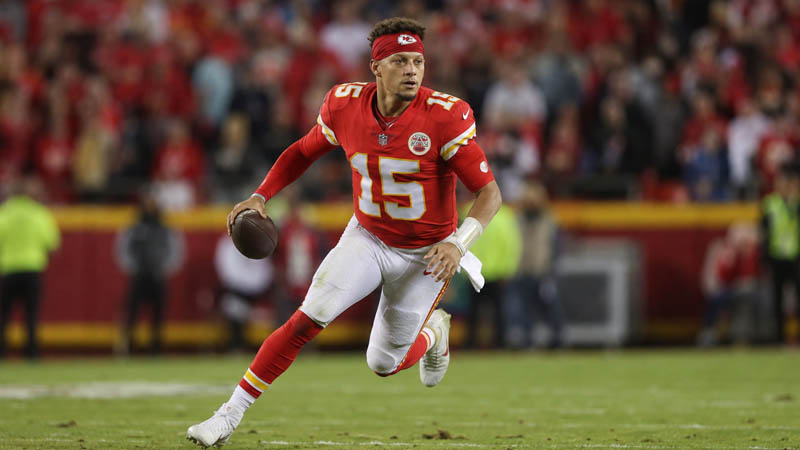
The landscape of professional sports underwent a seismic shift in June 2026. With a single signature, the Kansas City Chiefs and Patrick Mahomes established a new fiscal reality for the National Football League.
This was not merely a contract renewal; it was a comprehensive valuation of the most critical position in team sports.
By analyzing the specific components of this agreement, one can understand the broader trajectory of the league’s economic health and the strategic priorities of a championship-caliber organization.
The Benchmark: Decoding the $504.75 Million Milestone
As of the mid-2026 season, Patrick Mahomes officially holds the title of the highest-paid quarterback in the NFL.
The figures associated with this extension represent a leap forward in player compensation, setting a ceiling that many analysts believed would take several more years to reach.
The following table outlines the core financial pillars of the 2026 agreement:
| Metric | Financial Detail |
|---|---|
| Total Contract Value | $504.75 Million |
| Average Annual Salary | $64 Million |
| Contract Expiration | 2033 |
| Organization | Kansas City Chiefs |
This $64 million annual average value (AAV) serves as a marker for all future negotiations.
In a league where the salary cap has seen consistent year-over-year increases, this deal represents the Chiefs’ attempt to lock in a generational talent before the market experiences further inflation.
Strategic Longevity: The 2033 Horizon
One of the most notable aspects of the Mahomes extension is its duration. While many elite quarterbacks opt for shorter, three-to-five-year “bridge” deals to capitalize on rising caps, Mahomes and the Chiefs have committed to a partnership through 2033.
Key Implications of the Long-Term Structure:
- Roster Stability: By extending the contract through 2033, the front office gains a predictable window for long-term roster construction. They can structure bonus triggers and cap hits with a clear understanding of their primary financial obligation.
- Inflation Hedging: While $64 million is the current peak, as the league’s media rights deals and international expansion continue to drive revenue, this figure may represent a smaller percentage of the total cap by the late 2020s.
- Franchise Identity: Mahomes is now inextricably linked to the Kansas City brand for the remainder of his prime years, ensuring a level of marketing and competitive continuity that is rare in the modern era of player movement.
Comparative Analysis: The Quarterback Market Evolution
To understand why $64 million is the new standard, one must look at the rapid escalation of the quarterback market over the last several cycles.
Historically, the “highest-paid” tag was a revolving door, often held by whichever top-ten quarterback signed the most recent deal.
The Mahomes extension changed this dynamic by creating significant separation from previous benchmarks.
- Market Correction: Before this 2026 milestone, the AAV for top-tier starters had hovered in the low-to-mid $50 million range. The jump to $64 million represents a nearly 20% increase over previous high-water marks.
- Leverage Metrics: Mahomes’ status is unique because his compensation is backed by multiple championships and MVP awards, making the $504.75 million total value a reflection of both past performance and future projection.
- The “Mahomes Floor”: For upcoming free agents or those seeking extensions (such as the next wave of young stars), the $64 million AAV is no longer an aspirational goal but a baseline for negotiation.
Fiscal Dynamics: Balancing the Cap and the Competition
The challenge for any organization paying a single player $64 million annually is maintaining a competitive 53-man roster. The “quarterback tax” often forces teams to find value in the draft and through mid-tier veteran acquisitions.
Strategic Challenges for the Kansas City Chiefs:
- Draft Dependency: With such a large portion of the cap allocated to Mahomes, the Chiefs must excel at identifying “plug-and-play” talent in the early-to-mid rounds of the NFL Draft to balance the books.
- Allocated Spending: The organization will likely have to make difficult decisions regarding aging veterans at other premium positions, such as left tackle or edge rusher.
- Post-Season Windows: Every year of the extension through 2033 is essentially a “Super Bowl or bust” window, given the financial investment required to keep the roster viable.
Why the Value is Justified: An Analytical Perspective
From an organizational standpoint, the $504.75 million price tag is often viewed through the lens of risk management. While the number is staggering, the cost of not having an elite quarterback is significantly higher in terms of lost revenue, diminished ticket sales, and decreased brand relevance.
- Revenue Generation: A franchise quarterback drives jersey sales, national television appearances, and stadium naming rights value.
- Competitive Floor: Mahomes provides a high competitive floor; even in “rebuilding” years, a team with an elite quarterback remains a playoff contender.
- Coaching Synergy: The relationship between the coaching staff and a long-term franchise quarterback allows for a more complex and evolved offensive playbook that can adapt over a decade.
The Future of NFL Compensation Patterns
As we look toward the 2030s, the Mahomes contract will be viewed as the moment the NFL entered the “Half-Billion Dollar Era”.
This agreement suggests that for truly elite, “one-of-one” talents, the traditional constraints of the salary cap are becoming secondary to the need for long-term institutional security.
The Mahomes extension is a testament to the growth of the NFL as a global media powerhouse. The ability of a single team to commit half a billion dollars to one individual speaks to the robust financial health of the league and the specific dominance of the Kansas City Chiefs’ business model.
Conclusion: A Legacy Defined by Numbers and Rings
The 2026 extension for Patrick Mahomes is more than a financial transaction; it is a declaration of intent. By securing their quarterback through 2033 with a $504.75 million package, the Kansas City Chiefs have signaled their belief that Mahomes is the essential ingredient for a dynasty that spans decades.
While the $64 million annual salary is a record today, the history of the NFL suggests that this peak will eventually be scaled by others.
However, the structure, the timing, and the sheer magnitude of this deal ensure that Patrick Mahomes remains the central figure in the conversation about value, talent, and the future of the American sporting landscape.
Summary of Key Data Points:
- Highest Paid Status: Confirmed as of June 2026.
- Average Salary: $64,000,000.
- Aggregate Value: $504,750,000.
- Expiration Year: 2033.
This contract sets the stage for the next decade of NFL football, where the value of a franchise-altering quarterback is clearly defined at the half-billion-dollar mark.