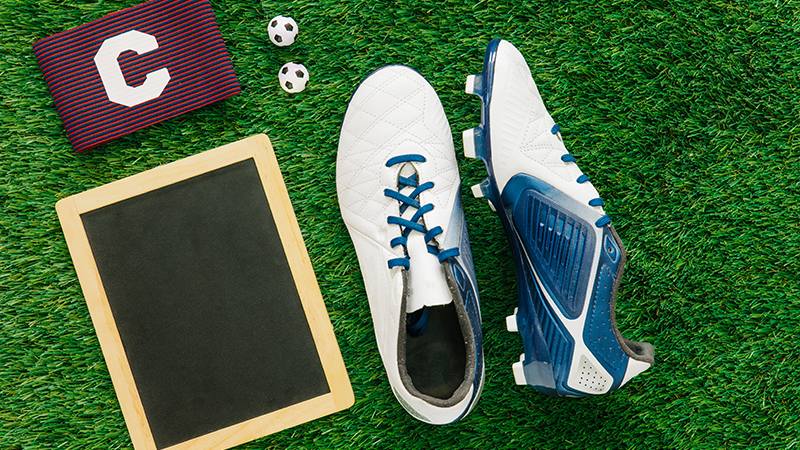
Whether you can wear football (soccer) boots for rugby is a common one, particularly for beginners, multi-sport athletes, or parents looking to save on equipment costs.
The short answer is that you can wear football boots for rugby in many casual and training situations, but for competitive matches and optimal performance, rugby-specific boots are highly recommended.
Understanding why this distinction exists requires a deep dive into the safety regulations of the sport, the physical demands of different player positions, and the structural differences between footwear designed for two very different games.
The Legal Framework: World Rugby Regulation 12
Before stepping onto a rugby pitch, the most critical factor is safety and legality. Unlike football, where the referee primarily checks for dangerous play, a rugby referee has a specific mandate to inspect footwear before a match begins. Ultimately, it is up to the referee’s discretion; if they believe your footwear is unsafe, you will not be allowed to take the field.
The standards for rugby footwear are governed by World Rugby Regulation 12, which outlines strict requirements for studs, cleats, and blades:
Length and Diameter
Studs must not be longer than 21 mm. Additionally, they must have a diameter of at least 10 mm at the end. Many football boots, designed for speed and agility on firm ground, feature much narrower, sharper studs that fail to meet this 10 mm minimum.
The Contact Area
The technical standard requires that the cross-sectional contact area of a stud at a plane 2 mm below the tip must be at least 78 mm². This ensures the pressure is distributed in a way that minimizes the risk of puncture injuries to other players.
Finishing and Edges
All edges of the studs or blades must be finished smooth and rounded to a radius of not less than 1 mm.
Material Integrity
Studs must be made of a material that maintains these safety characteristics throughout the game. Interestingly, nylon has been found to be an unsuitable material because it has a propensity for “burring”—developing sharp, jagged edges during play that can cause significant lacerations to opponents.
While blades and non-cylindrical studs are not strictly prohibited, they must conform to these same dimensions and must not present a greater risk of injury to another player than a standard cylindrical stud.
Structural Differences: Rugby Boots vs. Football Boots
If you look at a football boot and a rugby boot side-by-side, they may look similar, but their construction reflects the different stresses of the two sports.
Stud Configuration and Traction
Football boots are optimized for sprinting, rapid changes of direction, and “ball feel.” Consequently, their studs are usually shorter and concentrated under the forefoot and heel.
In contrast, rugby boots feature longer, more widely spaced studs that are often removable. This design is essential for providing the necessary traction in scrums, rucks, and mauls, as well as maintaining grip on muddy or wet pitches.
If you wear short football studs in a rugby scrum on a wet day, you will likely lose your footing, compromising both your performance and the safety of the scrum.
Ankle Support and Protection
Football boots are almost exclusively low-cut to maximize ankle mobility for technical footwork. Rugby boots, however, are available in low, mid, and high-cut models.
- Mid and High Cuts: These provide reinforced ankle support and uppers designed to resist the intense lateral forces encountered during tackles and scrums.
- Reinforcement: Rugby-specific boots often include reinforced toes and tougher uppers. This is a practical necessity in a sport where players are frequently stepped on (stamped) or caught in high-impact contact situations. Football boots, which prioritize being lightweight, may split or wear down much faster under these stresses.
Positional Requirements: Who Can Get Away With It?
Whether football boots are “enough” for you often depends on where you play on the field.
The Backline (Speedsters)
Backs and outside players (such as wingers or fullbacks) often prioritize agility and top-end speed over raw power. For these players, football boots can be adequate, especially when playing on firm, dry turf.
These players do not participate in scrums and thus do not require the same level of heavy-duty traction or ankle stability as forwards. However, by choosing football boots, they still sacrifice the added protection found in rugby-specific models.
The Forwards (The Powerhouse)
For front-row forwards, tight forwards, and anyone frequently involved in scrums and mauls, football boots are generally unsuitable.
These players require the massive traction and leverage provided by long, metal rugby studs to push against the opposition.
Wearing lightweight football boots in these positions can lead to slipping, which is not only a performance failure but a major safety risk in a collapsing scrum.
When Can You Use Football Boots?
There are specific scenarios where football boots are a perfectly reasonable choice:
- Touch Rugby: Since there is no scrummaging or heavy contact, football boots are often the standard choice.
- Training on Artificial Grass: Many players find football boots comfortable for training sessions on firm, dry, or artificial surfaces.
- Beginners: If you are just starting out and haven’t committed to the sport yet, your existing football boots can serve you for those initial non-competitive sessions.
When Should You Avoid Football Boots?
You should strictly avoid using football boots in the following circumstances:
- Competitive Match Play: In formal matches, stud types and boot specifications are often regulated, and the risk of being asked to leave the field is high.
- Muddy or Soft Fields: On wet pitches, football boots will almost certainly slip, leaving you ineffective in most phases of play.
- Forward Positions: As mentioned, the lack of stability and protection makes football boots a poor choice for any forward.
Practical Recommendations for Players
If you are deciding on footwear for the upcoming season, keep these practical tips in mind:
Check Competition Rules
Always confirm your specific club or league’s rules regarding metal vs. plastic studs before you buy anything.
The Maintenance Check
Regularly inspect your studs. Replace any that show signs of “burring” or have become sharp, as this will lead to a referee banning them during pre-match inspection.
Choose Durability
If you must use football boots for rugby, choose a model with a durable upper and a stud pattern that offers decent rearfoot traction. Avoid ultra-lightweight “speed” boots or indoor/turf shoes that offer no grip on grass.
Invest in Rugby-Specific Gear
For frequent players or forwards, the best advice is to invest in a pair of rugby boots with removable studs.
This allows you to swap between shorter plastic studs for dry ground and longer metal studs for muddy conditions, ensuring you are always legal and performing at your peak.
Final Verdict
While you can wear football boots for rugby, especially for casual play or in the backline on dry ground, they are rarely the ideal choice for the competitive player.
The differences in stud dimensions (Regulation 12), durability, and traction mean that rugby-specific boots are almost always a safer and more effective investment.
As the old sporting adage goes: you wouldn’t play football in ice skates—so if you want to play rugby to your full potential, wear the boots built for the job.