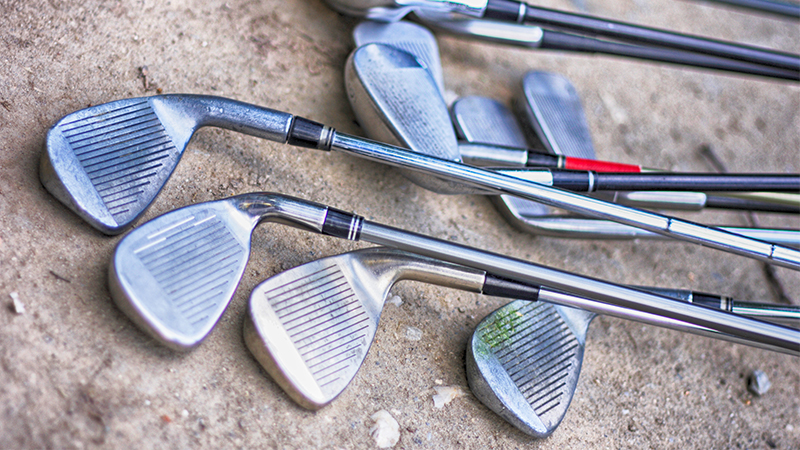
Whether you are a weekend warrior or a scratch golfer, there is a recurring question that haunts every trip to the local pro shop: Is it time to replace my irons? For some, the 5-year mark feels like a natural expiration date. For others, a set of irons is a lifelong companion, lasting 30 years or more.
The Great Golf Dilemma: When Does “Old” Become “Obsolete”?
The consensus among golfers is far from uniform. Some players, like those on the r/golf community, find themselves questioning their gear after just five years, wondering if they are “leaving a fair amount of improvement on the table” due to tech advancements.
However, the data suggests that for many, the “5-year itch” is more about marketing than mechanics. One common perspective is that clubs are only truly “getting broken in” after five years, provided the sweet spot hasn’t been worn through to the chrome.
The Replacement Spectrum: From 2 Years to 34 Years
User experiences vary wildly, creating a replacement spectrum that looks like this:
- The “Tech Chaser”: Replaces irons every 2–5 years to stay on the cutting edge.
- The “Decade Club”: Upgrades every 10–15 years, usually when a significant shift in forgiveness or distance is needed.
- The “Legacy Player”: Holds onto a set for 20–34 years, often playing classic models like the Ping Eye 2s or Hogan h40s.
Physical Wear and Tear: The Technical Red Flags
Before looking at new technology, you must assess the integrity of your current tools. While irons are incredibly durable, they are not invincible.
Groove Degradation and Rust
The most obvious sign for replacement is visible damage. If you play frequently, you may eventually wear a “sweet spot through the chrome”.
Once the protective plating is gone, the underlying metal is susceptible to rust, which can affect the consistency of your spin and ball flight.
Maintenance as Longevity
It is a common misconception that irons have a hard expiration date. Many golfers find that if they “keep them clean,” a set can last for decades.
A set of Mizuno MP62s from 2008 or Callaway X-20s from 2007 can still perform at a high level if the grooves are maintained and the clubs are not abused.
Technological Advancements: Is the Hype Real?
The primary driver for the $1,200+ investment in new irons is the promise of distance and forgiveness. But does a five-year gap actually deliver a measurable difference?
The “Minimal Returns” Reality
For the average amateur, the difference between a 2019 iron and a 2024 iron may be negligible. Some players argue that until the “tech really improves,” the returns on a new set are minimal. If you are a 10-handicapper playing 10-year-old clubs, the clubs are rarely the limiting factor in your game.
The Forgiveness Jump
Where technology does make a difference is in the transition from player’s blades to modern “game improvement” irons.
If a golfer is playing 10–20 year old irons and is looking for significantly more distance and help on off-center hits, a modern set will likely provide a noticeable boost.
This is especially true for players who find their game has changed—perhaps they were a better golfer 15 years ago and now need the added forgiveness of modern “trickery” to keep their scores low.
The Shift in Shaft Technology: A Critical Reason to Upgrade
Often, the reason to replace irons isn’t the clubhead itself, but the shaft. As golfers age or face physical challenges, the equipment must adapt to their changing swing speeds and physical needs.
Transitioning from Steel to Graphite A common trend among long-term players is the switch from steel shafts to graphite. This shift is often motivated by:
- Age: As players get older, the lighter weight and vibration-dampening qualities of graphite become more attractive.
- Health and Injury: For players diagnosed with conditions like MS or chronic joint pain, switching to a more “forgiving” setup—both in head design (like the Sim2) and shaft material—can be the difference between continuing to play and giving up the game entirely.
- Consistency: Sometimes, a player simply wants a change in feel, leading them to replace a 9-year-old set specifically to make the jump to graphite.
The Psychology of the “New Bag”: Look Good, Play Good
We cannot ignore the mental aspect of golf. The “First we get jobs. Then we get khakis. Then we get the girls” philosophy applies to golf gear as well.
Confidence and Motivation
There is a legitimate psychological boost that comes from standing over a “pretty” club. One user noted that their Cobra Forged Tec Copper irons were “too pretty to replace,” suggesting that aesthetic satisfaction can actually lead to better focus and enjoyment. If you “look good,” you often “play good” because of the confidence the equipment inspires.
The “Boredom” Factor
For some, the replacement cycle has nothing to do with performance. Some golfers simply “get bored quickly” and enjoy the process of selling a “new used thing” to buy another “new used thing”.
While this is a more expensive way to play, it keeps the game fresh for those who treat golf as a hobby centered on equipment as much as skill.
Audience Profiling: Which Category Do You Fall Into?
To determine your personal replacement cycle, identify your current “Golfer Persona”:
- The Competitor: You play 40+ rounds a year. Your grooves are likely worn, and your swing speed is consistent. You should look at a fitting every 3–5 years to ensure your lofts haven’t moved and your tech is current.
- The Recreationalist: You play for fun 1-2 times a month. Your 15-year-old irons are likely fine, but you could benefit from a “modern” game-improvement set if you struggle with consistency.
- The “Senior” Transitioner: You are noticing a loss in distance or increased joint soreness. Regardless of the age of your clubs, you should look into graphite-shafted irons immediately to prolong your playing years.
Enhanced FAQ: Your Iron Replacement Questions Answered
Q: How many rounds do irons actually last?
A: While there is no hard number, many golfers play the same set for 10–15 years without a loss in performance. If you play 100 rounds a year, you may see groove wear after 5 years; if you play 20 rounds a year, they could last 20+ years.
Q: Will new irons actually lower my handicap?
A: It depends on what you are switching from. Moving from 15-year-old blades to modern game-improvement irons will likely offer more forgiveness on mishits. However, as one golfer noted, “it’s not the clubs”—fundamental swing improvements often yield higher ROI than a new set of sticks.
Q: Should I replace my driver or my irons first?
A: Most golfers follow a staggered replacement schedule. A common strategy is to replace the driver every 2 years, while keeping irons for 5 years or longer, and the putter almost never.
Q: What is the best way to “refresh” my old irons without buying new ones?
A: Re-gripping and re-shafting are excellent ways to extend the life of your gear. One golfer reported they have used only three sets of Mizuno irons since 1997, opting to simply “re-shaft” their current 11-year-old set to maintain performance.
Conclusion: The Final Verdict
So, how often should you replace your irons?
If we look at the collective wisdom of the golfing community, the answer is: Whenever the equipment stops you from playing your best—or having the most fun. Whether that’s every 5 years to stay modern or every 34 years because your wife finally bought you a new set, the right time is a personal intersection of budget, skill, and desire.
Ready to see if your irons are holding you back? Visit our interactive “Club Age vs. Performance” calculator to see how much distance you might be leaving on the table.