In the high-stakes world of professional athletics, a jersey number often transcends its function as a mere identifier.
For an elite athlete, the digits on their chest and back become a central component of their professional identity, a brand recognized by millions, and a symbol of their contributions to the game.
Richard Sherman, widely regarded as one of the most intellectually gifted and physically dominant cornerbacks in modern football history, provides a compelling case study in this evolution.
Throughout his storied career, Sherman’s choice of numbers has reflected his professional standing, his tactical maturity, and ultimately, his personal values.
The Foundation of a Legacy: The Iconic No. 25 in Seattle
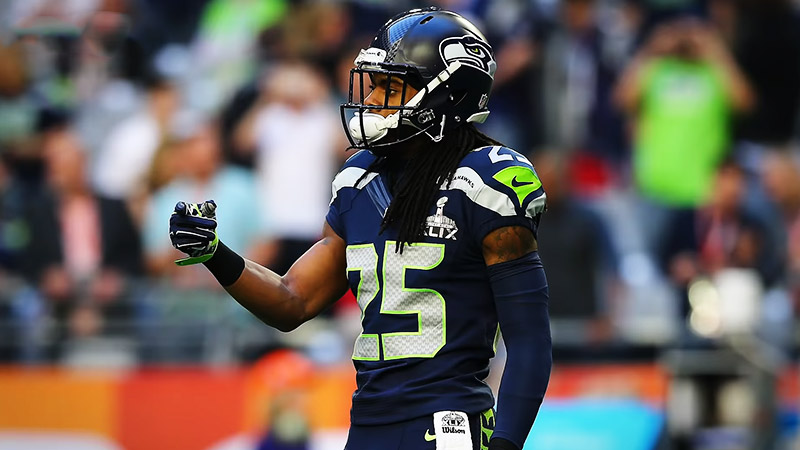
When analyzing the defensive landscape of the 2010s, it is impossible to overlook the “Legion of Boom.” At the heart of this historic unit was Richard Sherman, who donned the No. 25 for the majority of his career during his tenure with the Seattle Seahawks.
It was during these years that the number became synonymous with a specific brand of psychological and physical dominance.
During his peak years in the Pacific Northwest, Sherman was an All-Pro caliber talent who redefined the expectations of the cornerback position.
His use of No. 25 during these dominant years helped make the number iconic within the Seahawks’ franchise history.
For opponents, seeing those two digits meant they were entering a “shutdown” zone where completions were rare and interceptions were frequent.
The choice of No. 25 was not just about the player; it was about the era. In Seattle, the number represented a collective defensive philosophy.
Sherman’s success in this jersey cemented his status as a first-ballot Hall of Fame candidate, ensuring that any professional discussion of the No. 25 in a defensive context must begin with his contributions.
Professional Continuity: The San Francisco Transition
In 2018, when Sherman made the strategic move to the San Francisco 49ers, there was significant speculation regarding whether he would maintain his established brand or seek a fresh start.
Ultimately, Sherman opted to keep the No. 25 during his time with the 49ers. This decision was not merely a matter of personal preference but a calculated effort to maintain the continuity of his professional identity.
However, entering a new locker room as a veteran leader requires a high degree of emotional intelligence and diplomacy. The No. 25 was not vacant upon his arrival. To maintain the number, Sherman worked out a friendly agreement with his new teammate, Jimmie Ward.
This gesture highlighted Sherman’s respect for the existing team hierarchy and his willingness to engage in professional dialogue to achieve a mutually beneficial outcome.
By retaining the number, Sherman proved that his “No. 25” brand was not tied to a single city, but rather to his own standard of excellence.
His performance in San Francisco further validated the authority of the number, as he led a young secondary back to a championship appearance.
The Shift to No. 5: A Personal Milestone in Tampa Bay
The final chapter of Sherman’s active playing career saw a departure from the “20s” range entirely, marking a significant aesthetic and symbolic shift.
When Sherman signed with the Tampa Bay Buccaneers, he officially switched his jersey number to No. 5.
In the modern landscape of the league, jersey number regulations have become increasingly flexible, allowing veteran players to explore single-digit options that were previously restricted to quarterbacks and specialists.
However, Sherman’s choice of No. 5 was rooted in something far deeper than a trend or a rule change. He chose the No. 5 specifically to honor the birth date of his son.
This transition from No. 25 to No. 5 represents the evolution of the man behind the helmet.
While the earlier part of his career was defined by building a legacy and establishing a dominant brand, his time in Tampa Bay focused on the integration of his professional platform with his personal life.
The No. 5 served as a daily reminder of his priorities outside of the stadium, showcasing a level of maturity and sentiment that resonated with fans and teammates alike.
The Strategic Impact of Athlete Branding
From a leadership and branding perspective, Sherman’s journey provides several key insights into how elite professionals manage their public-facing identities:
- Brand Equity: Sherman understood that No. 25 was an asset. By maintaining it across two major franchises, he maximized his recognition and marketability.
- Negotiation and Diplomacy: The agreement with Jimmie Ward serves as a prime example of how veteran leaders navigate workplace culture. It wasn’t about “taking” a number; it was about a professional arrangement.
- Personal Narratives: By switching to No. 5 for a personal reason, Sherman humanized his brand. In an industry often criticized for being impersonal, this move created a deeper connection with his audience.
Conclusion: A Legacy Defined by More Than Digits
Richard Sherman’s career is a testament to the power of a professional narrative. Whether he was shutting down half the field in the iconic No. 25 in Seattle or paying tribute to his family with the No. 5 in Tampa Bay, his impact on the game remained consistent.
He demonstrated that while a number can identify a player, it is the player’s character, intelligence, and performance that give the number its meaning.
For fans and analysts alike, Sherman’s jersey evolution offers a roadmap of his journey from a dominant young star to a respected veteran and devoted father.
As he moves into the next phase of his career in media and leadership, the numbers 25 and 5 will forever be etched into the history of the sport as symbols of one of the greatest defensive minds to ever play the game.