In the modern era of professional athletics, the pursuit of excellence is often viewed through the lens of data, talent acquisition, and tactical innovation.
However, the tenure of Jim Harbaugh with the San Francisco 49ers serves as a definitive case study in how organizational culture and interpersonal friction can dismantle even the most successful operations.
Between 2011 and 2014, Harbaugh transformed a franchise mired in a decade of mediocrity into a perennial powerhouse, only to be forced out in a manner that many analysts still view as a masterclass in management failure.
To understand why a coach with a .681 winning percentage and three consecutive NFC Championship appearances was discarded, one must look past the win-loss column and into the volatile intersection of ego, power, and mental fatigue.
The Catalyst: A Fundamental Breakdown in Governance
At the core of the Harbaugh departure was a complete disintegration of the working relationship between the head coach, CEO Jed York, and General Manager Trent Baalke.
In any case, the alignment between the visionary (the coach) and the infrastructure (the front office) is the primary determinant of long-term sustainability. In San Francisco, this triangle became a theater of war.
Harbaugh and Baalke were reportedly locked in a constant power struggle over team control and roster decisions.
While Baalke was viewed as a “smoother political player” who navigated the corporate hierarchy with ease, Harbaugh was described as a “bull in a china shop” whose primary focus was the immediate competitive result rather than organizational harmony.
This friction was not merely professional; it was deeply personal. By the end of their tenure, reports indicated that the two men would share an elevator without acknowledging each other’s presence.
The tension reached a tipping point because ownership—specifically Jed York—felt “weary” of the constant “tussling” between his two most important employees.
Ultimately, York faced a binary choice: retain the abrasive winner or keep the politically aligned manager. He chose the latter, a decision that has been criticized as prioritizing internal comfort over championship results.
The “Men Only” Incident: A Symbolic Point of No Return
While various factors contributed to the exit, certain anecdotal events highlight the sheer level of disrespect that characterized the relationship between Harbaugh and his superiors.
One of the most enduring stories involves a locker room incident where Jed York entered while Harbaugh was addressing the team.
Harbaugh reportedly stopped his speech and told York that the meeting was for “men only,” effectively questioning the CEO’s authority and place within the football operation.
In a corporate environment, such a public challenge to a superior is often an irreversible act. For York, this likely served as a definitive sign that Harbaugh did not view him as a boss, but rather as an interloper.
This psychological rift made the “mutual parting” narrative—later used by the team to frame the exit—entirely hollow. Harbaugh eventually clarified that he was explicitly told he would no longer be the coach, regardless of his desire to stay.
The Burden of Intensity: Player Burnout and the “Rah-Rah” Fatigue
While it is easy to place the entirety of the blame on the front office, evidence suggests that Harbaugh’s coaching style had a finite shelf life within a professional locker room.
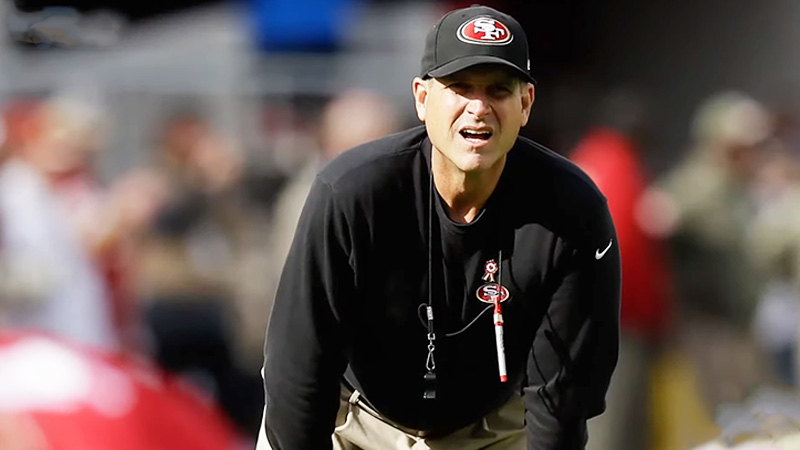
His “intense, high-strung ‘rah-rah’ style,” which proved highly effective in the collegiate ranks where players cycle out every four years, began to grate on NFL veterans.
Professional athletes, particularly those with established legacies, often require a different psychological approach than college students.
By the fourth year of Harbaugh’s tenure, veteran players were reportedly suffering from “mental fatigue” caused by his relentless, “psychotic” competitiveness and demanding conditioning regimes.
This internal exhaustion is often cited as a reason for the unprecedented wave of early retirements that followed Harbaugh’s departure. Key figures like Patrick Willis and Chris Borland stepped away from the game shortly after the 2014 season.
While some retired for health reasons, the timing suggests that the environment had become so taxing that the passion for the game had been depleted for many of the team’s core leaders.
Tactical Stagnation and the Greg Roman Conflict
Beyond the interpersonal drama, the 2014 season exposed technical vulnerabilities that provided the front office with the leverage they needed to justify a change. The 49ers finished with a disappointing 8-8 record, a significant drop from their previous heights.
A primary point of contention was the performance of the offense. Under Offensive Coordinator Greg Roman, the team’s production began to plateau as the league adapted to the read-option and Colin Kaepernick’s specific skill set.
Critics argued that Kaepernick failed to evolve as a pocket passer, and when defenses began to shut down his running lanes, the offense lacked a “Plan B”.
The front office reportedly pressured Harbaugh to make changes to his staff, specifically regarding Roman.
However, Harbaugh’s unwavering loyalty to his assistants became a major friction point. His refusal to fire Roman, even as the offense stalled, signaled to ownership that the coach was unwilling to adapt his philosophy for the sake of the organization’s progress.
The Legacy of the Divorce: A Comparative Analysis
The decision to move on from Harbaugh was not just a coaching change; it was a pivot in franchise philosophy. The 49ers traded a high-variance, high-conflict winner for what they hoped would be a more manageable structure. The immediate results were catastrophic.
- The Vacuum of Leadership: Harbaugh was replaced by Jim Tomsula, a coach whom some fans described as a “handyman” hired to manage a tanking effort. The team fell into a period of prolonged struggle, proving that while Harbaugh may have been difficult to manage, his “coaching acumen” was the primary driver of the team’s success, rather than a foundation laid by previous regimes.
- The Validation of the System: Supporters of the front office often argue that Harbaugh merely “rode the coattails” of a loaded roster built by Mike Singletary and Trent Baalke. However, the counter-argument remains stronger: the talent was present before 2011, but it was Harbaugh who turned those individual pieces into an “elite” unit.
- The Harbaugh Paradox: The “animated coaching style” that fans loved was the exact same trait that the front office found “embarrassing” and “abrasive”. This highlights a common organizational trap: the very traits that make a leader successful in a crisis (intensity, tunnel vision, defiance) can become liabilities once the organization reaches a period of stability.
Essential Insights: Why the Divorce Was Inevitable
To synthesize the complex factors behind this exit, we can categorize the collapse into three distinct pillars of organizational failure:
- Political Misalignment: Harbaugh was a “football purist” in a “corporate world.” He lacked the political suavity to manage upward, which allowed Trent Baalke to consolidate power and influence Jed York’s perception of the coach’s value.
- Diminishing Returns on Intensity: The “rah-rah” energy that fuels a turnaround often burns out the very people who achieved it. The mental tax of the Harbaugh era was sustainable for a three-year sprint but proved unsustainable for a decade-long marathon.
- The Control-Competence Conflict: Management (the suits) felt that the roster was the star, while the coach (the sweatshirt) felt that the strategy was the star. When the 2014 season provided a dip in performance, it gave the “suits” the ammunition they needed to reclaim control.
Management Lessons from the 49ers’ Mistake
The Harbaugh-49ers saga is more than a sports story; it is a cautionary tale for any high-stakes leadership team. It illustrates that winning on the field—or in the marketplace—is not a shield against the consequences of a toxic internal culture.
For a leader, the lesson is clear: competence does not excuse abrasiveness. For an owner or CEO, the lesson is even more poignant: never prioritize political comfort over elite performance.
Jed York and Trent Baalke believed they were the “smart guys in the room” who could easily replace the production of a world-class coach.
They were wrong. The subsequent years of “perma-tanking” served as a stark reminder that in any competitive endeavor, the “suits” may hold the trophy, but it is the vision and leadership in the trenches that earn it.
In the end, Jim Harbaugh didn’t just leave San Francisco; he was the casualty of an organization that forgot that the primary goal of a professional team is to win—not to be comfortable.
The “middle finger” given to Harbaugh remains one of the most debated and scrutinized management decisions in the history of the National Football League.