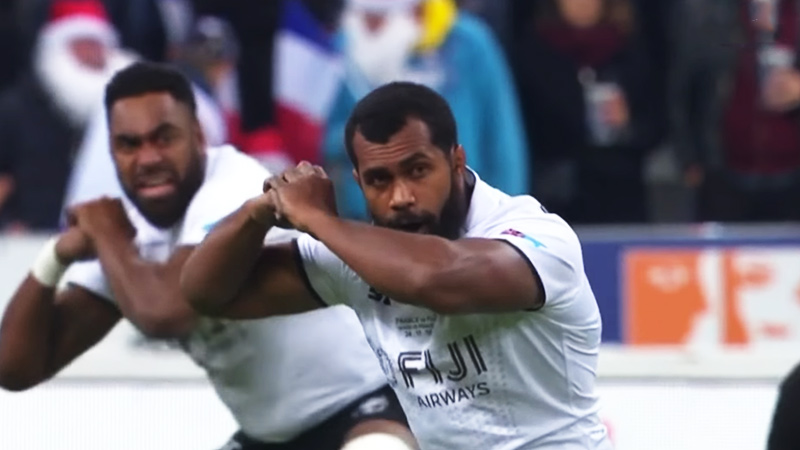
When a nation of fewer than 900,000 people consistently outmaneuvers global superpowers on the grass, the world takes notice.
Fiji’s dominance in rugby, particularly in the lightning-fast Sevens format, is not a mere statistical anomaly; it is a profound intersection of heritage, geography, and an uncompromising national spirit.
From the gold-standard performance in Rio 2016 to the legendary flair displayed at the Hong Kong Sevens for decades, the “Flying Fijians” have redefined what is possible in modern athletics.
To understand why this South Pacific archipelago is so exceptional, one must look past the scoreboards and into the heart of the village crucible where the game is first forged.
The Village Crucible: Where Instinct Precedes Instruction
In most Tier 1 rugby nations, talent is identified in elite academies and honed with expensive equipment. In Fiji, the development process is far more organic and, arguably, more effective.
The Barefoot Tradition From a very young age, children in Fiji engage in touch rugby on roadsides, beaches, and village commons.
These games often occur without a regulation ball; instead, kids use plastic bottles or bundles of rags to practice their handling.
Playing barefoot on uneven terrain develops a level of instinctive footwork and balance that is difficult to replicate in a structured environment.
A Grassroots Phenomenon The sheer scale of participation is staggering. Out of approximately 180,000 males aged between 14 and 40, an estimated 155,000 are active rugby players.
This high player-to-population ratio ensures that the sport is more than a pastime—it is a national heartbeat.
With over 30,000 active school and provincial players spread across more than 300 islands, the talent pool is constantly being refreshed by a culture that prioritizes the oval ball above all else.
The Anthropology of Excellence: From Warriors to Athletes
The prowess of Fijian rugby is often attributed to a “warrior heritage,” a concept supported by both cultural tradition and academic study.
A Modern Expression of Ancient Values Anthropological research suggests that rugby served as a perfect replacement for pre-colonial tribal warrior traditions.
During the colonial era, as traditional warfare was discouraged, rugby provided a constructive outlet for the physical and moral values associated with martial societies.
The speed, strength, and tactical aggression required on the pitch are seen as a direct lineage to the warfare and martial traditions of pre-colonial Fijian identity.
Nation-Building and Identity Rugby has become a critical tool for uniting a diverse population.
Following periods of military coups and constitutional crises, the national team has acted as a bridge, bringing together members of different ethnic groups under a common “Fiji Islander” identity.
When the team wins, the victory belongs to every village, regardless of internal politics.
The Sevens Specialty: Why Fiji Rules the Shorter Game
While Fiji is a formidable opponent in the 15-a-side game (currently ranked among the top nations in the world), they are undisputed masters of Rugby Sevens.
Natural Suitability The Sevens format—characterized by 14-minute matches on a full-sized pitch—places a massive premium on speed, endurance, and individual flair.
This “wide-open” style of play perfectly aligns with the Fijian skill set developed in village touch games:
- One-handed catches: Allowing for faster transitions.
- Behind-the-back passes: Keeping the defensive line guessing.
- “Mad shit” offloading: A term used by fans to describe the team’s ability to keep the ball alive in impossible situations.
The Hong Kong Connection For over 40 years, the Hong Kong Sevens has served as the “spiritual home” of the Fijian game. The team has won the tournament 16 times, turning the event into an annual pilgrimage for fans who transform the stands into a sea of singing and dancing. Success in Hong Kong often serves as a dress rehearsal for global stages like the Olympics.
The Professional Evolution: Science Meets Soul
For decades, Fiji relied almost exclusively on raw talent. However, the appointment of coach Ben Ryan ahead of the 2016 Olympics introduced a vital layer of modern professionalism.
Sports Science and Nutrition
Ryan’s “secret” to success involved introducing rigorous sports science and nutrition to a squad that had previously been inconsistent in their preparation.
Players who were accustomed to a diet heavy in bulky carbohydrates like taro and cassava were introduced to more refined athletic fueling, and a new sense of steely discipline was instilled within the camp.
The Ben Ryan Legacy
The impact of this professional shift was immediate. Not only did it lead to Olympic gold, but it also changed the way the nation viewed the potential of their athletes. Ryan’s influence was so profound that he became the first non-Fijian to be made a tribal chief, and his name remains popular for newborns across the islands.
The Professional Paradox: Challenges in the 15s Game
The question often arises: if Fiji is so dominant in Sevens, why aren’t they consistently winning the 15-a-side World Cup? The answer lies in structure, resources, and technical discipline.
Technical Complexity
The 15-man game is significantly more technical than Sevens. It requires mastery of the set-piece (scrums and lineouts) and a high level of organized defensive structure.
Some analysts argue that the instinctive, “free-flowing” style that wins Sevens matches can actually be a hindrance in the highly disciplined environment of a 15s Test match.
The Global Talent Drain
Fiji faces a unique challenge known as player poaching. Because of the country’s economic status, its best players are frequently signed by wealthy European and French clubs.
These clubs often place immense pressure on players to retire from international duty to remain available for club matches.
This means that Fiji’s national coaches often struggle to field their strongest 15-man squad, as players must prioritize the wages that support their entire villages back home.
Cohesion and Facilities
Unlike Tier 1 nations like England or New Zealand, Fiji does not have the luxury of multiple professional domestic sides where national players can train together year-round.
With talent scattered across the globe, the national team often has limited time in camp to build the cohesion necessary to compete at the highest levels of the 15s game.
The Economic Impact: More Than a Sport
In Fiji, a professional rugby contract is an economic lifeline. The wages earned by a single player in the French leagues can provide for an entire extended family.
This financial pressure makes every career-ending injury a potential tragedy for a whole community.
Despite these pressures, the dream remains universal. Every child playing touch rugby in the village is not just playing for fun; they are playing for a chance to take their family to the next level.
Conclusion: The Future of the Flying Fijians
Fiji’s rugby excellence is a masterclass in turning limited resources into limitless potential.
By combining a deep-seated warrior heritage with an environment that encourages instinctive play from the age of five, they have created a brand of rugby that is as effective as it is beautiful.
As professional structures like the Fijian Drua in Super Rugby continue to develop, the gap between their Sevens dominance and 15s performance is likely to close.
The world should prepare: the “Flying Fijians” are no longer just an exciting underdog—they are a developing powerhouse, fueled by the soul of a nation that lives and breathes the game.