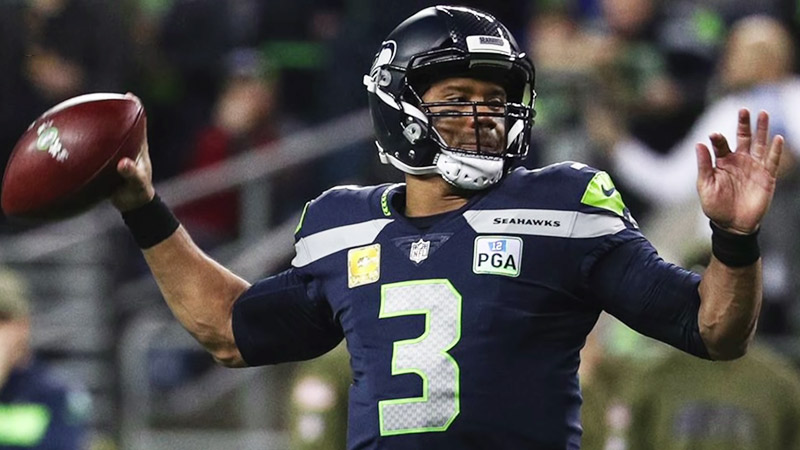
The modern game of professional football is as much a battle of analytical preparation and rapid communication as it is of physical endurance and athletic talent.
On any given Sunday, millions of spectators watch quarterbacks scan the defensive alignment, make subtle adjustments at the line of scrimmage, and execute complex plays with precision.
Yet, one of the most critical elements of this coordination remains entirely invisible to the naked eye, hidden beneath the plastic and padding of the players’ helmets.
A central question often arises among both casual observers and dedicated students of the game: Do NFL quarterbacks have speakers inside their helmets?
The short answer is yes; NFL quarterbacks do indeed have speakers installed inside their helmets to receive play calls directly from the coaching staff on the sidelines.
This communication system serves as the primary link between the sideline strategists and the field general, transforming how play-calling is executed.
However, this technology is not a free-form, open-ended channel. It is governed by a strict set of regulations, technical limitations, and strategic boundaries set by the league to maintain competitive balance.
The Visual Marker: Understanding the “Green Dot” Rule
In a fast-paced game where substitute players constantly enter and exit the field, officials and opposing teams must have a clear, immediate way to verify that no team is gaining an unfair technological advantage.
To regulate this, the league mandates a highly visible indicator on the equipment of authorized players.
Every team is permitted to have only one player on the field at any given time who is equipped with an active speaker system. This designated communicator is distinguished by a visible green dot located on the back of their helmet.
+------------------------------------------+
|          NFL HELMET BACK VIEW            |
|                                          |
|                 /-------\                |
|                /         \               |
|               |  (Logo)   |              |
|               |           |              |
|                \         /               |
|                 \---*---/                |
|                     ^                    |
|                     |                    |
|             [ GREEN DOT DECAL ]          |
|         (Indicates Active Speaker)       |
+------------------------------------------+
The presence of the green dot allows officials to monitor compliance on every single snap. If a team accidentally fields two players wearing green-dot helmets simultaneously, they risk severe administrative penalties.
This strict single-player limitation ensures that while technology can assist in the relay of information, it cannot replace the organic coordination and leadership required of players on the field.
The player wearing the green dot must serve as the sole conduit of information, digesting the instructions from the coaching staff and verbally distributing them to the rest of the huddle.
Technical Architecture: How Helmet Audio Works
The technology embedded within an NFL helmet is a marvel of specialized engineering. It must be highly durable, capable of withstanding violent impacts, and clear enough to be heard over the deafening roar of tens of thousands of cheering fans. The architecture of this system relies on three primary pillars:
One-Way Audio Dynamics
The communication link is strictly a one-way audio channel. Coaches can speak directly to the quarterback, but the quarterback cannot speak back to the coaches through the helmet system. If a quarterback disagrees with a call, notices an unexpected defensive look, or needs clarification, they cannot simply press a button and reply.
They must rely on traditional methods of communication, such as physical hand signals, pre-arranged adjustments, or waiting until they return to the sideline to discuss adjustments face-to-face with the offensive coordinator.
This design choice prevents constant back-and-forth debates, keeping the pre-snap phase structured and decisive.
Dual Speaker Integration
To ensure the quarterback can hear the play call clearly amidst immense stadium noise, helmets are engineered with two small speakers—one positioned near each ear.
Rather than being exposed, these speakers are carefully hidden inside the protective padding of the helmet. This integration serves two critical purposes:
- Hearing Protection and Audio Clarity: By housing the speakers within the ear-side padding, the sound is directed straight into the player’s ears, minimizing the interference of ambient crowd noise.
- Safety Maintenance: Placing the speakers deep within the padding ensures that the structural integrity of the helmet is not compromised, protecting the player’s head from impact while maintaining functional audio delivery.
Encrypted Signal Transmission
In an elite professional sports league, information security is paramount. Intercepting an opponent’s play-calling channel would provide an insurmountable advantage.
To prevent any form of espionage or signal crossing, the audio is transmitted via a highly secure, encrypted digital radio frequency.
The signal travels from the coach’s headset on the sideline or in the coaches’ booth directly to an internal receiver mounted securely inside the quarterback’s helmet.
Because the signal is encrypted digitally, teams do not have to worry about local radio stations, stadium security channels, or opposing coaching staffs scanning the airwaves to listen in on their tactical discussions.
Strict Operational Limitations: The 15-Second Rule
Perhaps the most tactically significant aspect of the helmet communication system is not what it allows, but when it is forced to shut down.
The league does not permit coaches to guide their quarterbacks throughout the entire pre-snap process.
To preserve the intellectual demands of the quarterback position, the communication system is programmed with an automatic cutoff mechanism.
The audio connection automatically cuts off when 15 seconds remain on the play clock, or as soon as the ball is snapped—whichever event occurs first.
+-----------------------------------------------------------------+
|                    THE 40-SECOND PLAY CLOCK TIMELINE            |
|                                                                 |
|  [40 Seconds]                                      [15 Seconds] |  [0 Sec]
|  +------------------------------------------------------+-------+  (Snap)
|  | <--- COACH-TO-PLAYER AUDIO ACTIVE (Max 25 Sec) ---> | MUTED |
|  +------------------------------------------------------+-------+
|                                                         ^
|                                                  AUDIO CUTS OFF
|                                             (System automatically mutes)
+-----------------------------------------------------------------+
The Strategic Value of the Cutoff
This 15-second cutoff completely alters the pre-snap phase of a football play. During the initial portion of the play clock, the coach can describe the play design, highlight potential defensive matchups, and offer reminders about coverage shells. However, once the clock ticks down to 15 seconds, the line goes completely silent.
From that moment onward, the quarterback is entirely on their own. They must:
- Scan the defensive front to identify blitz threats and safety rotations.
- Communicate any protection changes to the offensive line.
- Signal route adjustments to wide receivers at the line of scrimmage.
- Manage the remaining seconds on the play clock to avoid a delay of game penalty.
This rule prevents coaches from acting as “puppeteers,” whispering real-time adjustments into the quarterback’s ear as the defense shifts late in the play clock.
It preserves the classic, high-IQ nature of playing quarterback, demanding that the player on the field possesses a deep understanding of the playbook and defensive schemes.
Defensive Implementation: Balancing the Field
For many years, the helmet communication system was a luxury reserved exclusively for the offensive side of the ball.
This created a notable competitive imbalance, as offenses could rapidly adjust their tempos and call plays while defenses had to rely on complex hand signals or substitution packages to relay counter-strategies.
To level the playing field, the league eventually updated its rules to allow defensive units to utilize the exact same technology.
The Defensive “Green Dot”
Just like the offense, the defense is permitted exactly one player on the field with a green-dot helmet containing an active speaker. While the offensive system almost always stays with the quarterback, the defensive assignment requires a different strategic approach.
On defense, this responsibility is almost always assigned to a single linebacker.
+------------------------------------------------------------+
|             ON-FIELD COMMUNICATIONS SYSTEM                 |
|                                                            |
|          OFFENSE                            DEFENSE        |
|     +---------------+                  +---------------+   |
|     |  Quarterback  |                  |  Linebacker   |   |
|     |  [Green Dot]  |                  |  [Green Dot]  |   |
|     +-------+-------+                  +-------+-------+   |
|             |                                  |           |
|     (One-Way Audio)                    (One-Way Audio)     |
|             |                                  |           |
|      [Offense Coach]                    [Defense Coach]    |
+------------------------------------------------------------+
Why Linebackers?
Choosing a linebacker as the central defensive communicator is a highly logical decision based on the physics of the sport:
- Central Positioning: Linebackers line up in the middle of the defensive formation, making it physically easier for them to project their voice to both the defensive linemen in front of them and the defensive backs behind them.
- Down-to-Down Consistency: Unlike cornerbacks or safeties who might be subbed out based on specific offensive formations, starting linebackers typically stay on the field across a wide variety of defensive packages, ensuring continuity in communication.
- Role Alignment: Much like the quarterback on offense, the middle linebacker is traditionally viewed as the “field general” of the defense, responsible for aligning teammates and calling out strength adjustments.
If the designated linebacker must leave the field due to injury, a scheme adjustment, or a rest period, another player wearing a duplicate green-dot helmet must enter. However, coaching staffs must be meticulous in coordinating these substitutions to ensure that two green-dot defensive players are never on the turf at the same time.
Historical Context and Evolution
To appreciate the sophistication of modern encrypted, dual-speaker helmet systems, it is worth reflecting on how far the sport has come. In the early decades of professional football, play-calling was a highly manual, physical process.
Coaches had to physically rotate quarterbacks or messengers onto the field, use elaborate hand signals that were easily decodable by opponents, or rely on players memorizing massive sequences of plays beforehand.
The introduction of radio technology in helmets was initially met with hesitation and technical failure.
Early experiments in the mid-20th century suffered from severe interference, picking up local taxi dispatches, police bands, or commercial radio broadcasts instead of the coach’s instructions. Furthermore, without digital encryption, the risk of signal interception by the opposing team was a constant threat.
The modern era of standardized, regulated, and digitally encrypted helmet communication has brought a level of professional polish to the sport.
It has eliminated the chaos of missed signals, reduced the frequency of pre-snap confusion, and elevated the tactical execution of both offensive and defensive units to unprecedented heights.
The Future of On-Field Communications
As digital technology continues to advance, the intersection of sports and engineering will likely yield even more sophisticated solutions.
While the fundamental rules governing helmet communication—such as the 15-second cutoff and the single-player limit—are tightly protected to maintain the human element of the sport, the hardware itself continues to evolve.
Future iterations of helmet audio may feature:
- Advanced Noise-Cancellation: Algorithms that can dynamically filter out intense stadium decibels while isolating the specific frequency of the coach’s voice.
- Enhanced Structural Integration: Micro-receivers and flat-panel speakers that integrate seamlessly into carbon-fiber shell designs without adding any weight or bulk.
- Secondary Systems: Highly secure backup channels that can instantly activate in the event of primary frequency interference, minimizing game delays.
Ultimately, the speaker inside an NFL quarterback’s helmet is a perfect symbol of how modern sports balance cutting-edge technology with traditional athletic skill.
It streamlines the tactical delivery of complex strategies while keeping the ultimate responsibility of execution squarely on the shoulders of the athletes on the gridiron.