In the modern National Football League, few positions carry as much franchise-altering weight as the edge defender.
A dominant pass rusher can single-handedly disrupt an opposing offense’s game plan, force game-changing turnovers, and mask deficiencies in the secondary.
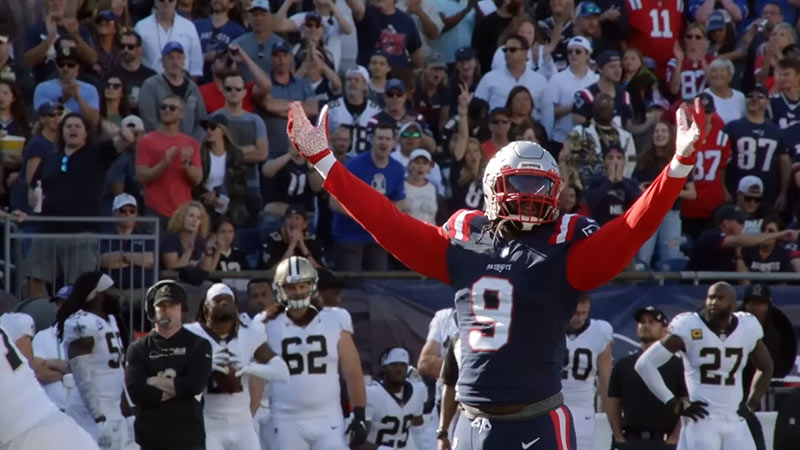
For several seasons, Matthew Judon stood as one of the premier archetypes of this vital role. His signature red sleeves and relentless pursuit of opposing quarterbacks made him a household name and a focal point of defensive game plans.
However, NFL careers are defined by a relentless battle against time and physical toll. The transition from elite defensive anchor to a player fighting for snaps is often sudden, leaving analysts and fans asking a difficult question: Is Matthew Judon still good?
To answer this question objectively, we must analyze the statistical peaks that established his elite reputation, the compounding variables of age and physical wear, and the stark analytical realities of his most recent campaigns.
The Peak Years: Deciphering Matthew Judon’s NFL Dominance
To understand the magnitude of Matthew Judon’s recent performance shifts, one must first appreciate the high-water marks of his career.
Judon’s journey to NFL stardom was defined by a steady trajectory of improvement, culminating in a multi-year stretch where he was universally regarded as one of the most disruptive defensive players in football.
The Pro Bowl Run (2019–2022)
Between 2019 and 2022, Judon achieved a level of sustained success that very few edge defenders ever reach, earning four consecutive Pro Bowl selections. This four-year peak spanned two highly respected defensive organizations:
- The Baltimore Ravens: Known for their complex, aggressive defensive structures, the Ravens utilized Judon’s versatility to create schematic advantages, allowing him to establish himself as a premier defensive disruptor.
- The New England Patriots: Upon arriving in New England, Judon’s game elevated even further under a system that maximized his individual pass-rushing traits, turning him from a great starter into an elite defensive anchor.
The Statistical High-Water Marks
Judon’s dominance in New England was highlighted by two extraordinary statistical seasons that solidified his standing among the league’s elite point-of-attack defenders:
- The 2021 Season: Judon recorded 12.5 sacks, serving as the primary engine for a resurgent New England pass rush.
- The 2022 Season: Judon surpassed his previous achievements by registering a career-high 15.5 sacks, putting him in the conversation for Defensive Player of the Year honors and cementing his status as an elite tier-one defender.
During this prime stretch, Judon was the classic definition of a versatile, high-energy outside linebacker and pass rusher.
He possessed the rare ability to disrupt backfields early in the season, establishing a physical presence that forced opposing coordinators to consistently slide protections and assign double-teams to his side of the formation.
His prime skillset combined an explosive first step, heavy hands, and a relentless motor that allowed him to win both with initial speed and on second-effort pass rushes.
The Anatomy of a Decline: The Impact of Age and Physical Wear
In professional football, the cliff for edge defenders can appear with terrifying speed.
The physical demands of the position require an elite combination of lateral agility, explosive power, and raw linear speed. When any of these physical traits are even slightly compromised, the impact on production is immediate and severe.
For Matthew Judon, the transition away from elite production was not due to a lack of effort or schematic understanding, but rather the dual pressures of injuries and age.
The Aging Curve of NFL Edge Defenders
Historically, edge defenders begin to experience a decline in explosive power in their early thirties. The constant collision with 300-pound offensive tackles takes a compounding toll on the joints, ligaments, and muscle fibers.
When a player relies heavily on high-energy, high-motor traits—as Judon did during his prime—any slight reduction in physical capacity directly impacts their pass-rush win rate.
The Compounding Effect of Injuries
When physical wear is compounded by major injuries, the recovery process becomes longer and less certain. For an older player, missing significant time due to injury means fighting an uphill battle to regain the conditioning and explosive twitch needed to beat modern NFL offensive tackles.
The loss of a fraction of a second in get-off time can mean the difference between a sack and an incomplete pass. In Judon’s case, these physical realities heavily impacted his recent on-field production, setting the stage for a highly challenging period in his career.
Inside the 2025 Numbers: A Difficult Campaign
The true test of a player’s current standing in the league lies in their most recent output. While legacy and past accolades command respect, current roster value is built entirely on current performance.
Unfortunately for Judon, the 2025 season presented a stark, undeniable departure from his historic standards.
The Scoreless Sack Campaign
For a player who once averaged double-digit sacks over multi-year stretches, the ultimate measure of pass-rushing efficacy is getting the quarterback to the ground. In 2025, Judon finished the season with zero sacks.
A scoreless sack campaign over an entire season is a highly alarming indicator for an edge defender. It suggests that even in pass-rushing situations, the player was unable to win their individual matchups cleanly or finish plays when quarterbacks held onto the ball.
Tackle Volume and Run Support
Beyond the sack category, Judon’s overall presence on the field was significantly minimized. He recorded only 19 total tackles over the course of the year.
For context, during his prime years, Judon was not just a pass-rush specialist; he was an active, physical run defender who set the edge and accumulated high tackle numbers near the line of scrimmage.
A drop to just 19 tackles indicates that he was either struggling to stay on the field for run downs or was consistently blocked out of plays at the point of attack.
Roster Transitions: Stints with the Dolphins and Bills
When elite players begin to experience a decline, franchises often attempt to maximize their remaining value by utilizing them in specific sub-packages or rotating them with younger players.
During the 2025 season, Judon spent time with two prominent AFC East organizations: the Miami Dolphins and the Buffalo Bills.
The Search for the Right Fit
Both Miami and Buffalo entered the season with high aspirations and defensive schemes designed to pressure the quarterback.
In theory, adding a veteran with Judon’s pedigree was a low-risk, high-reward move that could bolster a pass-rush rotation.
However, playing for two different teams in a single season is exceptionally difficult for a veteran player:
- Schematic Adaptability: Every defensive coordinator employs unique terminology, run-fit responsibilities, and pass-rush lane disciplines. Transitioning mid-stream requires rapid mental processing, which can sometimes slow a player’s physical reaction times.
- Role Limitation: Rather than acting as the undisputed focal point of the defense—as he was in New England—Judon was forced to adjust to complementary roles, which naturally limited his opportunities to build momentum and rhythm.
Despite the defensive pedigree of both the Dolphins and the Bills, Judon was unable to recapture his signature form in either environment, highlighting that his struggles were independent of the scheme or the jersey he wore.
The Analytical Verdict: Bottom-Tier Performance Metrics
In the modern era of sports evaluation, standard box-score statistics like sacks and tackles tell only part of the story. Football analysts look to advanced performance metrics to evaluate a player’s down-by-down efficiency, pass-rush win rate, and defensive consistency.
To gain an objective view of Judon’s play, we must look to advanced grading platforms, most notably Pro Football Focus (PFF).
The Collapse of Advanced Grades
PFF grades evaluate every single snap a player plays, charting wins, losses, neutral plays, and mental errors. According to their metrics, Judon’s grades did not simply dip; they plummeted to the bottom tier among qualified edge defenders.
This analytical drop-off is highly telling:
- Lack of Consistent Pressure: Even when an edge rusher is not recording sacks, they can still be highly effective by generating pressures, quarterback hits, and hurries. A bottom-tier PFF grade indicates that Judon was not consistently beating his blocker, meaning his pressure rate was incredibly low.
- Run Defense Vulnerability: Edge defenders must be disciplined in holding their ground against pulling guards and heavy tackles. Low analytical grades suggest that Judon was regularly moved off the line of scrimmage, making it difficult for his teams to trust him on early downs.
- Physical Limitations in Space: In modern defenses, outside linebackers are occasionally asked to drop into flat coverage or chase down fast ball-carriers in space. A decline in lateral movement speed directly translates to poor coverage and run-defense grades.
The advanced data confirms the raw box-score numbers: the decline was not a fluke or the result of bad luck, but rather a reflection of a fundamental shift in his down-by-down effectiveness.
The Crossroads: Facing the Reality of Retirement
One of the most admirable yet painful aspects of professional sports is watching an elite athlete come to terms with their physical limitations.
Throughout his career, Matthew Judon has been known not only for his physical talent but also for his candor, leadership, and deep understanding of the game.
Following the immense challenges of his 2025 campaign, Judon did not shy away from the reality of his situation. He admitted himself that his playing career may be nearing its end.
The Psychological Shift of the Veteran Athlete
For a four-time Pro Bowler who has operated at the highest levels of athletic achievement, acknowledging that the end is near requires immense humility and self-awareness.
The transition away from the field is rarely easy, but recognizing when the body can no longer meet the demands of the sport is the final mark of a professional.
Judon’s willingness to speak openly about his potential retirement reflects his realistic assessment of the physical toll the game has taken on his body.
The Verdict: A Great Legacy Facing a Natural Conclusion
To answer the core question: Is Matthew Judon still good?
If we define “good” by active, on-field NFL standards, the current version of Matthew Judon is struggling to remain a productive contributor at the professional level.
The physical toll of the game, combined with natural aging, has eroded the elite explosiveness and versatility that once made him a nightmare for offensive coordinators.
His scoreless 2025 campaign across multiple teams represents a clear signal that his time as an impactful edge defender has drawn to a close.
However, if we define “good” by the legacy he leaves behind, Matthew Judon’s place in recent NFL history is secure.
For a dominant four-year stretch, he was the gold standard of high-energy outside linebackers, delivering masterclasses in edge-setting and pass-rushing dominance for both the Baltimore Ravens and the New England Patriots.
As Judon navigates the final stages of his football journey, his career stands as a testament to both the heights of NFL stardom and the uncompromising reality of the professional athlete’s aging curve.