When professional sports front offices sit down in the war room, every choice is weighed against probability, risk, and historical precedent.
The NFL draft is, fundamentally, an exercise in risk mitigation. Franchises spend millions on scouting departments, athletic testing data, and psychological evaluations to secure players who can alter the trajectory of an organization.
Yet, despite these vast expenditures, finding a franchise quarterback outside of the premium first-round slots remains one of the rarest feats in sports.
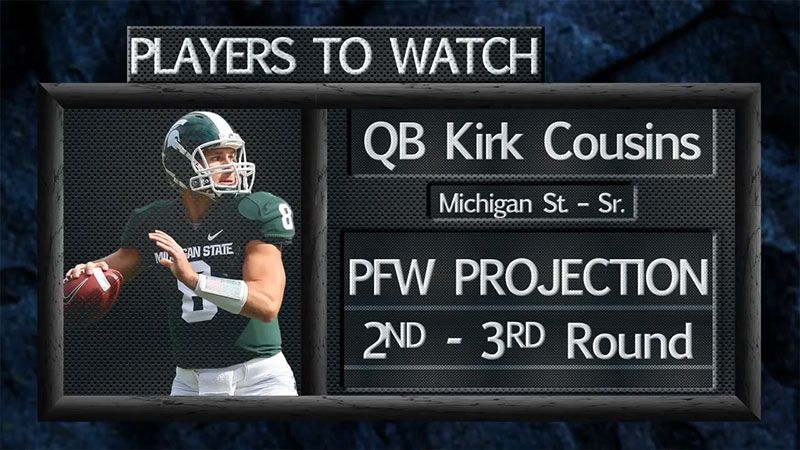
To evaluate whether Kirk Cousins was a good draft pick, we must look beyond casual fan narratives and dissect the cold, hard numbers of draft capital return.
Selected by the Washington franchise in the fourth round (102nd overall) of the 2012 NFL Draft, Cousins entered the league with modest expectations, initially serving as a developmental backup.
What followed over the next decade and a half was an unprecedented career path that completely disrupted traditional valuation metrics.
By analyzing his historical context, statistical milestones, contract economics, and leadership longevity across stints with Washington, Minnesota, Atlanta, and Las Vegas, it becomes unequivocally clear: Kirk Cousins stands as one of the most profitable, high-yielding draft selections in modern football history.
The Macro Economics of Draft Capital: Why Round Four is a Graveyard for Quarterbacks
To truly appreciate the magnitude of the Cousins selection, one must understand the empirical reality of the draft board.
Historical tracking data reveals that players selected in the fourth round carry a remarkably low probability of developing into long-term, multi-year starting quarterbacks.
The Hit Rate Reality
The Roster Bubble
The vast majority of players selected in rounds four through seven fight fiercely simply to make a 53-man active roster. Many wash out of the league within three years, functioning as temporary depth or practice squad bodies.
The Quarterback Premium
When teams draft a quarterback on day three of the draft, they are typically looking for a backup or a developmental project with a ceiling capped at clipboard holder.
Finding an active, high-volume starting signal-caller at pick 102 is an extreme statistical anomaly.
Opportunity Cost
Franchises routinely spend top-five picks on quarterbacks who flame out within three seasons, destroying franchise momentum and costing coaching staffs and general managers their jobs. Securing elite production at pick 102 eliminates draft risk entirely.
When Washington selected Cousins in 2012, they famously had already traded up to pick two overall to draft Robert Griffin III.
The selection of Cousins was viewed by many analysts at the time as a luxury insurance policy rather than the drafting of a future franchise cornerstone.
Yet, that single mid-round gamble yielded over a decade of high-level professional quarterback play, tens of thousands of passing yards, and multiple Pro Bowl campaigns.
Chronological Breakdown of an Extraordinary Career Path
Cousins’ journey from day-three selection to established veteran leader can be broken down into distinct chapters, each validating the initial draft investment.
1. The Washington Apprenticeship and Emergence (2012–2017)
Cousins spent his initial years operating in the background, learning the professional rigor required to survive. When injuries and shifting front-office dynamics thrust him into the starting role permanently by 2015, he immediately seized the opportunity.
The Breakthrough Season: In 2015, Cousins started all 16 games, leading Washington to an NFC East division title while pacing the entire National Football League in completion percentage at 69.8%.
Prolific Volume: In 2016, he followed up his breakout campaign by slinging the ball for 4,917 yards—earning his first career Pro Bowl selection and establishing a reputation as a hyper-accurate, high-volume rhythm passer.
The Franchise Tag Pivot: Navigating consecutive franchise tags in Washington allowed Cousins to control his career trajectory, protecting his market value and setting the stage for an unprecedented shift in player empowerment.
2. The Minnesota Anchor and Consistent Production (2018–2023)
Ahead of the 2018 league year, Cousins entered unrestricted free agency as one of the most sought-after commodities in sports history, signing a landmark fully guaranteed contract with the Minnesota Vikings.
Elite Consistency: Over six seasons in the Twin Cities, Cousins regularly surpassed the 4,000-yard passing mark, guiding the Vikings to crucial divisional victories and playoff appearances.
Clutch Heroics: Highlights from this era included engineering the largest regular-season comeback in professional football history against the Indianapolis Colts and displaying elite fourth-quarter poise.
Locker Room Leadership: Beyond the stat sheet, his peer-voted recognition—such as receiving the prestigious Bart Starr Award—demonstrated his elite character, professionalism, and unifying presence within high-pressure environments.
3. Veteran Leadership and Extended Longevity (2024–Present)
As his career advanced into his mid-to-late thirties, Cousins continued to prove his enduring value across the league, transitioning into a respected veteran leader with stints in Atlanta and Las Vegas.
Very few fourth-round picks maintain active, high-status employment as trusted signal-callers deep into their professional decade, a testament to his meticulous physical conditioning, preparation, and football IQ.
Statistical Evaluation and Return on Investment
| Draft Metric / Career Stat | Value / Milestone | Historical Context for 4th Round Picks |
| Draft Position | Round 4, Pick 102 (2012) | Historically low probability of securing a long-term starter. |
| Career Passing Yards | Over 44,700 Yards | Puts him in rare historical company among all-time passers. |
| Pro Bowl Honors | 4 Selections (2016, 2019, 2021, 2022) | Represents perennial upper-tier conference recognition. |
| Career Earnings | Over $340 Million | Unprecedented financial return for a non-first-round draft asset. |
When analyzing these figures through an objective framework, the return on investment is astronomical.
Front offices routinely spend first-round picks on players who fail to secure a second contract. Cousins secured multiple massive market extensions, proving that day-three picks can occasionally yield franchise-altering stability.
Conclusion
The ultimate verdict on any draft choice comes down to a simple mathematical comparison: did the player outperform their projected market valuation?
Kirk Cousins didn’t just clear that bar; he redefined it. Rising from a fourth-round afterthought in 2012 to a multi-time Pro Bowler, durable team captain, and historical earner, his career stands as an enduring blueprint for how mid-round draft capital can be maximized through patience, precision, and relentless preparation.
For any organization evaluating draft efficiency, Cousins remains the ultimate proof that elite value can be found anywhere on the board