In the world of professional football, few debates ignite as much passion as the crowning of the world’s best player.
For decades, the Ballon d’Or stood as the undisputed pinnacle of individual achievement. However, between 2010 and 2015, the landscape changed when the award merged with FIFA’s World Player of the Year.
This union was supposed to create a singular, definitive honor, but by 2016, the partnership collapsed in a move often referred to as “The Great Divorce” of football.
This article explores the multifaceted reasons behind the 2016 split, the branding war that followed, and how the two awards—The Best FIFA Football Awards and the Ballon d’Or—now compete for prestige in the modern era.
The Multi-Million Pound Agreement: The Financial Core of the Split
The foundation of the 2016 separation was primarily contractual and financial. In 2010, FIFA and the French publication France Football entered into a high-stakes partnership to merge their respective honors into the FIFA Ballon d’Or.
FIFA reportedly paid £13 million to secure this five-year contractual agreement. This merger was intended to streamline the award process, ensuring that the football world didn’t have two different “best players” every year.
However, when the contract reached its natural expiration in 2016, the landscape of FIFA’s leadership had shifted dramatically.
Gianni Infantino, who had recently taken the helm as FIFA President, opted against renewing the partnership.
Rather than continuing to share the spotlight with a third-party magazine, Infantino envisioned a different path for the organization’s branding, choosing to move in a direction where FIFA held complete autonomy.
Rebranding and the Birth of “The Best.”
One of the most significant strategic reasons for the split was FIFA’s desire to own its intellectual property entirely. Under the merger, FIFA was tied to the history and branding of France Football. For a global governing body, this was seen as a limitation.
The Creation of an Independent Flagship. By ending the partnership, FIFA was able to launch its own unique honor: The Best FIFA Football Awards. This move allowed the organization to:
- Design a New Trophy: Move away from the iconic golden ball design.
- Control the Ceremony: Manage every aspect of the gala and presentation.
- Own the Voting Process: Dictate exactly how the world’s best are selected without external editorial influence.
Political Maneuvering: The “Olive Branch” to the English FA
The 2016 split was not just about branding; it was a calculated political move. Following years of high-profile corruption scandals under the previous regime, FIFA was desperate to repair its public image and its relationships with key member associations.
Moving the awards was a strategic “olive branch” to repair FIFA’s strained relationship with the English Football Association (FA).
As a symbol of this fresh start, the inaugural ceremony for “The Best” was moved from its traditional home in Zurich to London.
This change of venue signaled a departure from the “closed-door” perception of FIFA’s Swiss headquarters and showcased a more transparent, global-facing organization under Infantino’s leadership.
The Battle of Philosophies: Journalism vs. Democracy
Perhaps the most enduring legacy of the split is the difference in how the winners are actually chosen. When the organizations separated, they reverted to (or created) fundamentally different voting ideologies.
The Ballon d’Or: The Journalist’s Choice
Post-2016, the Ballon d’Or returned to its traditional roots. The winner is decided exclusively by a panel of international journalists.
The philosophy here is that professional observers of the game—those who watch matches week-in and week-out through a critical lens—are the most qualified to judge individual performance.
The Best FIFA: A Democratic Four-Way Split
In contrast, FIFA implemented what they viewed as a more “democratic” and inclusive system. The voting for “The Best” is split into four equal categories, each accounting for 25% of the total vote:
- National Team Coaches
- National Team Captains
- International Journalists
- The General Public (Fans)
This system ensures that the voices of the players and fans are heard, though it has often led to different winners than the Ballon d’Or, sparking intense debate over which criteria truly define “the best”.
History vs. Governance: The Prestige Factor
Despite FIFA’s immense global reach and the high-production value of their ceremonies, The Ballon d’Or has retained its status as the most prestigious individual honor in football.
The primary reason for this is longevity. The Ballon d’Or has a deep history that dates back to 1956, long before FIFA’s own individual awards became a mainstay of the sport.
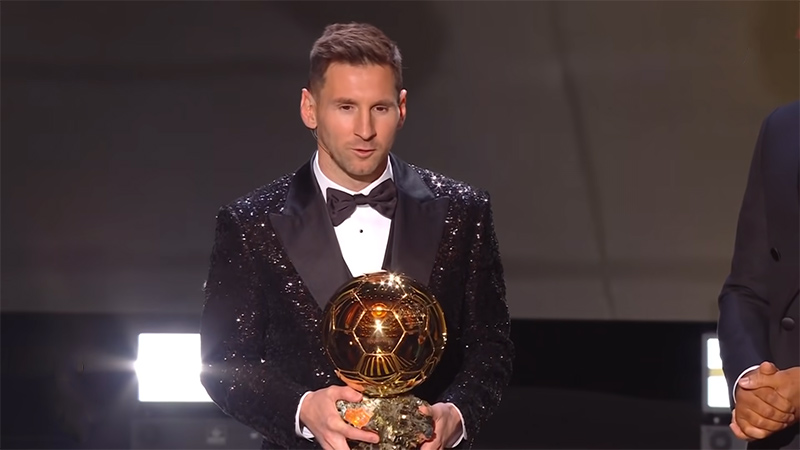
For most players, the image of holding the “Golden Ball” remains the ultimate symbol of individual greatness, regardless of the governing body’s official stance.
Conclusion: Two Awards, One Goal
The 2016 split between FIFA and France Football changed the landscape of footballing honors forever. What began as a financial and contractual expiration evolved into a battle for the soul of footballing prestige.
Today, players strive to sweep both awards, but the divergence in voting methods and the political motivations behind their creation continue to offer two distinct perspectives on who truly sits atop the footballing world.