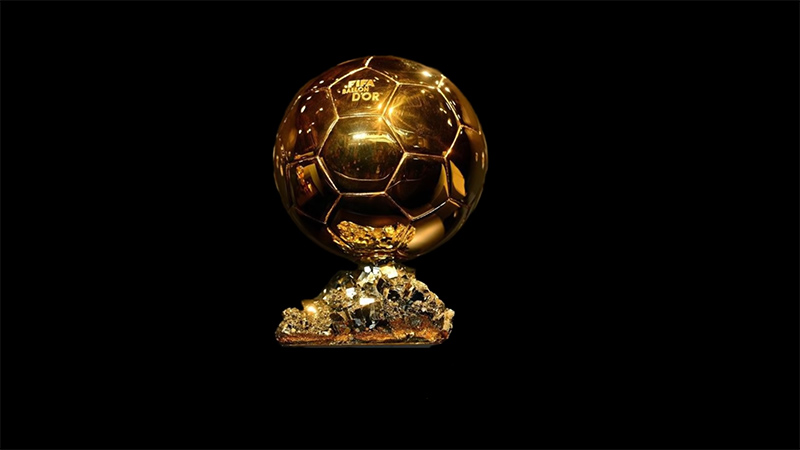
For decades, the Ballon d’Or has stood as the pinnacle of individual achievement in the football world. However, a recurring point of confusion for fans, analysts, and even the players themselves is the timeframe used to judge these elite performances.
Is the Ballon d’Or based on the calendar year (January to December) or the football season (typically August to July)?
The answer has actually changed recently, marking a significant shift in how the “Greatest of All Time” debates are settled.
This article will dive deep into the evolution of the award, the current judging criteria, and the community debates surrounding the fairness of its format.
The 2022 Revolution: Shifting from Year to Season
For the majority of its history, the Ballon d’Or was strictly a calendar-year award. This meant that a player’s performance was tracked from January 1st to December 31st. While this sounds straightforward, it often created a “split-season” problem.
A player might be unstoppable in the spring (the end of one season) but struggle or deal with injury in the autumn (the start of the next).
However, a major format change occurred recently. Since 2022, jurors have been officially instructed to take into account the previous season rather than the calendar year.
Why the Change Happened
The shift to a season-based model was designed to align the award with the actual rhythm of the sport. Most major domestic leagues and continental competitions, such as the UEFA Champions League, run from late summer to the following spring.
By judging players based on a single season, the award can more accurately capture the narrative of a player’s campaign—from the opening match to the lifting of a trophy.
Before this change, fans often pointed out the awkward timing of the award. For instance, a spectacular performance in a December league match would technically count toward the same award as a Champions League final from the previous May, even though they belonged to two different competitive cycles.
The Three Pillars: How Winners Are Chosen
While the timeframe is the most discussed technicality, the criteria for winning are what truly determine the recipient.
According to historical guidelines from France Football, the award is based on three primary criteria, prioritized in the following order:
- Individual and Collective Performance: This is the most weighted category. It looks at the individual statistics of the player (goals, assists, clean sheets) alongside the collective trophies won by their team (league titles, domestic cups, and international glory).
- Player Class: This encompasses the player’s talent on the pitch as well as their adherence to “fair play” and overall sportsmanship.
- The Player’s Career: Interestingly, the Ballon d’Or isn’t just about one year or season in a vacuum; it also considers the player’s overall legacy and standing in the game.
The Impact of the Season Format on International Tournaments
Under the new season-based rules, the timing of international tournaments like the World Cup or the Euros becomes critical.
If a tournament takes place in the summer, it serves as the “grand finale” of the season being judged.
This prevents the confusion seen in previous years, where a player’s brilliant World Cup performance might be “diluted” by a poor start to the following club season in the same calendar year.
The “Calendar Year” Confusion: A History of Debate
Despite the official move to a season-based format in 2022, the debate over “Year vs. Season” has raged for years.
Even when the rules explicitly stated that the award followed the calendar year, many argued that voters were already subconsciously judging based on the season.
The “Subconscious Season” Effect
Some observers have noted that voters—who include journalists, national team captains, and coaches—often have “short memories.”
There is a perception that even when the award was intended to be for the calendar year, voters would run with the narrative of the most recent full season.
For example, if a player like Lionel Messi scored 60 goals in the 2020-2021 season, voters might focus on that total figure during the award ceremony, even if only 15 of those goals were scored in the actual calendar year being rewarded.
This has led to the criticism that the “calendar year” designation was often a rule on paper that wasn’t strictly followed in practice.
The “Nominations Date” Problem
In the past, the timing of nominations also added to the confusion. If a player had a “fantastic season start” in August or September, it might not have counted toward the current award if the nomination period had already closed.
The move to a season-based format largely resolves this by ensuring the judging period ends precisely when the competitive season concludes.
Is the Ballon d’Or Fair? The Popularity Contest Argument
Beyond the technical timing of the award, many football fans express skepticism about whether the Ballon d’Or is truly meritocratic.
Within the football community, there is a recurring sentiment that the award is heavily influenced by marketability and popularity.
The Marketability Factor
A common critique is that players with higher marketability or larger fanbases have a significant advantage. Critics argue that the award is “usually given to whoever the media hypes the most”.
Some fans go as far as to say that the award is “a joke” or “nothing really counts” because it relies on the subjective votes of people who may be influenced by a player’s fame rather than their pure statistical output.
Famous “Robberies” in the Calendar Year Era
The history of the Ballon d’Or is filled with controversial winners and “robberies.” Players like Wesley Sneijder (2010), Andres Iniesta, Franck Ribéry, and Robert Lewandowski are frequently cited as players who deserved the award but lost out to more “marketable” stars like Messi or Cristiano Ronaldo.
In 2010, for example, many felt Wesley Sneijder was the rightful winner after winning the treble with Inter Milan and reaching the World Cup final. Others argued for Iniesta, who scored the winning goal in the World Cup final that same year.
Despite these achievements, Messi took the trophy, fueling the narrative that “talent and fair play” or “career legacy” sometimes outweigh the “individual and collective performances of the year”.
Does the Format Change Help or Hinder Certain Leagues?
The shift to a season-based format has also raised questions about whether certain leagues are at a disadvantage. Specifically, fans of the English Premier League (EPL) have wondered if the change makes it harder for their players to win.
The argument is that because the Premier League is often perceived as more “tough” and competitive than other European leagues, it is harder for a single player to be “absolutely outstanding” throughout a full season.
In a league where “anyone can beat anyone,” maintaining the consistent stats required to win a Ballon d’Or can be more difficult than in leagues that are traditionally dominated by one or two powerhouse clubs.
Conclusion: A New Era for the Golden Ball
So, is the Ballon d’Or based on the year or the season? As of 2022, it is officially based on the football season.
This change was a necessary evolution to bring the award in line with the reality of how football is played and watched. By focusing on the August-to-July cycle, the award aims to provide a clearer, more logical window for judging greatness.
However, as the passionate debates on Reddit and across social media show, no change in format will ever completely silence the discussions about bias, popularity, and the “robbing” of deserving players.
Ultimately, whether judged by a year or a season, the Ballon d’Or remains the sport’s most prestigious individual honor—and its most controversial.