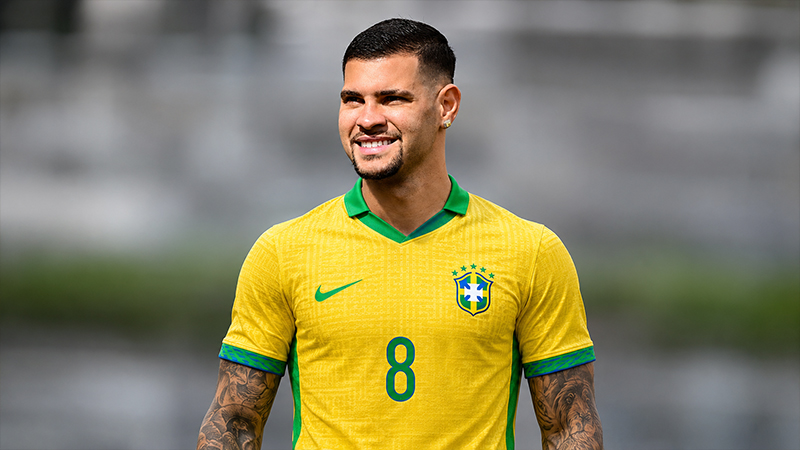
Bruno Guimarães has emerged as one of the most technically gifted and tactically intelligent midfielders in world football, currently anchoring the midfield for Newcastle United.
While his flair and passion on the pitch are unmistakably Brazilian, fans and analysts often inquire about his legal status within European leagues.
To clarify, Bruno Guimarães is primarily a Brazilian citizen, but he also holds secondary Spanish citizenship.
This dual heritage is not just a personal detail but a strategic component of his professional identity. Understanding his background provides insight into his seamless transitions between the top leagues in South America and Europe.
The Foundation of His Identity: Brazilian Roots
As a world-class midfielder, Bruno’s identity is deeply rooted in the footballing culture of his home country. His journey began in Rio de Janeiro, and his primary nationality remains Brazilian.
This core identity defines his international eligibility and his style of play, which combines physical resilience with high-level technical precision.
Early Career and National Pride
Born in Rio de Janeiro, Bruno’s development as a footballer took place within the competitive Brazilian league system. His rise through the ranks at clubs like Athletico Paranaense established him as a premier talent in South America.
Throughout this period, his Brazilian nationality was his sole focus, culminating in his eventual call-up to represent the “Seleção”.
Choosing the Brazil National Team
Despite holding a European passport, Bruno Guimarães has maintained total commitment to the Brazil National Team. In international football, players with dual heritage often face a choice, but for Bruno, the path was clear.
His role in the Brazilian squad is central to their current tactical setup, and he has represented the nation in major tournaments, including the FIFA World Cup and the Olympic Games.
The Acquisition of Spanish Citizenship
While his heart is in Brazil, his professional logistics are significantly aided by his secondary nationality. Bruno Guimarães acquired Spanish citizenship during his career in Europe.
This process is common for high-profile South American athletes who seek to integrate more fully into the European sports market.
Why he holds a Spanish Passport
The acquisition of Spanish citizenship was a strategic move that occurred during his time playing in European leagues. For many South American players, living and working in Europe for a set period allows them to apply for citizenship in countries like Spain.
This status grants him “EU player” status, which is a massive asset in the global transfer market.
Professional Benefits for European Clubs
| Benefit Category | Description |
|---|---|
| Registration | Does not count toward “Non-EU” player quotas in leagues like La Liga or Ligue 1. |
| Mobility | Easier movement across borders within the European Union for matches and residency. |
| Market Value | Higher appeal to top-tier clubs that are restricted by foreign player limits. |
The Strategic Importance of Dual Heritage in Football
In the modern era of the sport, holding dual citizenship is a significant competitive advantage. For a player like Bruno, having Spanish citizenship alongside his Brazilian nationality streamlines the administrative side of his career.
This allows him to focus entirely on his performance on the pitch without the burden of complex work permit renewals that often plague non-European athletes.
Bypassing Strict Work Permit Regulations
In leagues like the Premier League, work permits are often tied to international appearances and transfer fees. However, holding a Spanish passport provided Bruno with a layer of administrative security when moving between clubs.
Although the United Kingdom is no longer in the EU, the status gained from his time in Spain remains a vital part of his legal profile as a global athlete.
Integration into the European Market
When Bruno moved from Brazil to Lyon in France, and later to Newcastle in England, his secondary Spanish nationality acted as a bridge.
It signaled to European scouts and directors that he was a player who could be easily integrated into a squad without displacing other international signings who might lack European documentation.
Technical Profile: The Modern “Number 8”
Bruno Guimarães is often described as the “engine room” of his team. His nationality and upbringing in Rio influenced his flair, but his European experience and Spanish citizenship reflect his tactical discipline.
He is the quintessential modern midfielder who can transition from a defensive “6” to a creative “8” with ease.
Defensive Solidity and Work Rate
One of Bruno’s standout traits is his ability to regain possession. He combines the traditional Brazilian “volante” style—tenacity and grit—with the tactical positioning expected in top European tiers.
His secondary citizenship serves as a metaphor for this blend: the grit of South America and the tactical structure of Europe.
Playmaking and Vision
Beyond his defensive duties, Bruno is a master of the progressive pass. He has the vision to unlock defenses from deep positions, a trait that has made him indispensable for both Newcastle United and the Brazilian National Team.
His ability to dictate the tempo of a game is what separates him from standard defensive midfielders.
Impact on Newcastle United and the Premier League
Since joining Newcastle United, Bruno has become the face of the club’s new era. His dual nationality status was an important factor during the recruitment phase, ensuring that the club was signing a player with high global mobility and a settled legal status in Europe.
A Fan Favorite at St. James’ Park
The supporters in the North East of England have embraced Bruno not just for his skill, but for his passion.
He often displays the Brazilian flag and celebrates his heritage, while the club benefits from the stability his Spanish citizenship provides in terms of long-term registration and planning.
Statistical Dominance in Midfield
- Pass Completion: Consistently ranks in the top percentile for midfielders in the Premier League.
- Tackles per 90: Demonstrates elite defensive engagement.
- Chance Creation: High volume of key passes leading to goal-scoring opportunities.
Navigating the Challenges of a Dual Citizen
Being a dual citizen comes with unique responsibilities. For Bruno Guimarães, this means balancing his obligations to the Brazil National Team with his professional life in Europe.
His secondary Spanish nationality is a tool for his career, but his allegiance remains firmly with the yellow and green of Brazil.
International Travel and Logistics
Holding two passports allows for smoother travel during international breaks. When flying between the UK, Brazil, and other European venues for Champions League or international fixtures, the Spanish passport can simplify immigration processes, reducing the fatigue associated with professional travel.
Legal and Tax Implications
Professional athletes with dual citizenship often have complex financial structures. While his primary focus is football, his status as a Spanish citizen may have implications for how he manages his residency and image rights across different European jurisdictions.
Frequently Asked Questions About Bruno Guimarães
Is Bruno Guimarães eligible to play for Spain?
While he holds Spanish citizenship, he is not eligible to play for the Spanish national team because he has already represented Brazil in competitive senior matches.
FIFA rules generally prevent a player from switching nations once they have played a competitive “A” international game.
How did he get Spanish citizenship?
He acquired it during his time playing in Europe. Typically, South American players can fast-track Spanish citizenship if they reside in Spain for two years, though other routes exist for those playing in other European leagues who have ancestral ties or long-term residency in the EU.
Does he speak Spanish?
Given his dual citizenship and his time in the professional football circuit, it is highly likely he is proficient in Spanish, in addition to his native Portuguese and the English he has learned since moving to Newcastle.
What is his primary nationality?
His primary nationality is Brazilian. He was born in Brazil and has spent the majority of his life and early career identifying as a Brazilian national.
Conclusion: The Global Legacy of Bruno Guimarães
Bruno Guimarães represents the pinnacle of the modern, globalized footballer. By maintaining his primary Brazilian nationality while strategically holding Spanish citizenship, he has optimized both his international aspirations and his club career logistics. He is a player who belongs to the world—a Rio-born talent with a European edge.
As he continues to dominate the midfield in the Premier League, his dual heritage will remain a key part of his story.
Whether he is lifting trophies or leading the charge for the Brazil National Team, his status as a dual citizen ensures he remains one of the most versatile and valuable assets in professional sports today.